
Artificial intelligence (AI) broadly refers to computer systems or software capable of performing tasks that typically require human intelligence. These tasks can include functions such as learning from data, recognizing patterns, understanding language, and making decisions. In the context of Australian industries, AI involves a variety of technologies and applications that help streamline workflows, analyze large sets of information, and generate insights for decision-making. The foundational technologies behind AI often include machine learning, natural language processing, and computer vision, each serving distinct but sometimes overlapping purposes across sectors.
In practice, AI in Australia is being introduced in settings ranging from financial services and healthcare through to retail supply chains. Many Australian businesses integrate AI-powered solutions to help improve efficiency, automate repetitive tasks, and extract value from data that otherwise might not be analyzed effectively by conventional methods. These technologies are not restricted to large corporations; smaller enterprises and research institutions are also leveraging AI to address sector-specific problems and adapt to rapidly developing digital landscapes.

AI research driven by organizations like CSIRO's Data61 may support technology transfer into Australian industries, enabling practical deployment of machine learning algorithms and automation systems. These research centers often collaborate with business and government to address local challenges, including agricultural optimization and cyber security enhancements. Their work highlights the growing ecosystem of applied data science and AI in Australia.
Health initiatives such as AI-powered cancer detection at St Vincent’s Hospital demonstrate the practical impact of AI for clinicians and patients. Deep learning tools may assist medical professionals in analyzing complex data from imaging studies, potentially supporting earlier detection in cancer screening programs. Adoption of these technologies typically involves clinical trials and ethical review under Australia’s healthcare regulations.
In financial services, the implementation of AI by Australian banks, such as the Commonwealth Bank, often involves customer-facing applications like AI chatbots. These systems aim to improve user engagement while increasing efficiency in back-end processes, such as fraud detection and risk modeling. Responsible deployment is usually guided by evolving data governance and privacy frameworks within the Australian financial sector.
Australian businesses exploring AI integration may consider the readiness of internal systems, regulatory compliance, and staff training. Study of early use cases suggests organisations that adopt AI can experience measurable improvements in operational efficiency, but also face challenges like data quality and transparency. Ongoing collaboration between industry, regulators, and the research community remains essential as AI adoption progresses across the Australian economy.
In summary, understanding the technologies and representative applications currently active in Australia provides a foundation for deeper examination. The next sections examine practical components and considerations in more detail.
Australian organisations typically deploy several AI technologies based on sector-specific needs and resource availability. Machine learning, which enables computers to identify patterns and make predictions from data, is prominent in areas such as financial forecasting and inventory management. Natural language processing allows AI applications to interpret and respond to human language, which is useful for customer service automation and document analysis. Computer vision, another key technology, is often used in healthcare for medical image interpretation and in retail for recognition of stock items or customer behavior patterns.

Many Australian businesses partner with local research institutes for tailored AI solutions. For instance, projects hosted by CSIRO's Data61 focus on data-driven problem-solving in agriculture, such as optimizing crop yield predictions. These collaborations generally emphasize adaptability and alignment with existing business infrastructure, aiming for smooth technology deployment within current regulatory frameworks. This helps ensure responsible and effective use of AI in operational settings.
Government programs and regulatory bodies in Australia provide guidance for responsible AI development and deployment. The Australian Government has released discussion papers and guidelines to ensure AI technologies are applied ethically, particularly in sensitive areas like facial recognition, health diagnostics, and financial decision-making. This approach may support broad industry confidence while addressing concerns around privacy and transparency.
Australian businesses also consider integration challenges, such as data compatibility and system interoperability, when adopting new AI technologies. Experience suggests that organizations that devote resources to pilot projects and cross-industry learning can accelerate AI adoption. Continued growth in accessible training resources, academic partnerships, and public regulatory frameworks is contributing to the maturing AI ecosystem across the country.
Within healthcare, AI-driven diagnostic support tools are under evaluation for their ability to assist clinicians with interpreting imaging scans and patient records. Research collaborations between hospitals and universities in Australia may lead to more accurate or efficient identification of medical conditions, subject to thorough validation and oversight processes. Early pilot programs using AI for cancer detection have demonstrated potential value in assisting medical staff, although practical adoption generally follows a staged and evidence-based progression.
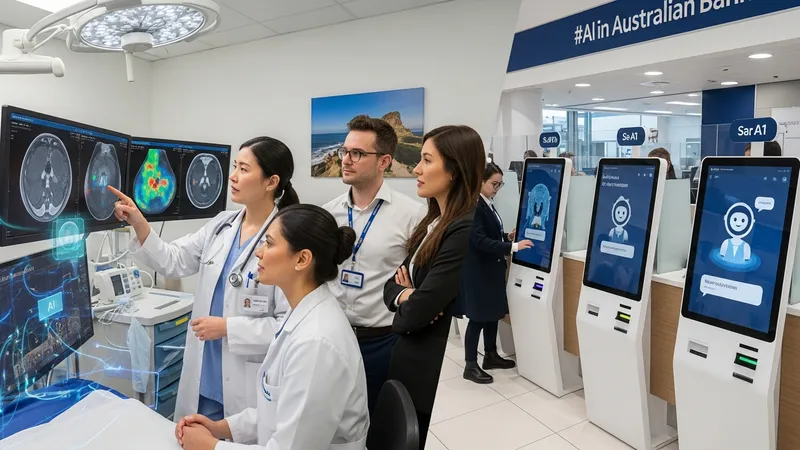
Australian financial institutions often utilize AI to support customer interactions and operational risk management. AI chatbots are designed to handle routine banking inquiries and free up staff to address more complex issues. Predictive analytics powered by machine learning can also assist in credit risk assessment and transaction monitoring, enabling institutions to focus resources where they are most likely to be required. All implementations are typically governed by national data privacy and security policies.
In retail, AI systems are becoming more integrated into store operations and supply chain management. Applications may include automated product recommendation engines for e-commerce, inventory forecasting for physical stores, and computer vision systems for real-time stock monitoring. Larger retailers have the capacity to trial and deploy customized AI solutions, whereas smaller businesses typically access cloud-based services that offer scalable machine learning and analytics tools.
Each industry in Australia adjusts its approach to AI based on distinct regulatory, security, and operational factors. Stakeholders frequently monitor emerging guidelines from authorities and remain informed about ethics, reliability, and transparency. Ongoing professional development opportunities in data science and AI further support industry readiness and responsible integration of new technologies.
Ethical deployment of AI in Australia typically entails assessment of transparency, fairness, and accountability. Organizations and developers are encouraged to consider possible biases in training data and algorithmic outputs, which may affect equity in healthcare or lending decisions. Regulatory guidance from Australian authorities frequently addresses these topics, aiming to align AI development with privacy rights and anti-discrimination laws while ensuring operational integrity.

Data privacy is an essential component of responsible AI adoption, particularly in sectors handling sensitive personal information. Australian businesses employing AI must adhere to the Privacy Act 1988 and related sector-specific rules, ensuring that customer data used to train or inform AI-driven systems is handled lawfully and securely. Regular audits and documentation of AI decision processes can further increase public and stakeholder trust.
Transparency in AI systems is regarded as a best practice, especially for decision support tools in health, finance, and government. Clear documentation regarding how AI models make predictions or classifications helps build confidence among both users and regulators. Many projects in Australia now involve explainable AI, which seeks to make machine decision processes more understandable to human operators and end users.
Education and professional training play a vital role in equipping the Australian workforce to use and monitor AI responsibly. Dedicated programs in universities and vocational institutions aim to impart skills in AI ethics, programming, and project management. Ongoing learning and participation in professional networks allow practitioners to stay updated with rapidly evolving technological and regulatory standards.
The AI landscape in Australia continues to evolve as research institutions, industries, and government bodies collaborate on new projects. Emphasis on locally relevant challenges—such as environmental sustainability, agriculture, and healthcare access—often shapes national priorities in AI research. Several high-profile initiatives led by public and private sectors are exploring the use of AI in optimizing transport networks, managing natural resources, and providing remote services to regional communities.

Expansion of cloud computing and data analytics infrastructure across Australia is enabling broader access to AI technologies. While larger organizations tend to invest heavily in custom AI platforms, many small-to-medium enterprises now utilize scalable, subscription-based AI services. This accessibility is strengthening digital capacity and supporting a wider distribution of AI-driven solutions across industries.
Government initiatives continue to support AI innovation, with funding schemes and regulatory reviews aimed at encouraging research, supporting startups, and guiding ethical use of technology. Pilot studies in education, law enforcement, and environmental monitoring are examples where outcomes may inform future nationwide strategies. Ongoing public consultation helps ensure that AI implementation aligns with community expectations and legal frameworks.
The future of AI in Australia will likely be shaped by developments in machine learning algorithms, increasing sophistication in natural language interaction, and advances in explainable AI. As new regulatory standards emerge, businesses and public institutions are expected to review their AI systems for compliance, transparency, and inclusiveness. Monitoring these trends can help stakeholders understand the potential and boundaries of AI technologies in Australia’s dynamic landscape.