
The process of listing on the Hong Kong Stock Exchange involves several structured steps. These are overseen by regulatory bodies designed to maintain fair, transparent, and efficient market standards. Companies seeking to list may encounter a range of requirements relating to financial history, corporate governance structures, disclosure obligations, and documentation standards. Each element of the process is shaped to provide assurance to both investors and regulators regarding the suitability of new listings.
Preparing for an initial public offering (IPO) in Hong Kong often includes engagement with legal, accounting, and financial advisers. These professionals assist with both compliance and strategy when preparing a company’s listing application and supporting documents. The process typically involves careful adherence to published rules from the Hong Kong Exchanges and Clearing Limited (HKEX), as well as ongoing communication with the Securities and Futures Commission (SFC).

Eligibility for IPOs on the Main Board or GEM typically depends on a combination of profitability, operational history, and suitability as defined by the HKEX. While Main Board applicants may need to demonstrate several years of profit and substantial assets, GEM applicants are often assessed more on growth potential and disclosure quality. Apart from financial standards, both demand detailed supporting documents, including prospectus filings and business descriptions.
One distinguishing requirement in Hong Kong’s IPO process is the appointment of a licensed sponsor. Sponsors have obligations not only to the applicant but to the integrity of the wider market. Their role spans from conducting due diligence checks to guiding the applicant in the preparation of regulatory filings that meet the HKEX and SFC requirements. This multi-stage review process may help mitigate risks and enhance investor confidence.
Regulatory filings represent a core phase of the Hong Kong IPO process, which typically includes delivering a draft prospectus and completing suitability questions. The documentation is rigorously reviewed for accuracy and completeness. Both the HKEX and SFC may request clarification or additional information at multiple stages prior to approval and final listing. This dialogue often improves transparency and enhances the reliability of information offered to public investors.
The cost of conducting a Hong Kong IPO can vary, depending on company size and complexity. Fees commonly include listing application charges, annual stock exchange fees, and professional advisor costs. These outlays are in addition to regulatory charges, such as compliance-related expenses. Companies planning for an IPO in Hong Kong may find it useful to carefully budget for these elements as part of early decision making.
To summarise, pursuing an IPO in Hong Kong generally involves choosing an appropriate market board, meeting specific eligibility criteria, and undergoing substantial due diligence. The next sections examine practical components and considerations in more detail.
Eligibility criteria for companies seeking a public listing in Hong Kong are carefully defined to uphold transparency and market integrity. For the Main Board, requirements often include a profit track record of at least HK$50 million over the past three financial years and a minimum market capitalisation threshold—currently set at HK$500 million. In contrast, the GEM Board is structured to support early-stage ventures or those without substantial profit histories but still requires clear operational and management backgrounds.

Disclosure obligations represent a critical part of the IPO process. Both the HKEX and the SFC emphasise timely and accurate publication of key information. A draft prospectus must typically include business operations, risk factors, financial statements, and details about directors and substantial shareholders. This is designed to inform potential investors and ensure all parties have a balanced view of the company’s activities and prospects.
The regulatory framework in place in Hong Kong also covers continuous disclosure after listing. Companies are required to provide regular updates through interim and annual reports, announcements regarding price-sensitive information, and timely reporting of material developments. Non-compliance can result in disciplinary actions or fines, underlining the importance of maintaining good governance practices throughout the public company lifecycle.
Corporate governance standards are also integral to the IPO process. Listing applicants may need to demonstrate that their internal controls, board composition, and shareholder rights are aligned with the HKEX’s Corporate Governance Code. Measures such as independent non-executive directors and audit committees are typically required, especially for entities seeking Main Board admission. These provisions are intended to promote accountability and fair conduct post-listing.
The regulatory filing process for a Hong Kong IPO usually begins with the appointment of a sponsor. Sponsors are licensed intermediaries registered with the SFC and are responsible for guiding the applicant through pre-listing requirements. Their tasks may involve coordinating financial audits, collating necessary disclosures, and ensuring overall readiness for regulatory review. Sponsor engagement is considered mandatory for both Main Board and GEM listings.

Once preparatory work is complete, the company and sponsor jointly submit a listing application to HKEX. This application typically includes a draft listing document, financial statements audited by a registered Hong Kong auditor, and the sponsor’s due diligence report. The regulatory review period—with input from both HKEX and SFC—can take several months, as exchanges often seek clarifications or additional materials from the applicant to verify disclosures.
During the review process, the HKEX may arrange for meetings with management to better understand the company’s business, governance, and financial practices. Queries from regulators are common, covering matters such as internal controls, related-party transactions, and business risk management. The applicant, with support from its advisers, is expected to respond promptly and substantiate all claims made in the draft prospectus.
Following satisfactory clearance of regulatory queries, the exchange grants approval-in-principle for the listing. The company may then publish its full prospectus, commence investor roadshows, and ascertain public interest. Only upon completion of these final steps will the shares be formally listed and trading initiated. This multi-stage approach aims to protect investors and ensure only qualified companies access public capital markets.
The financial obligations associated with a Hong Kong IPO generally comprise several categories. Listing application fees are determined based on the market board and the applicant’s market capitalisation. For example, Main Board application fees may reach up to HK$650,000, while GEM Board fees are typically lower, starting around HK$100,000. These amounts are published annually by HKEX and are subject to updates based on prevailing regulations.

Professional advisor fees often constitute a significant portion of the total cost. Sponsor fees may vary, commonly ranging from HK$4 million to HK$10 million for a main board listing. Other costs may include legal advisors, auditors, and reporting accountants, each of whom charge based on the scale and complexity of the engagement. These fees are normally agreed in advance and may fluctuate depending on the specific requirements of the IPO.
Additional expenses arising during the IPO process can include printing, public relations, underwriting commissions, and regulatory filing charges. Underwriting commissions, typically paid to banks supporting the share offering, may average between 2% and 3% of total funds raised. These are subject to negotiation and the overall size of the public offering. Companies are advised to assess these components early in the planning process to ensure appropriate budgeting.
Annual fees are also payable to HKEX after listing, scaled according to the company’s issued share capital. For Main Board issuers, these fees can range from HK$145,000 for lower market capitalisation companies to HK$1,190,000 for those with substantial capital bases. Budgeting for both initial and recurring costs can help maintain ongoing compliance and sustainable post-listing operations.
Oversight of newly listed companies in Hong Kong does not end at the IPO. HKEX and SFC maintain active supervision to ensure ongoing compliance with listing rules and disclosure requirements. Companies are expected to provide prompt updates about significant events, financial results, and board changes through public announcements or regulatory filings. These measures are intended to maintain market quality and uphold investor confidence throughout a company’s listed life.
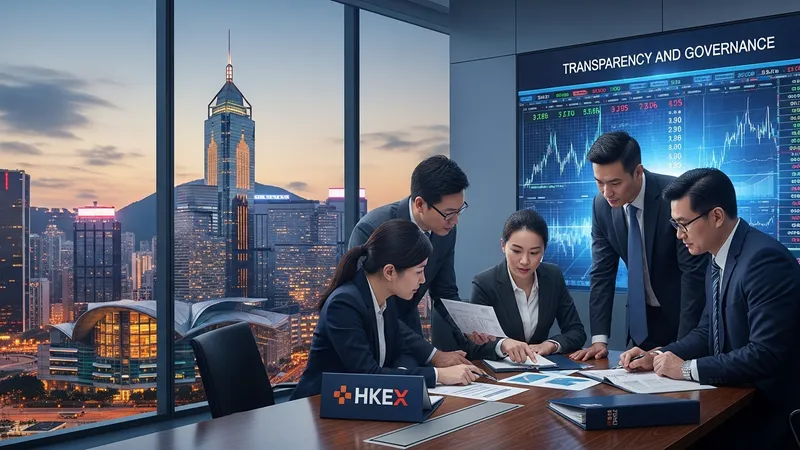
Corporate governance is a continued responsibility after listing. Listed companies must typically observe the HKEX Corporate Governance Code, which covers matters such as board independence, internal audits, and shareholder communication practices. Any deviations from the code are often required to be explained to shareholders, promoting transparency and accountability in company operations.
Where material breaches or ongoing non-compliance occur, HKEX and SFC are authorised to investigate and impose sanctions. Penalties can range from public censure to fines, suspension, or removal from the exchange in serious cases. Guidance on disciplinary procedure is provided through both exchange guidance materials and the Securities and Futures Ordinance. These systems aim to safeguard the market and ensure adherence to published requirements.
Continuous education for board members and key executives is encouraged under the prevailing framework. HKEX regularly publishes updates, training, and circulars to enhance understanding of evolving rules and practices. This may help directors remain informed of their obligations, fostering more resilient governance and risk management structures following an IPO.