
Small businesses often carry liability insurance designed to respond to third-party claims for bodily injury, property damage, and legal defence costs arising from operations, products, or professional services. Such policies typically define the scope of covered incidents, the limits available for payment, and conditions under which the insurer will provide a defence. Coverage intent is to address losses that a business could be held legally responsible for under civil liability rules, with contract terms that describe covered perils, exclusions, and settlement processes.
In practical terms, these liability arrangements are modular: a small firm may hold one or more policy types that together address different exposures. Policies are written with specified limits and often with deductibles or retentions; some are “occurrence” based while others are “claims-made.” The contract language, endorsements, and state insurance regulations influence how and when coverage may apply. Understanding common coverage categories and typical policy features can help clarify which incidents a business may expect to be within policy scope.
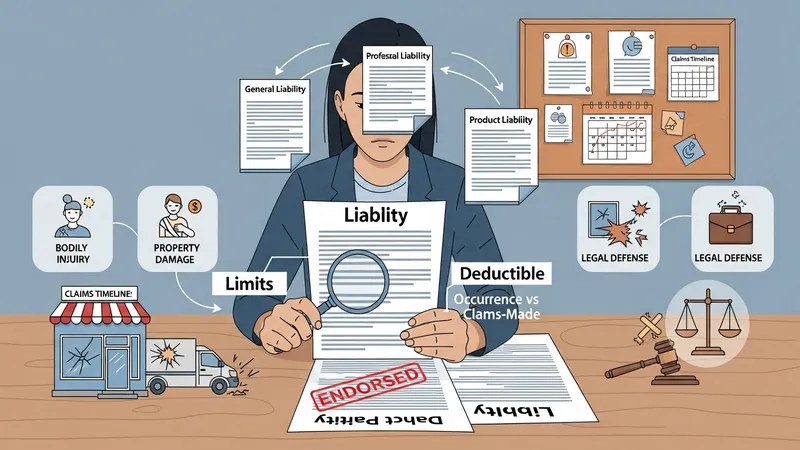
Policy limits and the way defence costs are handled can materially affect how protections operate in practice. Many U.S. policies specify a per-occurrence limit and an aggregate limit for the policy term; defence costs may be paid inside or outside those limits depending on policy wording. Endorsements can alter coverage scope, for example adding liability for contractors on a project or excluding specific risks. State insurance departments and neutral industry summaries often explain typical policy structures for small businesses in familiar terms.
Exclusions and conditions commonly narrow coverages in predictable ways. Intentional acts, criminal conduct, and certain professional services are often excluded from general liability forms and addressed instead via specialized policies. In the U.S., some sectors—construction, food service, retail—face industry-specific exclusions or endorsements. Understanding the typical exclusions and the way they interact with endorsements may clarify where gaps could exist and whether additional policy types, such as product liability or employment practices liability, may be relevant.
Cost factors for liability protection vary with business characteristics and may influence coverage choices. Underwriting often considers industry classification, annual revenue, payroll, premises exposures, claims history, and the presence of safety or loss-control measures. For small firms, annual premiums for general liability are often reported across a wide range—from several hundred dollars to multiple thousands of dollars—depending on these factors and on coverage limits selected. Estimates should be interpreted cautiously and viewed as illustrative rather than definitive.
When evaluating coverage, the relationship between limits, deductibles, and contractual requirements is important. Some clients or landlords in the U.S. may request certificates of insurance specifying minimum limits or additional insured endorsements, which can affect policy selection. Similarly, umbrella or excess policies can extend aggregate and per-occurrence limits above primary coverage layers. These structural choices can change the amount potentially available for settlements and legal defence when a covered claim arises.
In summary, liability insurance for small firms is organized into defined coverage types with policy language that determines when claims may be addressed and how losses and defence costs are allocated. Coverage choices and endorsements may influence the presence of gaps or overlaps, and underwriting factors typically drive premium variation. The next sections examine practical components and considerations in more detail.
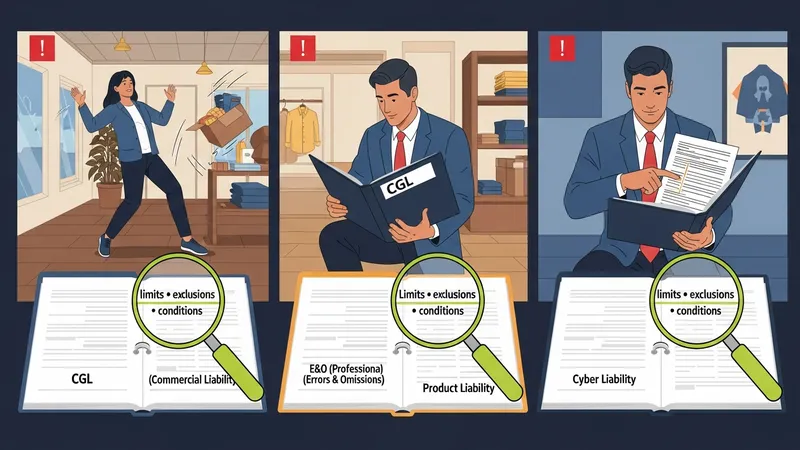
Commercial General Liability (CGL) is commonly the foundational policy for small business third-party exposures in the United States. It may respond to claims alleging bodily injury occurring on business premises or caused by operations, and to some forms of property damage. Advertising injury provisions in many CGL forms may address certain media-related claims. For professional mistakes or advisory services, firms often seek a separate professional liability or errors & omissions (E&O) policy, because general liability forms can exclude negligent professional acts. These distinctions often determine which policy responds to a specific allegation.
Product liability coverage is relevant when a business manufactures, distributes, or sells goods that could cause injury or property damage. In the U.S., claims arising from products may trigger product-completed operations cover within a CGL policy or require specialized product liability wording for manufacturers. Cyber liability policies are increasingly used by small firms that process personal data; these typically address breach response, notification costs, and third-party liability for privacy harms. Each coverage type typically contains its own limits, exclusions, and conditions, which influence how a loss may be handled.
Employment-related liability exposures commonly arise in U.S. workplaces and are often addressed through distinct policies. Employment Practices Liability Insurance (EPLI) may respond to claims of wrongful termination, harassment, or discrimination; such claims are often excluded from a standard CGL form. Workers’ compensation remains a separate statutory program addressing employee injuries on the job, and may interact with liability policies in certain situations. Contractual risk transfer—through indemnity clauses—can also shift potential liability and may affect insurance needs.
Insider considerations for U.S. small businesses include understanding which incidents typically fall within primary policies versus those requiring supplemental coverage. For example, a retail shop facing a slip-and-fall claim may rely on CGL, but a consultant facing an allegation of negligent advice may look to E&O coverage. Businesses often examine common client or landlord insurance requirements and adjust endorsements accordingly. These practical alignments between exposures and policy types help clarify where particular incidents may be directed for coverage evaluation.

Insurance contracts for liability exposures usually specify per-occurrence limits and aggregate limits for the policy term; these terms determine the maximum insurer obligation for a single event and for all events combined. Many U.S. small businesses commonly see illustrative limit structures such as $1,000,000 per occurrence with a $2,000,000 aggregate, though actual choices vary by industry, contract needs, and insurer underwriting. Deductibles or retentions can lower premium costs but increase out-of-pocket expenditure when a claim arises. It is common practice to balance limit selection against the financial capacity to absorb retained amounts.
The distinction between occurrence-form and claims-made policies is significant, especially for professional and cyber liability lines. An occurrence policy may respond to an event that occurs during the policy period even if the claim is made later, whereas a claims-made form typically requires the claim to be reported during the policy period (or an extended reporting period) for coverage to apply. Small firms in the U.S. that change insurers or purchase retroactive coverage often review these differences carefully because they affect long-term exposure handling and continuity of protection.
Umbrella and excess liability policies add broader or higher limits above underlying primary policies. An excess policy typically provides additional limits once the underlying policy limits are exhausted, while an umbrella policy may also contain coverage language that fills certain gaps. In the U.S., contractual requirements—such as lease agreements or client contracts—may stipulate minimum underlying limits before an umbrella can attach. Businesses should recognize that umbrella layers depend on the presence and scope of primary policies to function as intended.
Endorsements and policy form variations can materially change the effective coverage scope. Common endorsements in U.S. liability policies include additional insured status for contractual partners, waiver of subrogation, and specialized exclusions or extensions for specific operations. These modifications may be included to satisfy contract conditions or to tailor protection to particular exposures. When available, insurers or neutral industry resources can explain how typical endorsements alter policy behavior over time.

Underwriting for liability insurance in the United States typically assesses industry classification, revenue or payroll, physical premises hazards, claims history, and management practices. Certain industries—construction, food service, healthcare, and manufacturing—are commonly associated with higher frequency or severity of liability claims and may face higher premium density. Geographic factors such as state tort climates, local court environments, and regulatory patterns can also influence pricing. Insurers often use classification systems tied to NAICS codes or similar frameworks to standardize risk evaluations.
Claims history and loss-control measures are frequently influential underwriting considerations. Businesses that can document safety programs, training, or formal risk management procedures often present a clearer risk profile to underwriters. Conversely, a recent history of claims or unresolved litigation may increase underwriting scrutiny and premium cost. In U.S. markets, underwriting also often considers contractual exposures—such as whether a business regularly signs contracts that shift liability—which can affect required endorsements and limits.
Revenue and payroll levels are commonly used as premium bases because they correlate with exposure scale in many small firms. For service businesses, payroll or gross receipts may drive premium calculation; for product-based companies, units sold or production metrics may be relevant. Small firms frequently find that incremental increases in revenue or staff can change classification or premium bands, so periodic review of exposures is typical. Premium estimates often span wide ranges: for general liability, annual premiums for small, low-hazard firms may be several hundred dollars, while higher-exposure firms may see premiums increase into the thousands.
Market conditions and insurer capacity can shift pricing patterns in the U.S. liability market. Periods of higher loss activity, litigation trends, or economic cycles can lead to underwriting tightening and price adjustments. Small businesses may notice changes in available terms or the introduction of new exclusions in certain cycles. Industry trade groups, state insurance departments, and neutral market summaries often provide contextual updates on how broader market changes may affect small business liability premiums.
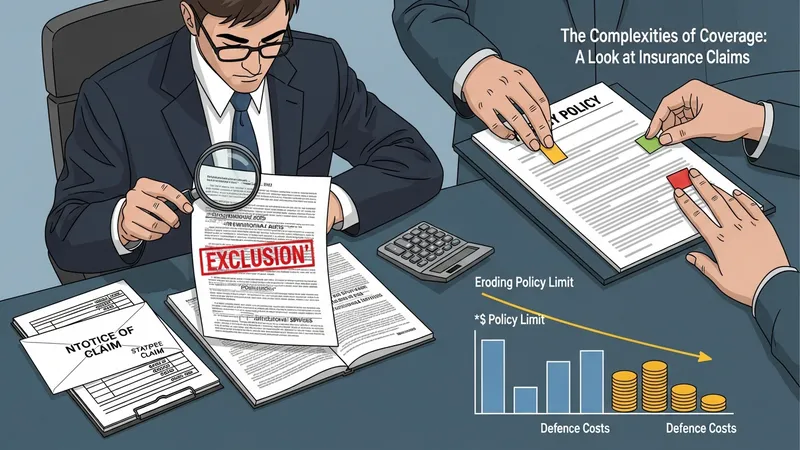
The claims handling process for liability incidents in the United States typically begins with prompt notice to the insurer, who may then investigate, determine coverage implications, and manage defence or settlement activities according to policy terms. Policy language often describes insured duties, such as cooperation and timeliness of notice. Defence costs may be covered within policy limits or as a separate allocation; the contract wording determines whether defence expenditures erode available limits. Understanding these mechanics helps businesses anticipate how a claim could affect policy limits and potential out-of-pocket exposure.
Exclusions commonly limit coverage for certain scenarios and are a frequent source of disputes when claims arise. Typical exclusions in many U.S. liability policies include intentional acts, contractual liability beyond specified thresholds, pollution unless specifically included, and some professional services under a general liability form. Mitigation strategies include purchasing specific lines (e.g., professional liability, pollution liability) or adding endorsements that expand protection. Recognizing common exclusions may clarify where additional policy types could be appropriate to address uncovered exposures.
Contractual requirements often prompt businesses to modify or expand coverage through endorsements. For example, landlords or clients in the U.S. may request additional insured status or specific liability limits to satisfy contractual obligations. Such endorsements can change the way claims involving third parties are managed, including defence obligations and indemnity relationships. Maintaining documentation—such as certificates of insurance that reflect current endorsements—can be an operational necessity when contracts specify insurance terms.
Periodic review and adjustment of liability programs is a practical consideration as a business evolves. Changes in product lines, services offered, staff size, revenue, or contractual arrangements can shift exposure profiles; accordingly, coverage limits, policy types, and endorsements may need to be revisited. While the insurer or licensed insurance professionals can provide policy details, the decision to alter coverage is an organizational choice based on the firm’s risk tolerance and contractual needs. Regular review often helps align coverage with present exposures and industry practice.