
Attorneys who represent people harmed by accidents or injuries provide legal advocacy focused on establishing liability, documenting losses, and pursuing compensation. Their work typically includes reviewing events that led to injury, identifying responsible parties, advising clients on legal options, and managing procedural requirements such as filing deadlines. This representation often interfaces with medical providers, insurers, and technical experts to develop a coherent claim that aligns with applicable state law in the United States.
These practitioners commonly handle a range of civil matters arising from automobile collisions, workplace incidents, slip-and-fall events, and other torts. Tasks may include assembling medical records, preserving physical and electronic evidence, drafting pleadings, negotiating with insurance adjusters, and preparing for trial if a negotiated resolution is not reached. Time limits known as statutes of limitations vary by state and can affect case strategy and timing.

Contingency arrangements may influence how a case proceeds: attorneys often evaluate the likelihood of recovery, the size of potential damages, and the cost of pursuing expert opinions before committing resources. In the United States, an attorney-client agreement typically specifies who advances out-of-pocket costs for medical records, expert fees, and court filings, and how those expenses will be repaid from any recovery. Clients can expect that fee agreements are documented in writing and governed by state bar rules that may require itemized accounting upon conclusion.
Evidence collection is frequently time-sensitive. Physical evidence can deteriorate, electronic event data may be overwritten, and witnesses’ recollections can fade, so practitioners often act quickly to preserve materials and issue subpoenas or preservation letters. Retained experts may conduct independent reviews of medical findings or reconstruct incidents using official data sources. These processes commonly affect timing and cost estimates and are balanced against expected case value when planning next steps.
Negotiation with insurers typically begins with a demand package that summarizes liability, medical treatment, and economic losses. Adjusters assess claims against policy limits, exclusions, and the insurer’s evaluation of comparative fault. Mediation or alternative dispute resolution may be used to narrow issues without a trial, and structured settlements or lump-sum payments can be components of negotiated outcomes. Attorneys often advise clients on release terms and potential liens from health insurers or government programs.
When a claim proceeds to litigation, the attorney manages formal pleadings, discovery, depositions, and pretrial motions in accordance with court rules. Trials are comparatively infrequent in the United States; many matters resolve through settlement beforehand. If a judgment is obtained, additional steps such as enforcement, collection, or handling of appeals may follow. Throughout, ethical and procedural rules applicable in each state and federal jurisdiction shape what actions may be appropriate.
In summary, representation for injury-related civil claims in the United States encompasses intake and case evaluation, evidence development, negotiations with insurers, and potential litigation, with each stage influenced by state law and case-specific factors. The next sections examine practical components and considerations in more detail.
Initial intake typically involves documenting the incident, obtaining preliminary medical records, and assessing potential defendants and insurance coverage. In the United States, counsel often screens cases for legal merit and feasibility, considering statutes of limitations that vary by state—commonly from one to six years depending on the claim type. Fee arrangements are discussed early: contingency agreements may cover attorney fees as a percentage of recovery and often spell out how out-of-pocket costs will be advanced and repaid. Fee agreements must comply with state bar regulations and usually require client signatures and clear explanation of financial terms.

Case assessment commonly includes estimating economic losses such as medical expenses and lost earnings, and non-economic losses like pain and suffering. Attorneys may use medical records, wage statements, and billing summaries to quantify damages. For economic calculations, practitioners may consult vocational specialists or use standard multiplier approaches as a preliminary gauge; these methods vary and are not definitive. Clients should be informed that projections often change as evidence develops, and fee agreements may address when fee percentages change if a case proceeds to litigation versus settling early.
Contingency arrangements can vary by firm size, geographic location, and complexity. Some agreements provide tiered percentages that increase if a case requires filing suit or trial; others maintain a single percentage with separate provisions for expenses. Additionally, retention agreements commonly include a provision for client decision-making on settlement offers and may outline what happens if the client terminates the relationship. Ethical rules in most U.S. jurisdictions require that fee arrangements be reasonable and disclosed in writing.
Practical considerations during intake include conflict checks, verifying insurance coverage, and advising clients to preserve evidence and records. Attorneys often recommend obtaining continuous medical care documentation and authorizations for record retrieval to prevent gaps. While intake does not guarantee case outcome, a structured assessment helps define likely timelines and resources needed. Readers may expect that early transparency about fees, potential costs, and likely procedural steps can inform choices about proceeding.
Thorough fact investigation underpins many injury claims. In the United States, practitioners may obtain police reports, traffic-camera footage, and maintenance records for premises-liability cases. Preservation letters to opposing parties and custodians can help secure evidence before it is altered or discarded. Electronic discovery (emails, telematics, or event data recorders in vehicles) is increasingly relevant; practitioners may use subpoenas or formal discovery requests once litigation is filed. Timely preservation is often emphasized because delay can impair admissibility or force additional proof to establish original conditions.

Medical documentation is typically central to proving damages and causation. Attorneys often work with medical providers to obtain complete treatment histories, diagnostic imaging, and billing statements. Independent medical examinations or peer reviews may be arranged when cause or extent of injury is contested. Expert witnesses—such as physicians, engineers, or vocational experts—may prepare reports and provide testimony. Expert fees vary widely depending on specialization and case complexity, and counsel commonly weigh these costs against expected case value when deciding whom to retain.
Accident reconstruction and technical analyses are used when liability or mechanism of injury is disputed. In vehicle collisions, specialists may use scene measurements, vehicle damage reports, and crash data to estimate speeds and impact forces. For workplace incidents, industrial safety experts may review compliance with OSHA standards or equipment maintenance records. Accessing public databases and regulatory reports can supplement private analyses; linking technical findings to legal theories requires coordination between counsel and retained experts to ensure admissibility under applicable evidence rules.
Chain-of-custody, authentication, and expert qualification are procedural matters that often affect strategy. Attorneys commonly document how evidence was obtained and maintained to reduce challenges at trial. Depositions and written discovery can test opposing witnesses and develop admissions that support expert analysis. These investigative steps may lengthen timelines and increase costs, yet they often clarify settlement potential and the strengths or weaknesses of a party’s position before formal filings or trial.
Communication with insurance companies is a central element of many injury matters. Insurer responses typically involve claim investigation, liability assessment, and evaluation of damages based on submitted medical records and repair estimates. Demand letters commonly aggregate evidence and quantify losses; adjusters may counter with lower offers based on policy limits, comparative fault, or gaps in documentation. Mediation, neutral evaluation, or structured negotiation sessions are methods used to narrow disputes without court adjudication.

Settlement mechanisms vary and can include lump-sum payments, periodic payments (structured settlements), or partial releases addressing specific claims. Structured settlements may be used in cases involving long-term care needs; they can involve annuities and coordinated payments over time. Tax implications and the effect on government benefits such as Medicare or Medicaid may be relevant. Attorneys often consider potential liens and subrogation claims by insurers or health programs and may negotiate reductions or plan to allocate settlement proceeds to address those obligations.
Release agreements commonly contain language detailing the scope of claims released, confidentiality provisions, and indemnities. Careful review of release terms is important because broad releases can bar future claims arising from the same incident. Clients are typically advised to understand whether a release includes known and unknown claims, whether it exempts certain claims (for example, future medical monitoring), and how structured payments are administered. Counsel often coordinate with medical and financial advisors to clarify the implications of proposed settlement terms.
Settlement timing and value are influenced by evidentiary strength, potential exposure to a defendant, and litigation costs. Many cases resolve through negotiation before trial; the choice to settle may reflect risk tolerance, case duration, or resource constraints rather than a simple measure of merit. As a practical consideration, negotiating parties may use staged disclosures or mediation briefs to present valuations and narrow issues, enabling more informed bargaining while preserving options for litigation if needed.
If settlement is not reached, litigation begins with pleadings that set forth allegations and legal theories. In the United States, complaints must comply with federal or state procedural rules depending on the chosen forum; cases invoking diversity jurisdiction or federal questions may proceed in federal court. Early motions can shape the scope of discovery or seek dismissal of claims. Discovery typically involves interrogatories, document requests, and depositions, which are tools used to develop testimonial and documentary evidence ahead of trial.
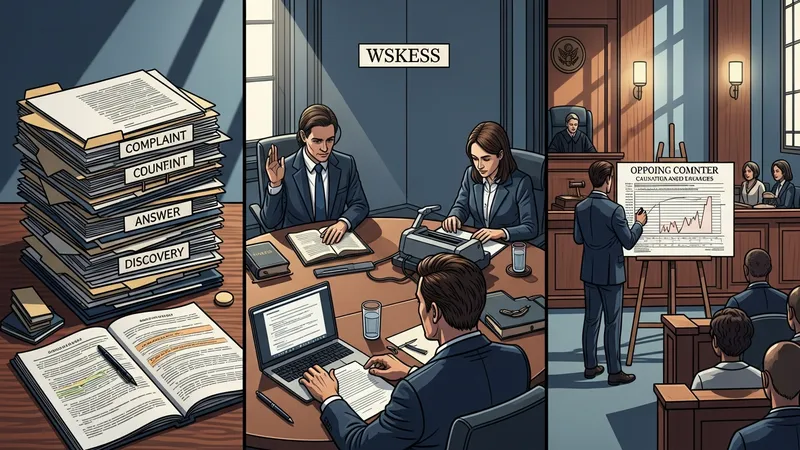
Pretrial practice may include motion practice on evidentiary issues, expert witness admissibility challenges, and settlement conferences ordered by the court. Trial preparation often focuses on witness preparation, exhibit organization, and jury instructions. Trials in personal injury matters commonly present evidence on liability, causation, and damages. Jury trials occur in many jurisdictions, but widely reported patterns indicate that a majority of civil disputes in the United States are resolved before reaching a jury verdict.
If a judgment is entered, post-judgment steps can involve enforcement actions, collections, or appeals. Judgment creditors may use tools such as wage garnishment or liens where permitted by law. Additionally, settlements and judgments may trigger obligations to satisfy health care payors’ subrogation interests or government program liens; practitioners often coordinate with Medicare set-aside procedures when future medical expenses are implicated. These post-resolution matters can affect net recovery and require attention to statutory reporting and negotiation with lien holders.
Appeals may follow adverse rulings and focus on legal or procedural errors rather than re-evaluating factual findings unless clear standards permit. Timeframes for appeal and standards of review differ across jurisdictions. Recognizing these procedural contours during initial case planning may influence tactical choices, including whether to invest in extensive expert work or pursue alternative dispute resolution. Understanding the sequence from pleadings through potential post-judgment enforcement helps clarify likely timelines and procedural obligations for parties involved.