
Manufacturing ERP software integrates data and workflows across production planning, inventory control, procurement, quality, and finance to provide a unified view of manufacturing operations. In practice, these systems collect inputs from bills of materials, production orders, machine records, and supplier documents, then translate those inputs into coordinated schedules, material requirements, and accounting records. For manufacturers in Italy, such systems often include modules for shop-floor control, traceability, and production costing so that operational decisions align with administrative reporting and statutory requirements.
Technical capabilities commonly associated with manufacturing ERP include materials planning (MRP), capacity planning, inventory valuation, and supplier management. These capabilities may be delivered as integrated modules or as configurable workflows that connect to barcode readers, PLCs, and accounting ledgers. In the Italian context, integration with local tax and reporting formats and support for Italian-language documentation are frequently part of vendor offerings, and system selection typically considers both operational fit and compliance with national reporting practices.
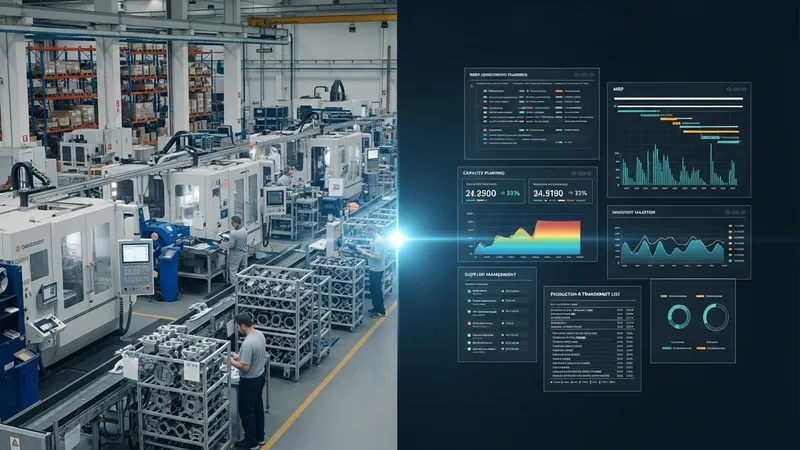
Manufacturing ERP systems differ in how they handle production routing, lot and serial traceability, and batch tracking. Some vendors provide specialized shop-floor execution features that record cycle times and machine states, while others emphasise planning and procurement. Italian manufacturers often assess how an ERP supports traceability required in sectors such as food, pharmaceuticals, or automotive supplier chains where provenance records and batch-level documentation may be routinely requested by customers or regulators.
Inventory and procurement capabilities in manufacturing ERP may include multi-warehouse management, automated replenishment triggers, and supplier performance metrics. These functions can reduce stockouts and excess inventory when properly tuned; however, expected outcomes depend on configuration, data quality, and organisational processes. In Italy, where many manufacturers work with regional suppliers and lean production models, ERP-driven procurement workflows can typically be aligned with local supply lead times and transport arrangements.
Production planning modules in these systems often implement material requirements planning (MRP) and finite capacity planning to align demand with available resources. Such modules can handle discrete, process, or mixed-mode manufacturing. In Italian industrial districts—where small-to-medium enterprises form clusters—planning features may often be used to synchronise production with subcontractors and to manage small batch runs that are common in artisanal or specialised manufacturing segments.
Financial and costing integrations are a core capability for manufacturing ERP, linking production activity to inventory valuation, cost-of-goods-sold, and margin reporting. ERP may support multiple costing methods (standard, FIFO, weighted average) and can typically generate statutory accounting outputs compatible with Italian accounting practices. Accurate cost reporting usually requires consistent item-level data and timely posting of production transactions into the financial ledgers.
In summary, manufacturing ERP software for Italian manufacturers covers modules for production planning, inventory, procurement, quality, and finance, with varying emphases on shop-floor execution and regulatory alignment. Selection and implementation may typically involve evaluating modular fit, integration with Italian tax and reporting formats, and realistic estimates for cloud versus on-premise cost structures. The next sections examine practical components and considerations in more detail.
Feature coverage typically addresses distinct operational domains: production planning, inventory management, procurement, quality assurance, and financial accounting. Production planning features may include MRP, order scheduling, and capacity checks. Inventory modules often provide lot and serial tracking, multiple location control, and valuation methods that align with accounting. Procurement components usually handle purchase orders, supplier evaluation, and lead-time management. Quality assurance modules can record inspections, nonconformance handling, and corrective actions. Financial integration ties these operational events back into cost accounting and statutory ledgers commonly used in Italy.
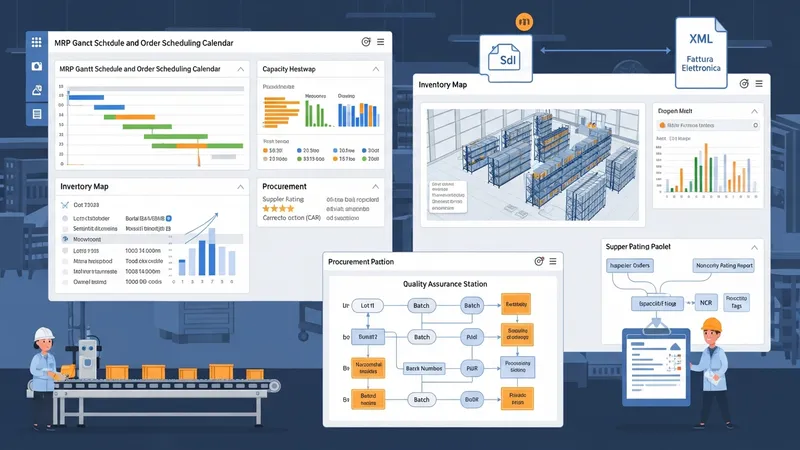
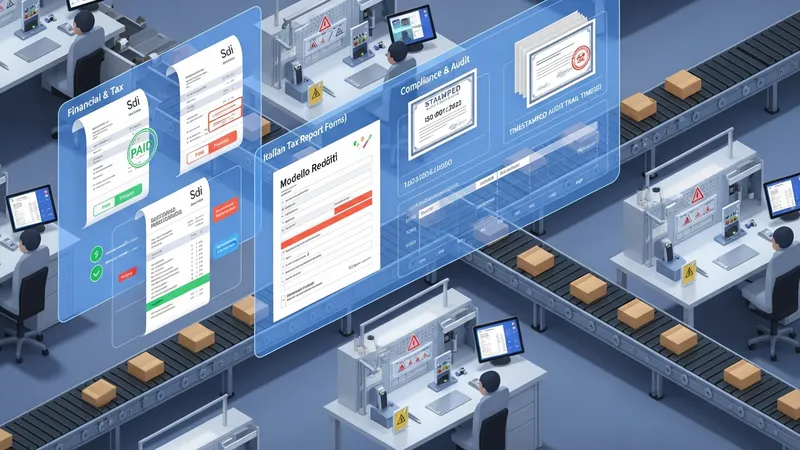
When comparing feature sets, Italian manufacturers may consider traceability and electronic invoicing compatibility as part of core coverage. Traceability features that log batch numbers and process steps may support compliance in food or medical supply chains. Electronic invoicing (fatturazione elettronica) is widely adopted in Italy, and ERP systems often provide modules or connectors to format and transmit XML invoices via the Sistema di Interscambio (SdI). Vendors may supply prebuilt adapters or APIs to streamline this interaction.
Another aspect of feature coverage is support for shop-floor data collection and production execution. Typical approaches include barcode scanning, RFID, or direct machine integrations using OPC-UA or PLC interfaces; these can feed real-time status and yield information into the ERP. For manufacturers in Italy’s industrial districts, lightweight data collection aimed at small batch and artisanal processes can be as important as high-volume automation integrations, and modular systems may accommodate both patterns.
Customisation and configurability often determine how well an ERP fits specific manufacturing processes. Some systems provide low-code configuration tools to adjust workflows, forms, and rules without deep custom development. In Italy, where some plants balance legacy processes with modernisation goals, the ability to configure approval flows, localisation of language, and compliance reporting can be a practical consideration when assessing feature coverage.
Integration capabilities determine how manufacturing ERP exchanges data with other systems such as CAD/CAM, PLM, MES, warehouse management, and e-invoicing services. Common integration patterns use REST APIs, file-based exchanges, or middleware platforms to synchronise bills of materials, routing changes, and inventory movements. In Italy, vendors frequently highlight connectors to local logistics partners and public services; practical integration work may focus on ensuring consistent part numbering, unit-of-measure conversions, and reliable supplier master data.
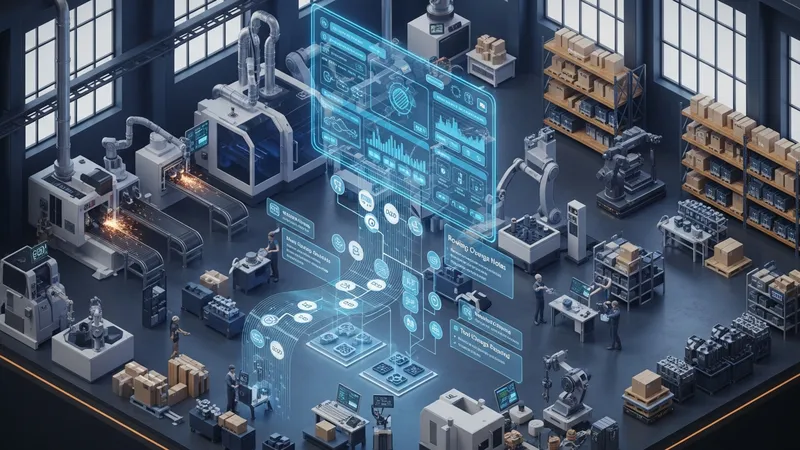
Data flow design should consider master data governance: consistent material masters, supplier records, and routing templates reduce errors across modules. ERP implementations in Italy often establish a single source of truth for item definitions and revision control to support traceability and customs documentation when exporting. Periodic reconciliation processes between production reporting and financial ledgers may be instituted to maintain accurate cost allocations and inventory valuation.
Real-time or near-real-time data capture from the shop floor can inform scheduling and exception handling. Common techniques include direct machine telemetry, operator input terminals, and mobile scanning workflows. Italian SMEs may implement phased integrations—starting with core MRP and inventory synchronisation and later expanding to machine-level telemetry—so the initial data flow architecture typically balances immediate needs with longer-term digitalisation plans.
Security and data protection are integral to integration planning, especially when connecting cloud-hosted ERP instances with local on-premise systems. In Italy, organisations may consider data residency preferences, role-based access controls, and encrypted transport channels for supplier and customer exchanges. Clear logging and audit trails are also practical for regulatory reviews and internal controls related to manufacturing transactions.
Deployment options commonly include cloud-hosted SaaS, on-premise installations, or hybrid models. Cloud deployments may reduce initial capital expenditure and can scale subscription costs by user or module; typical cloud pricing in the Italian market may range approximately from €30–€200 per user per month depending on functionality and support levels. On-premise deployments typically involve one-time licence fees and implementation costs that can range from several thousand to tens of thousands of euros, influenced by customisation and integration complexity.
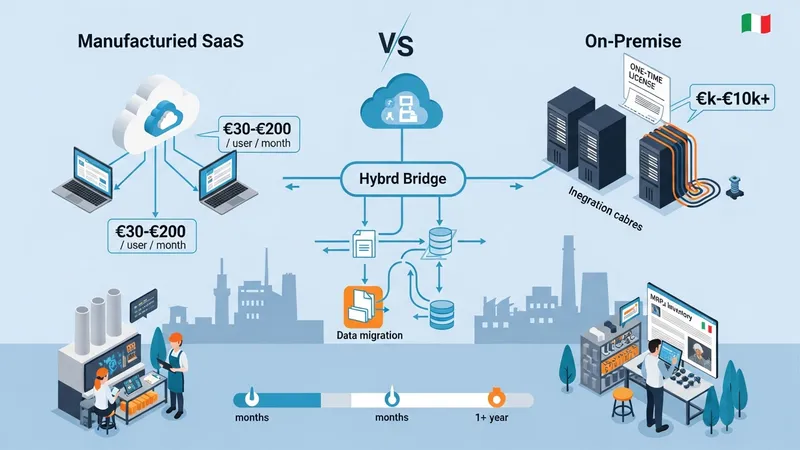
Implementation timelines and resource needs often vary with company size and production complexity. Small to medium-sized Italian manufacturers may achieve core MRP and inventory functionality in a few months, while larger, multi-site or highly customised projects can take a year or more. Internal resources for project governance, data migration, and change management commonly affect timelines and should be planned as part of total cost of ownership.
Licensing models and ongoing support terms influence long-term cost structures. Vendors may offer tiered modules, per-user subscriptions, or enterprise licences; maintenance and support agreements often represent annual costs that should be budgeted. For manufacturers in Italy, additional considerations may include localised training in Italian, vendor support availability in local time zones, and potential costs for integrations with national services such as the Sistema di Interscambio for electronic invoicing.
Cost-control strategies frequently involve phased rollouts, prioritising high-impact modules first and deferring specialised features. Typical insider considerations include reducing custom code to limit maintenance, reusing industry-standard templates for bills of materials and routings, and planning data-cleaning efforts in advance to minimise migration delays. These approaches can often lead to more predictable schedules and clearer budget outcomes.
Regulatory compliance in Italy often influences ERP requirements. For example, electronic invoicing via the Sistema di Interscambio (SdI) and specific tax reporting formats are common considerations. In regulated sectors—food, medical devices, chemicals—ERPs may be expected to handle lot traceability, certificate management, and audit trails. Organisations may typically assess whether a vendor provides out-of-the-box templates for compliance reporting or whether custom development will be required to meet sector-specific rules.
Quality management modules in ERP often encompass inspection plans, nonconformity tracking, corrective actions, and supplier quality metrics. In Italian manufacturing environments, where supplier networks and subcontracting are common, quality functions that trace components through receiving, processing, and final shipment may be critical. Systems can typically record inspection results and link them to production lots to support recalls or customer inquiries if they arise.
Operational considerations include scalability, performance under peak production loads, and the ability to support multiple production sites or languages. Italian firms with export activities may require multi-company or multi-currency support; while domestic-focused manufacturers may prioritise Italian-language interfaces and local reporting formats. Capacity planning and resource levelling features can often be used to simulate production scenarios and evaluate operational trade-offs.
Data retention, auditability, and reporting capabilities are practical elements for maintaining compliance and operational transparency. ERPs that provide configurable reports and dashboards can help operations and finance teams monitor yield, scrap, supplier lead times, and order fulfilment. When choosing or configuring features, organisations in Italy may consider retention policies aligned with statutory requirements and internal audit practices to ensure records are available for the necessary periods.