
A master’s degree in the United States is an advanced academic credential that deepens subject knowledge and develops specialized skills beyond a bachelor’s level. Programs usually focus on a defined discipline or interdisciplinary area and combine structured coursework with modes of independent inquiry. Students commonly engage with domain literature, methodological training, and supervised projects that aim to extend understanding in a focused area. The structure and expectations of master’s programs may vary by field and institution, but the central intent is to provide deeper conceptual grounding and applied competence relevant to academic, research, or professional settings.
In U.S. master’s programs, study formats often include classroom instruction, laboratory or studio practice, seminars, and directed research. Assessment can involve exams, research papers, capstone projects, portfolios, or thesis work supervised by faculty. Many programs emphasize critical analysis, research methods, and subject-specific technical skills while also offering opportunities to develop communication and professional skills. Program length and curricular emphasis may differ by discipline; for example, some fields prioritize original research while others emphasize practice-oriented training and applied project work.

Thesis-based and coursework-based models typically produce different skill emphases. Thesis programs may place greater weight on research design, data analysis, and scholarly writing; they may also prepare students who plan further graduate study. Coursework-oriented programs often emphasize practical application, project management, and domain-specific techniques applicable in professional contexts. Hybrid and online formats may extend access for employed learners and often incorporate applied capstones or practicum placements that allow demonstration of skills in workplace-like settings. These variations reflect how advanced study can be tailored to distinct educational aims.
Credit and time structures in the United States commonly shape how programs deepen knowledge. Many U.S. master’s degrees require roughly 30–36 semester credit hours, which may translate to one to two full academic years of full-time study, although part-time and extended formats are frequent. Program requirements often include core courses, electives for specialization, and a culminating experience such as a thesis, project, or comprehensive exam. These curricular components are organized to permit focused study while ensuring exposure to foundational concepts and methods in the discipline.
Faculty mentorship and departmental resources are central components that influence depth of learning. In the U.S. context, faculty advisors may guide research design, recommend literature, and facilitate professional connections; research centers, labs, and libraries provide infrastructure for sustained inquiry. Graduate assistantships and research collaborations can further embed students in ongoing scholarly work, offering practical experience in methods and governance of research. Institutional resources and faculty expertise thus often shape the degree to which a program deepens technical and analytic skills.
Assessment approaches used in master’s programs can shape skill development and evidence of learning. Common assessments include graded coursework, research reports, oral defenses, professional portfolios, and performance assessments in practicum settings. These methods typically aim to measure both conceptual understanding and applied competence; for example, capstone projects often require integration of theory with practice and may involve external stakeholders or community partners. Assessment design can therefore influence whether programs prioritize research depth, applied proficiency, or a mixture of both.
In summary, master’s degrees in the United States present multiple program models that deepen knowledge and skills through focused coursework, supervised research, and applied experiences. Variations across thesis-based, professional, and hybrid formats mean that learning outcomes may emphasize research, practice, or integrated competencies depending on program design. The next sections examine practical components and considerations in more detail.
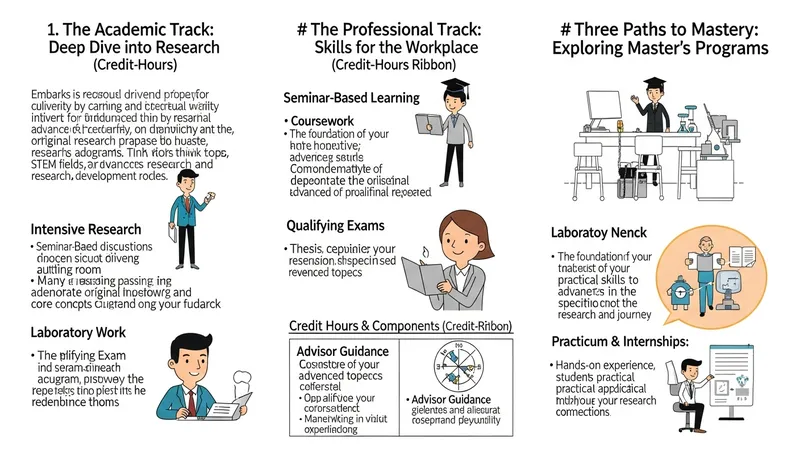
Master’s program types in the United States commonly include academically oriented degrees (e.g., M.S., M.A.), professionally oriented degrees (e.g., MBA, M.Ed., MSW, MPH), and specialized terminal degrees for practice. Academic degrees often emphasize methodological rigor and may require a thesis; professional degrees typically prioritize applied coursework, internships, or practica. Joint and interdisciplinary programs combine frameworks from multiple fields to address complex problems. These program forms may shape curricula, advising patterns, and assessment practices, influencing the balance between theoretical depth and applied skill development for U.S. students.
Credit requirements and curricular sequencing are typical differentiators across program types. Many U.S. master’s programs commonly require around 30–36 semester credit hours, but professional degrees can have variable credit structures tied to practicum or residency components. Some academic programs include qualifying exams or comprehensive assessments to ensure mastery of core concepts, while professional programs may use employer-supervised internships or capstones as evidence of applied competence. These structural choices affect how students allocate time to coursework, independent study, and experiential learning.
Field-specific expectations also influence how programs deepen skills. For example, engineering or computer science master’s study often includes laboratory work, coding projects, or systems design, whereas social science master’s programs may emphasize advanced statistical methods, qualitative research, and theory-driven analysis. In education and health-related professional degrees in the United States, supervised practicum hours and licensure-aligned components can contribute to practice readiness. Program curricula reflect the methods and competencies considered central to each discipline.
Considerations for prospective students and academic planners in the U.S. context often include alignment between program type and intended outcomes. Choosing between a thesis track and a professional track may hinge on whether the objective is preparation for doctoral study, research roles, or sector-oriented professional practice. Institutional offerings vary across public and private U.S. universities, and program design typically reflects disciplinary norms, accreditation standards, and employer expectations in the relevant field. These factors may shape curricular emphasis and the kinds of skills students develop.

Research components and capstone experiences are common ways that U.S. master’s programs deepen analytical and technical skills. Thesis-based tracks usually require original research under faculty supervision, including a literature review, methodological design, data collection or theoretical work, and a written thesis. Capstone projects in professional programs often involve applied problem solving for external partners, program evaluations, or design projects that synthesize coursework into a concrete deliverable. Both approaches can provide demonstrable evidence of advanced competence in a discipline.
Supervised practicum and internship placements are typical in several U.S. professional degrees, especially in social work, education, public health, and clinical fields. These placements often require coordination with external agencies and are supervised by both faculty and site professionals, with structured objectives and assessment rubrics. Research assistantships and departmental project roles may also provide hands-on methodological training in labs or field settings. These supervised experiences can help students translate academic learning into applied practice while receiving formative feedback.
Publication and dissemination pathways may be available within research-oriented master’s programs in the United States. Students who complete thesis research may present findings at academic conferences or contribute to peer-reviewed publications with faculty collaboration. While not universal, these dissemination activities can extend learning by engaging students with scholarly communities and peer critique. For professional track students, capstone presentations or project reports may serve as portfolio elements demonstrating applied skills to potential employers or collaborators.
Program planning considerations include the time required to complete research or capstone work and the supervisory resources needed. Research projects often require institutional review board (IRB) approval for human-subjects work and adherence to ethical protocols used by U.S. universities. Capstones may involve external partners and necessitate coordination across university offices. These logistical elements can influence timetable expectations and the depth of engagement students can undertake during their master’s study.

Master’s degree timeframes in the United States commonly range from one to three years of full-time study, depending on program intensity, credit requirements, and field. Many professional master’s programs aim for one to two years of full-time enrollment, while research-oriented degrees may take longer when substantial thesis work is involved. Part-time enrollment and extended formats are common for working professionals, which can lengthen completion time but allow integration of study with employment responsibilities.
Tuition and total costs vary across public and private institutions and by program type. In the U.S., tuition for master’s programs may typically range from several thousand dollars per year at some public in-state programs to tens of thousands of dollars per year at private institutions. For example, coursework-based professional programs at private universities may often show annual tuition figures that exceed $20,000 to $40,000, while public in-state tuition for some programs may be substantially lower; these ranges are approximate and vary widely by institution and discipline.
Funding sources in the United States commonly include graduate assistantships, institutional fellowships, employer support, and federal student aid. Graduate teaching or research assistantships can provide stipends and tuition remission in many research-focused programs; professional programs may offer fewer assistantship slots but sometimes provide targeted scholarships or employer-partnership funding. Prospective students often review program pages and federal resources such as the U.S. Office of Federal Student Aid to understand eligibility for loans and aid within the U.S. financial aid framework.
Cost and time considerations also affect program planning and sequencing of coursework and experiential components. Students weighing full-time versus part-time enrollment commonly consider employment responsibilities, availability of assistantships, and scheduling of practicum placements or fieldwork. Institutional policies on residency requirements, transfer credits, and continuous enrollment can further shape expected completion timelines and overall financial commitments in the U.S. educational context.

Master’s study in the United States typically targets a combination of disciplinary knowledge and transferable skills such as research literacy, quantitative or qualitative methods, technical proficiency, critical thinking, and professional communication. Programs may structure learning outcomes to emphasize technical competencies—such as statistical analysis or laboratory techniques—or soft skills like project management and multidisciplinary collaboration. Assessment strategies are chosen to measure the intended blend of knowledge and practical abilities.
Assessment methods commonly used in U.S. master’s programs include graded coursework, comprehensive examinations, thesis defenses, capstone project evaluations, and professional performance assessments in practicum settings. Portfolios and oral presentations may be used to showcase cumulative learning. These forms of assessment aim to provide evidence of mastery in both conceptual understanding and the practical application of methods or tools relevant to a student’s field.
Integration with career pathways in the United States often involves structured career services, alumni networks, industry partnerships, and internship placement support. While programs do not guarantee employment outcomes, many institutions maintain employer engagement through career fairs, networking events, and advisory boards that inform curriculum design and experiential learning opportunities. Students commonly use capstone projects, internships, and research collaborations to build demonstrable expertise for future professional roles.
Considerations for students include aligning program choices and assessment formats with intended professional or academic goals. Selecting a track that emphasizes either research or applied practice can influence the types of skills emphasized and the portfolio of work produced during study. Institutions and departments in the U.S. typically publish curriculum guides and outcome statements that can help clarify how a given master’s program may deepen specific knowledge areas and skill sets for future employment or further study.