
Long-term supportive services are arrangements designed to assist people who need ongoing help with health-related care or daily activities over months or years. Planning for these needs involves understanding patterns of functional decline, types of assistance required (such as mobility support, personal care, or medication management), and how care can be delivered across different living situations. A useful planning process typically considers the individual’s preferences, the role of informal caregivers, and how professional services might be integrated to maintain safety and quality of life over time.
Effective planning often starts with an assessment of current abilities and likely future needs, then maps those needs to available service options and governance structures. Coordination across clinical, social, and personal supports can matter for continuity of care; this may include coordination between primary care, community supports, and paid providers. Planning also usually considers contingency arrangements for periods of increased need or caregiver absence, and it typically recognizes that needs may change and require periodic reassessment.
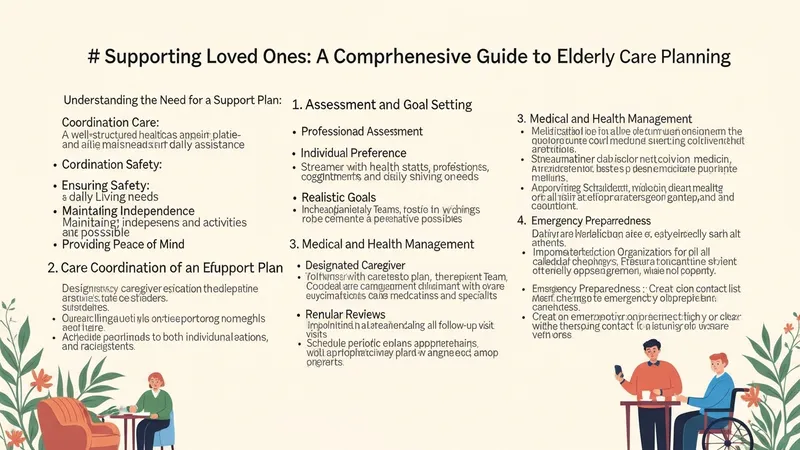
Assessment frameworks commonly used in planning include standardized functional measures and multidisciplinary evaluations; these tools may help characterize mobility, cognition, and ability to perform daily living tasks. Planners often combine clinical input with social and environmental assessments to identify modifiable risks and supports. This integrated view can clarify whether interventions may reduce immediate risks or whether long-term arrangements are more appropriate. Such frameworks are descriptive and intended to inform choices rather than mandate a single approach for all individuals.
Comparing service settings requires attention to levels of assistance, staffing patterns, and the scope of nonclinical supports such as meals and social programming. Home-based support can preserve familiar routines but may require home modifications and reliable caregiver arrangements. Residential options may offer structured supervision and group services, while nursing facilities typically provide clinical oversight for complex needs. Each setting involves trade-offs related to autonomy, social interaction, and the intensity of available professional care, and these trade-offs often influence the planning conversation.
Workforce and coordination issues often shape practical feasibility of different plans. Availability of trained home aides, community rehabilitation services, and licensed clinical staff can vary by location and over time. Effective planning may factor in recruitment, scheduling, and continuity-of-staff considerations, acknowledging that high staff turnover or limited local resources can affect service reliability. Planning that anticipates staffing variability can include backup arrangements and clear communication pathways among informal and formal caregivers.
Costs and financing are commonly central to long-term planning; costs may vary widely based on service intensity, setting, and payers involved. Typical financial considerations include out-of-pocket payments, public program eligibility, insurance coverage parameters, and informal caregiver time. Estimating likely ongoing expenses and potential funding sources may help frame options, though exact costs and coverage vary across jurisdictions and individual circumstances. Financial planning is descriptive and should be integrated with clinical and social planning elements.
In summary, preparing for extended personal and health-related assistance involves assessing likely needs, comparing service settings, and coordinating resources and supports. Planning typically balances personal preferences with practical constraints such as workforce availability and funding mechanisms. Maintaining flexibility and scheduling periodic reassessments may help adapt arrangements as needs change. The next sections examine practical components and considerations in more detail.
Understanding the major care settings is a foundational element of planning. Home-based services may include personal care assistance, skilled visiting professionals, and technology-enabled monitoring; these options typically support individuals who wish to remain at home but require regular help. Residential care communities often provide a mix of social supports and varying assistance levels, which may suit people seeking some communal services without full clinical oversight. Nursing facilities are structured for individuals with ongoing clinical needs. When comparing settings, planners often consider accessibility, service scope, and how each setting aligns with daily routines and safety requirements.
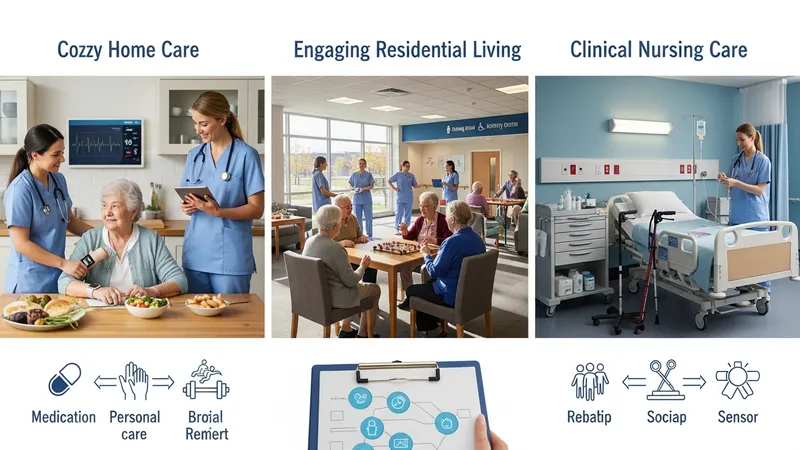
Service types within each setting can vary in intensity and regulation. Personal care aides generally assist with bathing, dressing, and meal preparation, while licensed nurses manage clinical tasks and medications. Rehabilitation therapies focus on restoring function after acute events and may be short- or long-term. Social supports, such as peer programs or adult day services, may provide respite for caregivers and social engagement for recipients. Planning that maps specific tasks to service types may clarify when professional oversight is necessary and when informal supports may be sufficient.
Technology and adaptive equipment are often part of modern service mixes and may influence setting suitability. Mobility aids, telehealth consultations, remote monitoring, and medication management devices can extend the ability to remain at home or reduce the intensity of supervision needed. However, technology works alongside human supports and typically requires training, maintenance, and reliable connectivity. Planners may evaluate technology as a complement to direct services rather than a replacement for essential personal care or clinical oversight.
Transitions between settings are a frequent planning consideration since needs commonly change over time. A plan that anticipates potential transitions—for example, from home supports to residential care or to a higher-acuity facility—often includes trigger points for reassessment, documentation transfers, and family communication strategies. These transitional elements can reduce gaps in care continuity and may help preserve health and daily functioning during periods of change. Considerations should remain practical and tailored to likely future scenarios.
Identifying potential funding sources and coordinating resources is an essential part of creating feasible long-term arrangements. Funding options may include consumer payments, private insurance products designed for extended care, employer-related benefits where available, and public programs that provide means-tested or needs-based support. Each option may have eligibility rules, coverage limits, and application processes, and these factors typically influence what services are practical. Planning often maps expected needs to likely funding pathways to understand trade-offs without assuming uniform availability of any particular source.

Resource coordination refers to organizing care providers, family caregivers, and financial resources into a cohesive plan. This may involve designating a care manager or point of contact for scheduling and communication, documenting preferences and legal authority for decisions, and aligning payment streams to service delivery. Coordination may also include contingency planning for unexpected events such as acute illness or caregiver incapacity. Effective coordination tends to reduce administrative burden and may enhance consistency of care, though it typically requires time and clear documentation.
Financial projections are commonly used to estimate ongoing costs and potential funding gaps. Projections may account for levels of care intensity, anticipated duration, and likely price variation across settings. While specific amounts vary regionally and by individual needs, planners often use conservative ranges to understand sensitivity to changes in condition or market pricing. These projections are informational and meant to support decision-making rather than determine a single prescribed option.
Eligibility and application processes for public programs and benefits can be complex and may influence timing of transitions or services. Many programs require documentation of needs, income, and assets, and some include waiting periods or prioritized access based on clinical assessments. Planning timelines that incorporate these procedural elements can help manage expectations about when support may begin. Such timelines are context-dependent and typically need periodic updates as situations evolve.
Legal and governance arrangements often underpin long-term care plans by clarifying decision-making authority and protecting individual preferences. Instruments such as durable powers of attorney, advance directives, and guardianship documents may specify who can make financial or health-related decisions if the person loses capacity. Organizational frameworks within families or care teams that delineate roles and responsibilities can reduce conflict and ensure consistent application of preferences. These frameworks should be established with attention to applicable laws and respect for the person’s autonomy.
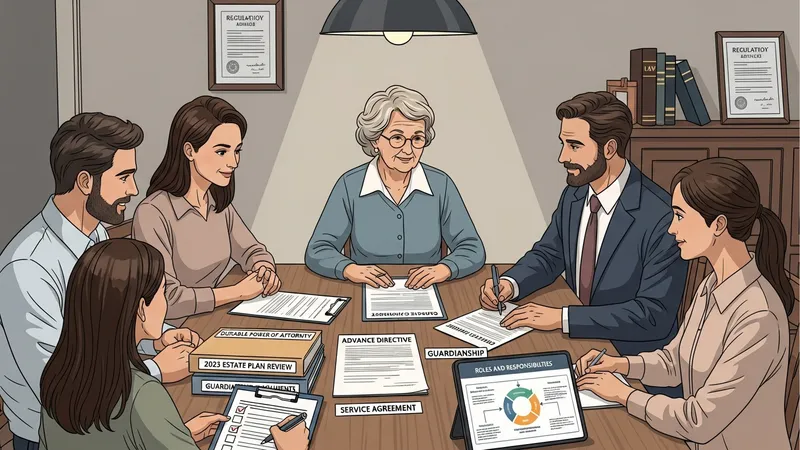
Contractual and regulatory aspects of different service providers may affect choice and oversight. Service agreements often describe the scope of services, fees, and dispute resolution processes, while regulatory oversight varies by setting and jurisdiction. Understanding provider reporting requirements, inspection regimes, and complaint mechanisms can help planners assess accountability structures. Such review is factual and descriptive, and it is generally advisable to document key terms and retain copies of agreements for future reference.
Organizational models for coordinating care range from informal family-led arrangements to formal care management services that consolidate clinical and social supports. Formal care management may offer centralized scheduling, clinical oversight, and integration with community resources, while informal models rely more heavily on family coordination and local supports. Each model has trade-offs in complexity, cost, and administrative burden, and planners may weigh these factors relative to available time, skills, and relationships within the care network.
Risk management is commonly integrated into governance planning and often includes contingency planning for emergencies, clear documentation of medical histories and preferences, and guidelines for provider selection and oversight. Backup caregiver plans, emergency contacts, and accessible records can help stabilize care during unexpected changes. These elements are preventive and organizational; they typically reduce disruption but cannot eliminate all uncertainty, which is why regular review and updates to legal and governance documents are often recommended as a practical consideration.
Long-term arrangements typically require periodic reassessment to remain aligned with changing needs and preferences. Regular review intervals may be scheduled based on clinical milestones or timeframes, and reviews often revisit functional status, caregiver capacity, financial resources, and service quality. This iterative approach helps identify emerging gaps and inform decisions about intensifying supports, initiating transitions between settings, or changing service mixes. Reviews are descriptive exercises intended to inform adjustments rather than impose specific actions.
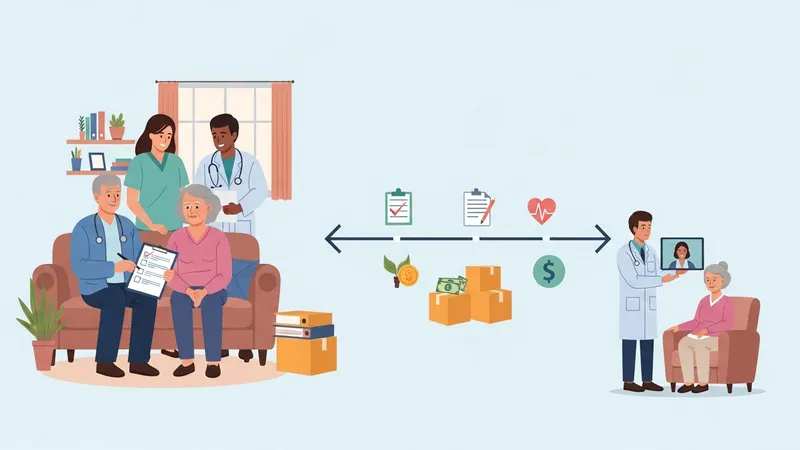
Transitions—such as moving from home-based care to a residential setting—are often smoother when planned in advance with clear documentation and staged steps. Advance planning may include identifying potential receiving providers, ensuring medical record transfer, and arranging orientation to new routines. Emotional and social adjustments are also relevant, and planning may consider continuity of social activities or communication channels to support adaptation. Transition planning focuses on reducing disruption and preserving dignity during change.
Monitoring quality and satisfaction can be part of ongoing adaptation, using measurable indicators where available, such as frequency of unmet needs, hospital readmissions, or satisfaction reports from the person and caregivers. Collecting basic data and reviewing it periodically may help identify areas needing adjustment. Quality monitoring is typically an informational process that informs discussions among care partners and helps target resources where they may be most effective.
Finally, flexibility in a plan is often a practical strength. As conditions evolve, adjustments to service intensity, funding arrangements, or legal authority may be necessary. Building in review triggers, clear communication protocols, and documented preferences can support timely adaptation. These practices are intended to keep arrangements responsive to real-world changes and to support continuity of care over the long term.