
Recurring revenue refers to income that a business receives at regular, predictable intervals in exchange for ongoing access to a product, service, or membership. In subscription-based business models, customers pay recurrently—often monthly or annually—to retain access, and the provider delivers continuing value over the subscription term. This model emphasizes continuity of service, periodic billing, and the administrative systems needed to manage renewals, amendments, and terminations without repeated one-off sales transactions.
Subscription arrangements can vary in structure: some grant access to software or content, others deliver physical goods on a schedule, and some combine services with consumables. Agreements commonly specify billing cadence, renewal mechanics, cancellation rights, and service levels. Operators typically track recurring commitments separately from one-time sales to measure predictable inflows and to manage operational workflows such as onboarding, support, and retention-focused communication.

Measurement and reporting for subscription revenue often center on standard metrics such as monthly recurring revenue (MRR), annual recurring revenue (ARR), churn rates, and average revenue per user (ARPU). MRR and ARR provide a normalized view of predictable inflows by converting varied billing cadences into common intervals. Churn quantifies the rate at which subscribers cease to renew; cohort analysis may be used to isolate patterns by acquisition source, plan type, or tenure. These metrics typically inform planning, forecasting, and resource allocation while acknowledging variability across industries and customer segments.
Pricing and packaging choices shape customer behavior and revenue stability. Common approaches include flat-rate plans, tiered offerings, and usage-based billing; freemium tiers are sometimes used to acquire users before conversion. Each pricing architecture may influence how customers upgrade, downgrade, or churn. Providers often treat pricing as an ongoing hypothesis to be tested analytically rather than a fixed rule; periodic analysis of uptake, feature utilization, and elasticity can guide refinements while avoiding prescriptive claims about outcomes.
Operational frameworks for subscriptions typically include billing automation, payment processing, tax handling, and dunning procedures for failed payments. Automation can reduce manual errors and administrative cost, and integrations with customer relationship tools may support lifecycle management. Payment reliability and retry logic often affect effective revenue capture. Providers commonly consider data security, privacy regulations, and fraud mitigation when selecting processors and designing workflows, accepting that implementation complexity can vary by scale and market.
Customer agreements and service terms underpin legal and financial treatment of recurring revenue. Contracts often define renewal mechanics (automatic renewal or explicit reauthorization), refund and cancellation policies, and service levels. Clear, consistent terms tend to reduce disputes and support predictable accounting treatment for deferred revenue. Legal provisions may also clarify intellectual property rights and limits of liability. Firms generally treat contract design as a balance among customer clarity, compliance obligations, and revenue recognition considerations.
In summary, subscription-based recurring revenue combines periodic billing, ongoing service delivery, and administrative systems to manage continuous customer relationships. The model may offer more predictable inflows than isolated transactions but requires attention to pricing, metrics, billing operations, and contractual clarity. The next sections examine practical components and considerations in more detail.
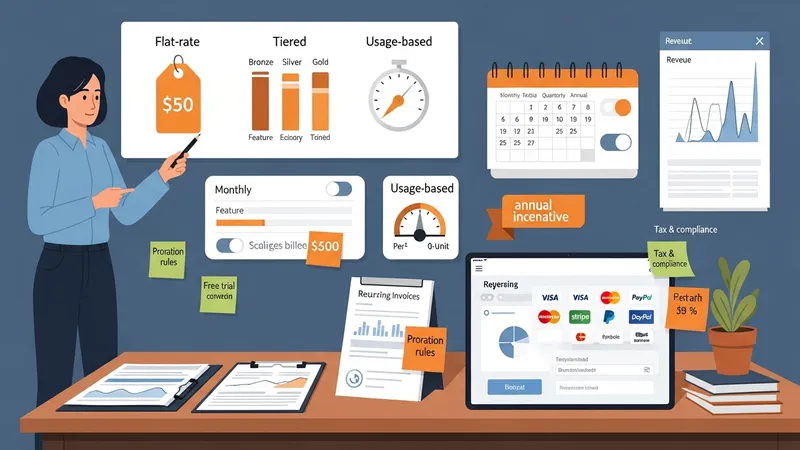
Pricing approaches for subscription models commonly include flat-rate, tiered, and usage-based structures, each with distinct implications for predictability and customer behavior. Flat-rate plans provide simplicity and may suit users with stable needs; tiered plans group features or capacity into segments to address diverse requirements; usage-based billing ties charges to actual consumption and may align costs with value delivered. Billing cadence—monthly, quarterly, or annual—affects cash flow and retention dynamics, and providers often offer different incentives for longer commitments while framing those incentives cautiously as potential value alignment rather than assured outcomes.
Billing technicalities influence operational resilience. Providers may use recurring invoicing, tokenized payment methods, or direct debit systems depending on regional payment infrastructure. Proration rules for mid-cycle changes and rules for free trial conversions are practical considerations that can affect perceived fairness and revenue timing. Tax treatment and regulatory compliance for recurring charges vary by jurisdiction; implementing appropriate tax calculation, remittance, and reporting processes is typically necessary for accurate accounting and regulatory adherence without implying uniform global rules.
Pricing experimentation is typically treated as iterative learning rather than a one-time decision. A common approach is to test packaging changes with defined segments and to monitor conversion, churn, and lifetime value metrics. Communication around price changes often includes clear notice periods and transparent rationale to maintain trust. Providers may also implement feature gating or add-ons to allow granular monetization without changing base plans, accepting that incremental complexity may increase administrative overhead.
When evaluating payment processors and billing platforms, considerations often include support for multiple payment methods, reporting capabilities, webhook integrations for lifecycle events, and retry/dunning functionality. Security standards such as PCI compliance and encrypted storage for payment tokens are frequently assessed. For emerging use cases, integration with analytics systems that feed into revenue and customer health dashboards can support more informed pricing decisions while acknowledging that technical integration effort and cost can vary by provider.
Understanding customer lifecycle stages—acquisition, onboarding, engagement, retention, and exit—is central to managing subscription revenue. Onboarding experiences that quickly demonstrate value often correlate with lower early churn; engagement metrics such as active usage, feature adoption, and support interactions can serve as early signals of customer health. Retention-focused activities typically include periodic value reminders, updates tied to features used, and responsive support. While specific tactics vary by sector, the underlying goal is to align continued access with demonstrable ongoing value for subscribers.
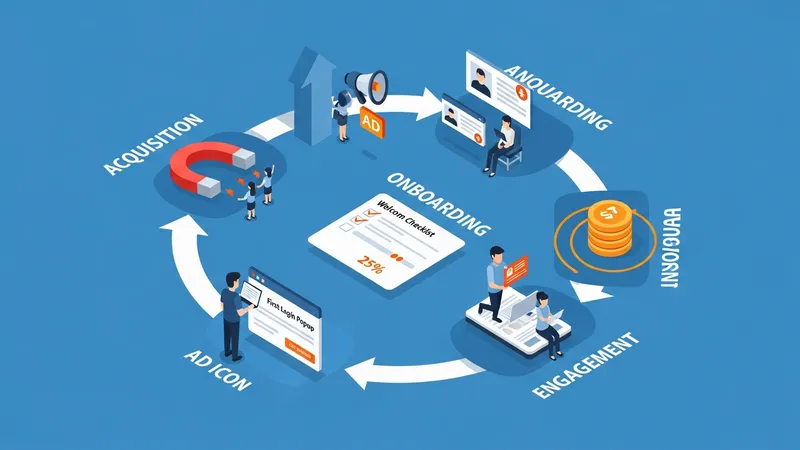
Churn measurement is commonly expressed on a monthly or annual basis depending on billing cadence and business needs. Churn rates may vary widely across consumer and business segments, with enterprise relationships often showing lower monthly churn and consumer services exhibiting higher volatility. Cohort analysis allows businesses to compare retention patterns across groups by acquisition channel, plan type, or timeframe. Interpreting churn in context—relative to acquisition economics and expected customer lifetime—helps organizations assess whether retention initiatives are affecting long-term sustainability.
Lifetime value (LTV) and average revenue per user (ARPU) are frequently used in conjunction to evaluate the economic balance between acquisition costs and recurring inflows. LTV typically aggregates expected future revenue from a customer cohort, often discounted or adjusted for churn assumptions, while ARPU measures average revenue generated per subscriber in a period. These metrics are sensitive to assumptions and should be calculated transparently, noting that projections may change as the business and market conditions evolve rather than presenting guaranteed outcomes.
Segmentation and personalized service models are practical considerations for retention. Different subscriber groups may respond differently to pricing, communication frequency, and support channels; therefore, targeted onboarding, tiered support, or tailored feature bundles may be used as considerations rather than prescriptive rules. Regularly reviewing engagement data and feedback loops helps inform adjustments, which are typically implemented incrementally and measured to understand effects on churn and revenue stability.
Operational systems for subscription management commonly include billing engines, customer relationship systems, and analytics platforms. Billing engines handle invoicing, retries, proration, and plan changes; CRM systems track subscriber interactions and support history; analytics platforms aggregate metrics such as MRR and churn. Integration among these systems can streamline workflows and improve data consistency, though integration complexity and resource requirements typically scale with the breadth of features and the size of the subscriber base.
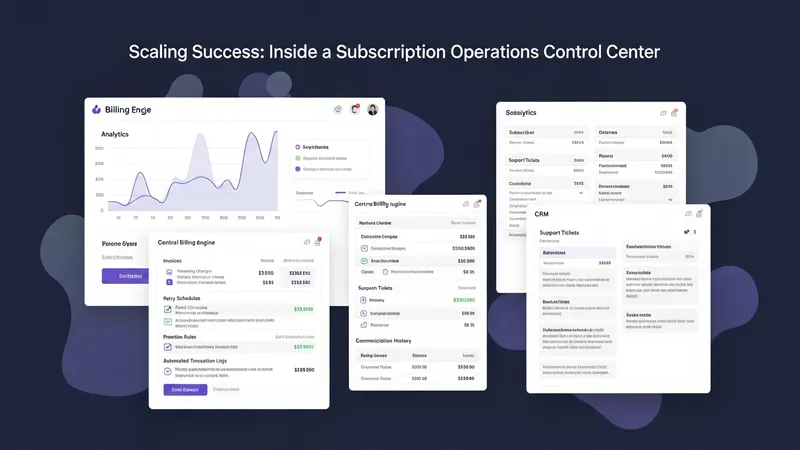
Payment reliability and dispute handling are practical operational concerns. Failed payments can meaningfully affect captured revenue if not managed with appropriate retry schedules, customer notification, and escalation paths. Dunning policies—formalized sequences of communication and retry attempts—are often designed to balance recovery with customer experience considerations. For physical goods subscriptions, logistics coordination, inventory forecasting, and return handling also form part of the operational stack and interact with subscription cadence to influence costs and delivery expectations.
Security, compliance, and data governance are frequent considerations in subscription operations. Providers often implement strong access controls, encrypted storage for sensitive fields, and routine auditing to reduce risk. Regulatory frameworks for data protection vary by jurisdiction; adopting privacy-by-design practices and clear data retention policies can reduce exposure. For payment processing, adherence to applicable payment security standards and careful vendor selection are commonly treated as core elements of an operational risk management approach.
Automation and monitoring help scale subscription operations without proportionally increasing manual effort. Automated lifecycle events (trial expiration, renewal reminders), alerting for anomalous payment patterns, and self-service portals for subscribers can reduce repetitive support requests. Instrumenting key metrics and operational logs typically enables faster problem resolution and continuous improvement, while recognizing that automation design should incorporate exceptions handling and human oversight where necessary.
Accounting for subscription revenue frequently involves recognizing income over the period the service is delivered rather than at the time of receipt when payment is received in advance. Many accounting frameworks encourage allocation of transaction price to performance obligations and recognition over time as obligations are satisfied. This approach often results in deferred revenue balances on the balance sheet that are released to revenue in future periods as service obligations are performed, and companies typically disclose relevant policies in financial statements to maintain transparency.
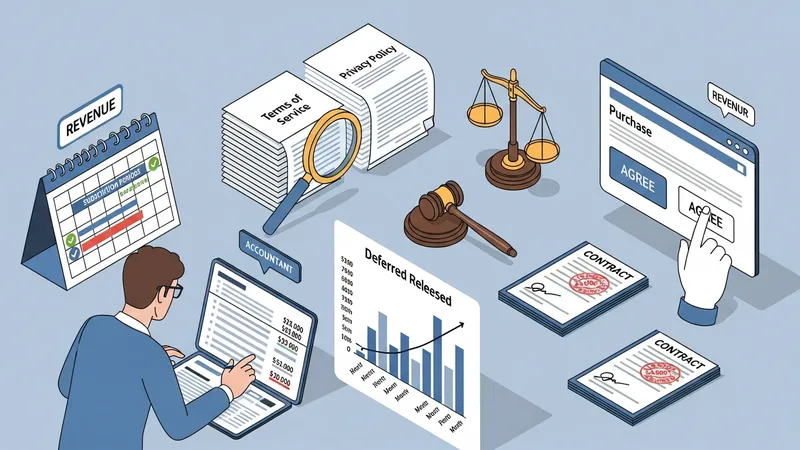
Contract terms determine many legal and governance implications of subscriptions. Clear definitions of renewal mechanics, cancellation rights, refund conditions, and service levels reduce ambiguity. Providers commonly ensure terms of service and privacy policies are accessible at the point of purchase and that consent or agreement capture aligns with applicable consumer protection and contract law requirements. Legal review of standard contract templates is a customary governance step for organizations that manage recurring customer agreements at scale.
Tax and regulatory compliance are recurring considerations that may vary by jurisdiction and by the nature of the delivered product or service. Sales tax, value-added taxes, and other indirect taxes can apply to recurring charges in different ways; providers often implement tax engines or consult specialists to determine obligations. Data protection and consumer rights laws may also affect billing practices, notice periods for renewals, and data processing agreements, and firms typically treat compliance as an ongoing responsibility rather than a one-time task.
Internal controls, audit readiness, and disclosure practices contribute to governance around subscription revenue. Companies commonly establish controls over billing changes, revenue recognition workflows, and reconciliations between billing systems and general ledger balances. Periodic internal or external audits can verify adherence to stated policies and identify areas for improvement. Ongoing monitoring and clear documentation of processes help maintain consistent treatment of recurring revenue in financial reporting and stakeholder communications.