
Retail electronics clearance is the set of processes retailers use to reduce inventory of consumer electronics that are no longer carried at full price. This typically includes pricing reductions, reclassification of items to clearance shelves or web sections, and decisions about disposition. The objective is operational: to free shelf space or warehouse capacity for newer models and to recover value from units that have lower demand or are nearing the end of their sales cycle. Retailers balance price adjustments with costs such as storage, handling, and any manufacturer return or buyback terms.
Selection of which items enter clearance is based on multiple observable signals rather than a single rule. Common signals include model age relative to new releases, comparative sales velocity, incoming shipments of replacement SKUs, seasonal assortment shifts, and any manufacturer-declared end-of-life notices. Retailers may also account for display units, open-box returns, and overstock from promotional periods. Inventory visibility systems and periodic assortment reviews often drive when and how an item is flagged for markdown or alternate disposition.

Inventory turnover and timing are central to clearance decisions. Retailers commonly use metrics such as sell-through rate, days-of-inventory, and forecasted demand declines to schedule markdowns. A sell-through threshold may trigger a first markdown, and subsequent staged reductions may occur if movement does not accelerate. This staged approach can help recover incremental margin while encouraging faster movement later in the lifecycle. Such frameworks are applied across categories but are adjusted for category-specific dynamics; for example, consumer electronics often depreciate faster than non-electronic household goods.
Pricing tactics used in clearance commonly include staggered markdowns, flat-percentage reductions, bundle adjustments, and reclassification to "open-box" pricing where applicable. Dynamic pricing systems may lower prices algorithmically based on time on shelf and competitive pricing signals, whereas smaller retailers may apply manual markdown schedules. Operational costs like restocking and reverse logistics influence the depth and timing of reductions, because deeper markdowns traded off against handling and potential return-to-manufacturer terms can alter the net recoverable value.
Seasonality and product release cycles often shape when electronics are selected for clearance. Major manufacturer launch seasons typically precede broader retailer markdowns for preceding generations. Similarly, demand cycles such as holiday buying periods can temporarily suppress or accelerate clearance actions: retailers may defer deep clearance until after peak seasons, or they may clear to make room for seasonal assortments. Category-specific seasonality, such as back-to-school for laptops or summer for portable audio, also factors into timing.
Disposition strategies beyond price reduction influence product selection and effective recovery. Options may include refurbishment and resale through secondary channels, manufacturer returns or trade-in programs, donation, or recycling for components. Each option has different cost structures and legal or environmental considerations, particularly for batteries and e-waste. Decisions about which route to use often consider warranty status, cosmetic condition, and potential resale value in secondary markets.
In summary, clearance of consumer electronics is managed through a mix of inventory signals, pricing tactics, timing tied to releases and seasons, and disposition pathways for unsold units. Retailers typically weigh storage costs, forecasted demand, and manufacturer agreements when choosing markdown depth and sequence. The next sections examine practical components and considerations in more detail.
Retailers often categorize clearance candidates by role and lifecycle stage, which can guide selection signals. Product role categories include prior-generation flagship devices, entry-level models approaching obsolescence, display or demo units, and open-box returns. Selection signals that commonly trigger review include a sustained decrease in sell-through rate, arrival of newer SKUs, inventory imbalances across store clusters, and manufacturer communications about end-of-life or updated firmware paths. These signals are often combined in rules within inventory management systems to prioritize items for markdown or alternate disposition.
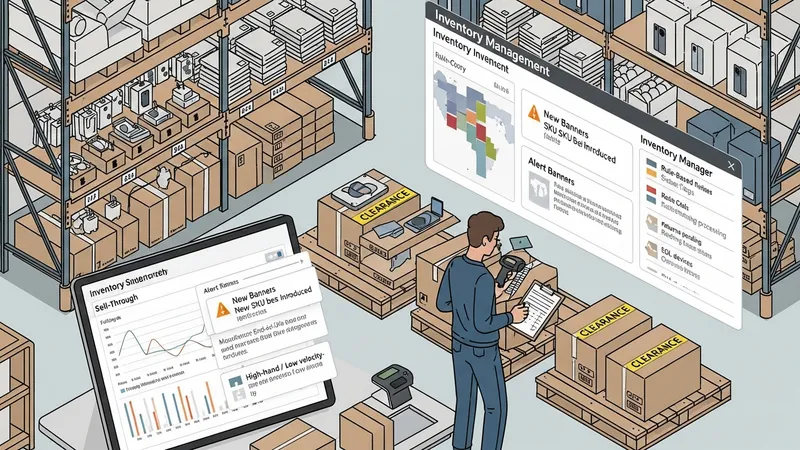
Staging and prioritization can vary by category: fast-depreciating categories such as smartphones and tablets may enter markdown cycles sooner than accessories, while durable goods like some audio equipment may be held longer if demand remains steady. Retailers often apply cluster-level analysis—items in certain stores or regions with lower demand may be cleared earlier. Internal dashboards may flag units with low velocity and high on-hand quantity to reduce holding costs and avoid deeper losses later.
Open-box and return items are typically handled with distinct criteria, since condition affects recoverable value. Retailers may inspect returns to determine eligibility for refurbishment, discounting, or return-to-vendor channels. Demo units often have fixed conversion rules that consider hours of use and cosmetic wear. Consistent documentation of condition and repair history can improve valuation in secondary channels and reduce uncertainty in clearance pricing decisions.
Retailers also consider compatibility and standards changes when selecting accessories and peripherals for clearance. For example, shifts in connector types or wireless standards can materially reduce demand for certain cables or devices. Anticipating such technical transitions may lead to earlier markdowns. These technology-driven signals are integrated with commercial indicators to form a holistic selection process for clearance candidates.
Common markdown sequences start with a modest reduction and escalate if sell-through remains insufficient. A staged sequence may involve an initial small percentage reduction, followed by larger drops at set intervals or when inventory thresholds persist. The precise timing and depth are influenced by carrying costs, the retailer's margin strategy, and expected demand sensitivity. Some retailers use algorithmic pricing that factors in competitive listings and historical elasticity, while others follow fixed calendar-driven markdown schedules tied to promotional windows.
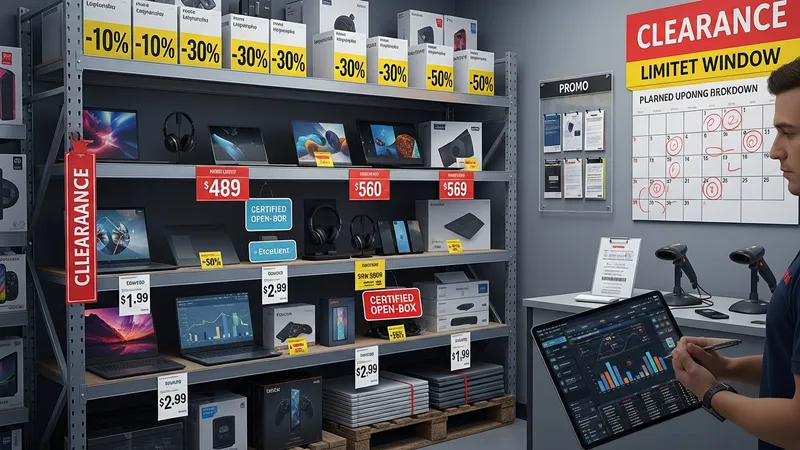
Bundle and open-box pricing are frequent mechanisms to clear items without reducing unit price severely. Combining a slower-moving item with a higher-demand accessory or offering certified open-box pricing can change the perceived value proposition. Retailers must account for warranty liabilities and return rates when establishing such pricing. Transparent condition descriptors and clear return policies for open-box items can affect buyer confidence and thus the effectiveness of these pricing approaches.
Liquidation and secondary-market pricing are alternative mechanisms for clearing inventory that may not perform through retail channels. Retailers sometimes sell batches to wholesalers or liquidation platforms, which typically accept lower per-unit prices but reduce handling and storage overhead. The decision to liquidate versus markdown for direct sale is often based on expected net recovery after channel fees, logistics costs, and the time value of clearing inventory.
Discount depth is also affected by supply chain factors, including incoming shipments of replacement units and forecasted future demand. If a significant replenishment of a newer model is imminent, retailers may accelerate markdowns on older stock to ensure shelf space is available. Conversely, if supply constraints are expected for a category, markdowns may be more conservative. These supply-side considerations interact with demand signals to calibrate markdown depth and timing.
Major manufacturer release calendars often create predictable windows when prior-generation products become clearance candidates. Retailers typically see higher rates of item selection for markdown shortly after new product launches, as consumer attention shifts to updated models. Seasonal buying patterns—such as year-end shopping or back-to-school periods—can temporarily mask clearance actions, leading some retailers to delay deeper reductions until after peak demand windows pass and shelf space planning is finalized.

Retailers also coordinate clearance timing with promotional calendars for broader assortment changes. For example, when a retail chain shifts seasonal inventory, electronics categories that align with those seasons may be prioritized for clearance. This coordination may involve cross-department planning to ensure that floor space and staffing for key periods are allocated appropriately, and that clearance activity does not inadvertently cannibalize sales of current-season stock.
Consumer purchasing behavior around holidays can influence markdown strategies. Some retailers adopt lighter initial markdowns before peak shopping days and then increase reductions afterward if inventory remains. Others create dedicated clearance events after major shopping periods to convert slow-moving units. The chosen approach depends on the retailer’s inventory levels, margins, and expectations about residual demand during off-peak times.
Product categories differ in seasonal sensitivity: portable audio and certain mobile accessories may show steady year-round demand, while certain display technologies or seasonal gift items may be more time-bound. Recognizing these category-specific rhythms helps retailers decide whether to accelerate clearance ahead of season changes or allow longer selling windows when demand is persistent.
Once an item is selected for clearance, retailers evaluate disposition options that affect the net recovery. Typical paths include continued retail discounting, certified open-box resale, refurbishment for resale through secondary channels, manufacturer return or trade-in programs, donation, or recycling. Each path has cost and regulatory implications: refurbishment requires inspection and repair capabilities, while recycling for electronic waste must follow environmental and safety regulations, particularly for batteries and hazardous components.

Reverse logistics costs and repair cycle times influence whether refurbishment is viable. Retailers with established refurbishment operations may recover more value by restoring units for resale, whereas those lacking such capabilities may prefer bulk liquidation. Documentation of item condition, repair history, and remaining warranty is important for accurate valuation in secondary channels and for compliance where warranties or consumer protections apply.
Legal and environmental considerations may shape clearance decisions. Disposal of certain electronic components is regulated in some jurisdictions, and retailers may be required to follow specific recycling or reporting procedures. Even where not legally mandated, many retailers consider extended lifecycle strategies—like refurbish-and-resell partnerships—to align with sustainability objectives and to reduce potential liabilities associated with improper disposal.
Operational coordination across merchandising, supply chain, and customer service functions is also necessary. Clear internal policies on markdown authority, condition assessment, and communication of open-box statuses reduce inconsistency. Information flows from point-of-sale and inventory systems back into planning engines can improve future clearance timing by refining forecasts and identifying recurring patterns in which SKUs enter clearance most often.