Lab Equipment: Essential Tools For Scientific And Industrial Innovation
3 min read
Laboratories serve as the foundation for scientific research, industrial development, and technological innovation. Whether in chemistry, biology, physics, medicine, or engineering, laboratories are equipped with a wide range of specialized tools and instruments that enable researchers and professionals to conduct experiments, analyze materials, and develop new technologies. The efficiency and accuracy of any laboratory are directly influenced by the quality, precision, and reliability of its equipment.
Types of Lab Equipment and Their Applications
Lab equipment varies depending on the type of laboratory and the field of research. Some of the most commonly used equipment includes:
- Basic Laboratory Equipment – These include beakers, test tubes, flasks, pipettes, and burettes, which are used for measuring, mixing, and storing chemicals and solutions. They form the core of chemistry and biology labs.
- Analytical Instruments – Devices such as spectrophotometers, chromatographs (GC/LC-MS), and pH meters help researchers analyze the composition and properties of materials with high precision. These are widely used in pharmaceuticals, environmental science, and food safety testing.
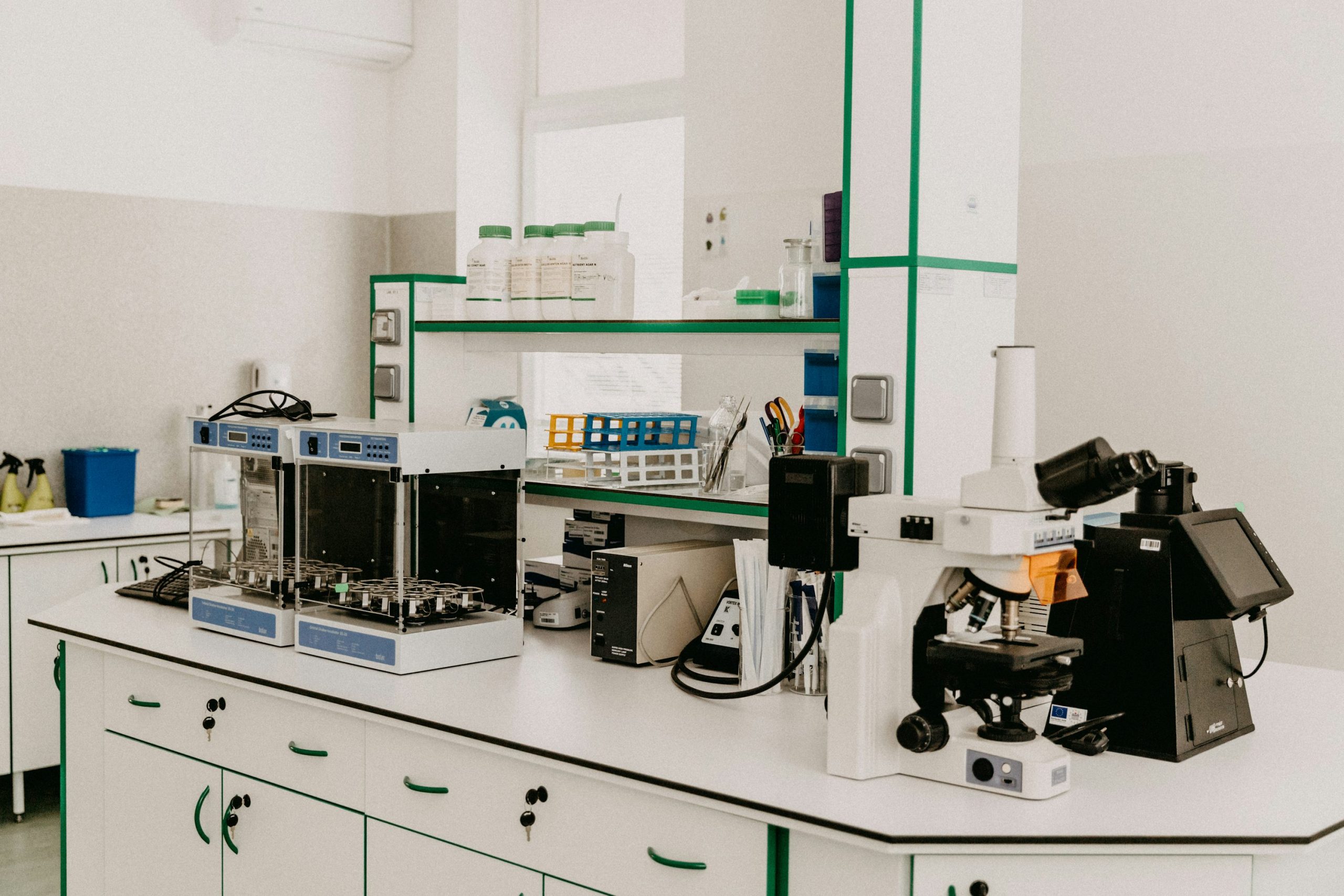
- Microscopy Equipment – Microscopes, including optical microscopes, electron microscopes, and atomic force microscopes, allow scientists to observe microorganisms, cells, and materials at the molecular or atomic level.
- Sterilization and Safety Equipment – Items like autoclaves, laminar flow hoods, fume hoods, and biosafety cabinets ensure sterile and contamination-free environments, essential for microbiology and medical research.
- Material Testing and Industrial Lab Equipment – In engineering and industrial research, tools such as hardness testers, tensile testing machines, and thermal analyzers are used to evaluate the properties of materials for quality control and manufacturing.
- Automated and Smart Lab Equipment – The integration of AI and robotics in lab equipment, such as automated liquid handling systems and robotic sample analyzers, has revolutionized research by improving efficiency and reducing human error.
These instruments allow researchers to study chemical reactions, test biological samples, measure environmental pollutants, and develop new materials for technological and medical advancements.
The Importance of High-Quality Lab Equipment
Investing in high-quality lab equipment is essential for achieving accurate, reliable, and reproducible results. Poor-quality equipment can lead to inconsistent data, safety risks, and failed experiments, potentially affecting scientific conclusions or industrial product quality. Some key reasons why high-quality lab equipment is crucial include:
- Precision and Accuracy – In fields like pharmaceuticals and clinical research, even the smallest measurement error can affect the outcome of a study or a medical diagnosis. Precision instruments like mass spectrometers and calorimeters ensure reliable results.
- Safety and Compliance – Many lab processes involve hazardous chemicals, biological samples, or extreme conditions. Proper equipment like fume hoods, safety cabinets, and chemical-resistant workstations helps protect researchers and ensures compliance with industry standards.
- Efficiency and Productivity – Advanced automated equipment significantly speeds up experiments and reduces manual workload, increasing research efficiency and output.
- Long-Term Cost Savings – While high-quality lab equipment may have a higher initial cost, it minimizes maintenance, reduces the risk of inaccurate results, and prevents costly errors, leading to long-term savings.
With the growing emphasis on precision medicine, nanotechnology, and AI-driven analytics, cutting-edge lab equipment continues to push the boundaries of scientific discoveries.
Challenges in Laboratory Equipment Management
Despite the importance of lab equipment, laboratories often face challenges related to cost, maintenance, and regulatory compliance. Some of the common challenges include:
- High Costs of Advanced Equipment – Many specialized instruments, such as MRI scanners, electron microscopes, and genome sequencers, require significant investment, making them inaccessible to smaller research facilities.
- Equipment Calibration and Maintenance – Lab instruments must be regularly calibrated to maintain accuracy. Improper maintenance can lead to inaccurate results and downtime in research activities.
- Technological Upgrades and Obsolescence – As technology rapidly advances, older lab equipment may become outdated, requiring frequent upgrades or replacements.
- Data Security and Integration – Modern lab equipment is often integrated with digital data management systems. Ensuring data security, compatibility with other systems, and regulatory compliance (such as FDA and ISO standards) is crucial.
To address these challenges, many laboratories adopt strategies such as leasing lab equipment, implementing preventive maintenance programs, and using cloud-based lab management systems to enhance operational efficiency.
Conclusion: The Future of Lab Equipment and Innovation
The future of lab equipment is being shaped by automation, AI, and smart technologies. Emerging trends include AI-driven diagnostics, 3D bioprinting, lab-on-a-chip technology, and cloud-based lab management. These innovations are making research faster, more precise, and more accessible.
Additionally, sustainable lab practices are gaining importance, with a focus on energy-efficient equipment, biodegradable lab materials, and waste reduction strategies. As scientific advancements continue, the development of next-generation lab equipment will drive breakthroughs in medicine, environmental science, material engineering, and beyond.
By investing in cutting-edge, high-quality, and sustainable lab equipment, research institutions and industries can unlock new possibilities and accelerate progress toward a smarter and healthier future.