
Automated lead generation describes a set of digital processes and tools that capture contact and behavioral information from prospective customers, then prepare that data for follow-up by marketing or sales teams. In practice, these systems collect inputs from web forms, landing pages, advertising lead forms, chat interactions, and offline sources, and they transform raw entries into structured records. The automation layer can perform tasks such as deduplication, basic validation, or assigning an initial status so that human teams receive organized prospect files rather than isolated form submissions.
Automation often includes rules or simple logic to direct leads to appropriate channels within an organization. For example, a form submission may be routed to a specific sales queue based on geography or product interest, or a chatbot interaction may create a lead record with tagged intent. These processes may be configured to reduce manual handling, speed initial response, and maintain consistency in how leads are recorded and passed to customer relationship management (CRM) systems or marketing platforms.

Automated capture channels vary in complexity and user interaction. Simple web forms may validate email formats and apply hidden fields for source attribution, while chatbots can prompt qualifying questions and use decision trees to determine readiness. In the US market, organizations often combine multiple capture points so that a single prospect can be tracked from an initial ad click through repeat site visits; this multi-touch approach may require careful mapping so automated systems do not create duplicate records or inconsistent attributes.
Qualification processes that run after capture may apply lead scoring, enrichment, or segmentation. Scoring typically assigns numeric values for actions such as page views or content downloads, and enrichment supplements basic submissions with firmographic data from third-party providers. In US implementations, common enrichment sources include business databases and public registries; automated enrichment can reduce manual research but may introduce inaccuracies that organizations need to monitor.
Routing and handoff rules are central to automated pipelines. Rules may route leads to local sales reps by ZIP code, to inside sales for immediate follow-up, or to nurture flows if further qualification is required. Automated systems often integrate with US-centric CRMs and email platforms so that lead status changes are synchronized. Organizations typically design these flows to preserve data lineage and to allow audit traces of who accessed or modified each lead record.
Measurement and iteration are typically ongoing tasks once automation is in place. Common indicators include lead capture volume by source, conversion rates from capture to qualified status, and time-to-first-contact after capture. In the United States, marketing teams often compare these indicators across platforms (for example, comparing form conversions on site pages versus ad-based lead forms) to adjust budgets and configuration, noting that differences in audience and intent can affect observed performance metrics.
In summary, automated lead capture and qualification systems collect prospect information from multiple channels, apply rules or enrichment to assess relevance, and route structured records into sales and marketing systems. Implementations in the United States commonly use US-based CRMs and advertising platforms and may vary in sophistication from simple form routing to multi-step scoring and enrichment. The next sections examine practical components and considerations in more detail.
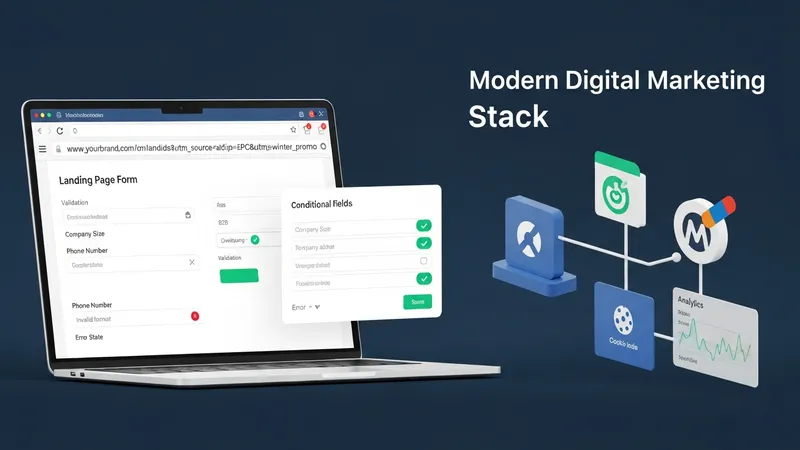
Web forms remain a foundational method for capturing leads; they can be embedded on corporate pages or deployed on dedicated landing pages. In the US context, forms are often paired with UTM parameters and cookie-based tracking so that marketers can attribute submissions to specific campaigns. Form builders from US vendors may include conditional fields and validation rules to improve data quality at entry. Organizations frequently balance the number of required fields against friction—shorter forms may capture more submissions, while longer forms may yield higher-quality entries depending on the audience.
Interactive capture channels such as chatbots and conversational landing pages are increasingly used by American firms to engage visitors and obtain qualifying details. Chat tools can present branching questions and populate lead records automatically; when integrated with CRMs, these interactions can create immediate tasks for sales staff. Chat-based capture may be particularly useful on mobile, where users prefer conversational input, but it also requires clear mapping of replies to standardized fields so subsequent automation can process records consistently.
Advertising platforms provide direct capture alternatives, for example lead form extensions in search and social ads. In the United States, advertisers may use Google Ads lead forms or social-platform lead ads to collect contact details without sending users to a separate page. These channels can increase convenience for the user, and automated exports or API integrations enable rapid ingestion into CRM systems. Teams should confirm that export mappings preserve consent metadata and source attribution when ingesting these leads.
Event and offline capture methods also feed automated pipelines in US operations. Registration data from webinars, trade show badge scans, and phone lead transcriptions can be uploaded or streamed into lead systems. Automated reconciliation processes are often used to deduplicate entries originating from different capture modes. When planning capture types, organizations in the United States typically consider the intended follow-up cadence and available integration points to ensure a single prospect view.
Lead scoring assigns quantitative values to prospect actions and attributes so automation can classify readiness. Typical scoring models used by US firms combine behavioral signals (page visits, content downloads) with firmographic data (company size, industry). Scores may be configured to trigger different automated paths—such as handoff to sales above a threshold or inclusion in a nurture sequence below it. It is common to periodically review scoring models and adjust weights to reflect observed conversion patterns rather than assuming initial settings will remain optimal.
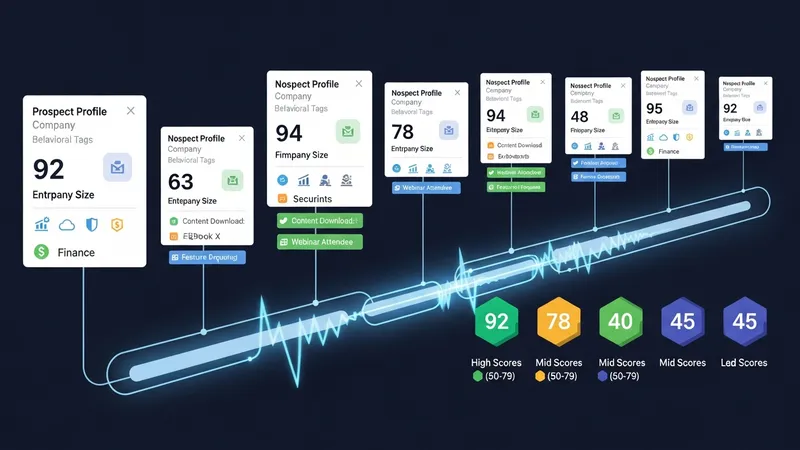
Data enrichment supplements capture data with external records to provide more complete profiles. US organizations may use third-party enrichment services to append company information, job titles, or business contact details; this can reduce manual lookups and help routing rules target the appropriate teams. Enrichment typically runs via APIs and may be performed at capture time or in batch; teams should monitor enrichment quality and establish fallbacks when third-party data is unavailable or inconsistent.
Qualification workflows may combine automated filters with human review. For instance, automation can surface leads that meet baseline criteria and flag others for manual vetting. In the United States, some sales teams prefer receiving only leads that pass initial automated thresholds to conserve prospecting capacity. Workflows should document handoff conditions and visibility rules so that both marketing and sales understand why certain leads are routed or deprioritized.
Machine-assisted classification, including predictive models, may be used to identify high-potential prospects based on historical conversion patterns. When applied in US settings, predictive approaches often require sufficient historical data and attention to bias and explainability. Teams typically test predictive models on holdout samples before operational use and retain the ability to override automated classifications when necessary to prevent systematic errors from propagating through follow-up processes.
Choosing integration patterns is a practical step in building automated lead pipelines. Common architectures in the United States include direct native integrations between capture tools and CRMs, middleware platforms that transform and route records, or custom APIs for high-volume needs. Native integrations can simplify setup for standard use cases, while middleware may be preferred when combining several sources or applying complex enrichment and routing logic across multiple systems.
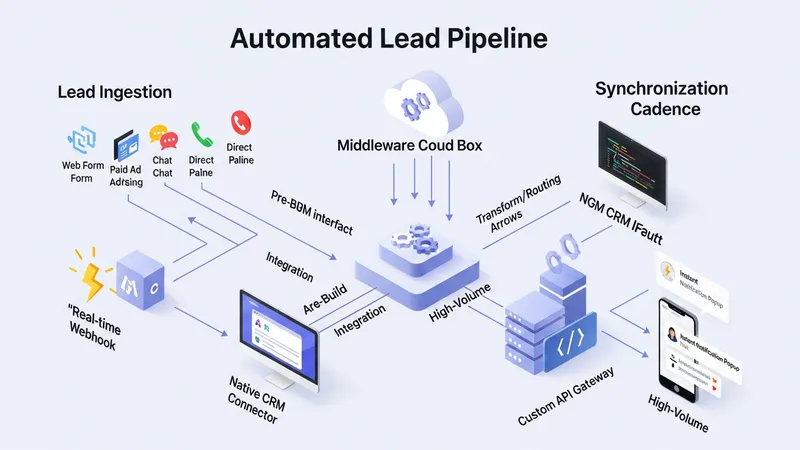
Synchronization cadence matters for how fresh lead data appears in downstream tools. Some systems perform near-real-time ingest via webhooks, enabling prompt follow-up; others batch-import leads hourly or daily. US sales organizations that prioritize rapid contact times may configure webhooks to create immediate notifications or tasks. When near-real-time processing is used, architects often include safeguards such as rate limits and deduplication checks to prevent processing spikes or duplicate entries.
Platform cost considerations vary by scale and feature set. Small US firms may use entry-level plans from marketing automation vendors that can start in a range of roughly $20 to $200 per month for limited contacts, while enterprise-grade subscriptions or extensive API usage may increase costs to several hundred or thousands of dollars monthly. These ranges may depend on contact volumes, required integrations, and the number of users; budgeting should account for data enrichment fees and any middleware or developer resources needed for custom integrations.
Security and access controls are key when integrating lead systems. Typical measures in US deployments include role-based access to lead records, audit logs of data changes, and encryption in transit and at rest. Integration design should also document which systems are authoritative for specific fields to avoid conflicts when two tools update the same attribute. Clear ownership and documented data flows aid in troubleshooting and compliance audits.
US federal and state regulations affect automated lead capture and handling. At the federal level, the FTC provides guidance on deceptive practices and data collection transparency; advertisers and marketers in the United States commonly reference that guidance when designing consent and disclosure flows. In addition, the Telephone Consumer Protection Act (TCPA) impacts certain outreach methods; organizations that use automated dialing or text messages typically review TCPA implications and preserve consent records associated with each captured contact.
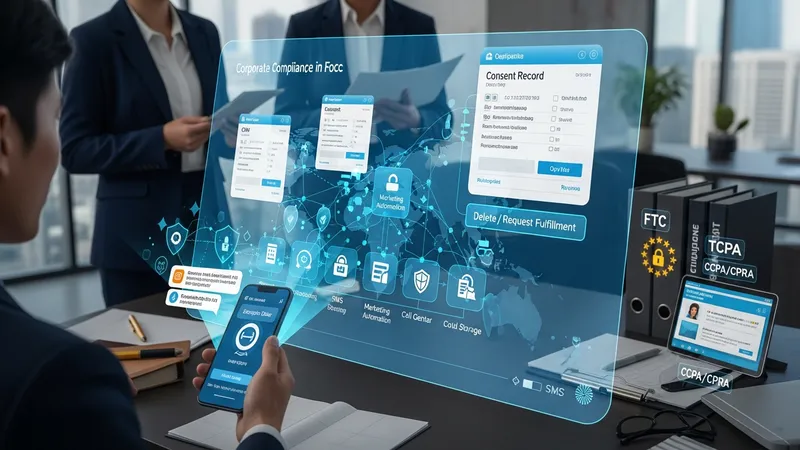
State laws such as the California Consumer Privacy Act (CCPA) and California Privacy Rights Act (CPRA) introduce requirements for consumer access and deletion requests that may apply to US-based businesses collecting personal information. Automated lead systems should retain provenance metadata indicating when and how consent was obtained and provide mechanisms for fulfilling data subject requests. Teams commonly map data flows to identify which systems hold personal data and how requests can be executed across those systems.
Email and commercial messaging are also regulated. The CAN-SPAM Act sets requirements for commercial email content and opt-out mechanisms in the United States, and automated systems that send follow-up messages typically include unsubscribe handling and suppression lists. Organizations often implement automated suppression syncing so that opt-out signals from one channel are respected across outbound platforms, reducing the risk of regulatory complaints.
Recordkeeping, vendor agreements, and security assessments are practical considerations for compliance. When US organizations use third-party enrichment or capture services, they often execute data processing agreements that define responsibilities for data handling and breach notification. Regular reviews of vendor practices, retention schedules for captured data, and access controls help ensure that automated lead pipelines align with legal and organizational privacy expectations.