
Building wealth involves accumulating and managing financial assets over time through deliberate financial strategies and informed decision-making. It typically includes identifying suitable investment instruments, understanding risk and return dynamics, and balancing portfolios to align with one’s time horizons and economic conditions. Within Mexico, this concept incorporates local financial practices, regulatory frameworks, and market conditions that can influence long-term asset growth possibilities.
Key principles underlying wealth growth often center on diversification, risk assessment, and consistent financial planning. Diversification aims to distribute investments across various sectors or asset types to mitigate potential losses. Risk assessment involves evaluating the potential variability of returns against personal tolerance levels. Long-term planning implies setting financial objectives that span years or decades, often taking advantage of Mexico’s financial products and market trends.

Diversification within Mexican wealth-building often integrates a mix of fixed-income instruments and equities. Government bonds provided by the Secretaría de Hacienda y Crédito Público (SHCP) are widely used for conservative portfolios. Stocks traded on the Bolsa Mexicana de Valores offer variable returns but can potentially enhance growth in the mid to long term. Contributions to social security-linked funds such as infonavit can also constitute part of a broader wealth-building strategy, particularly for asset accumulation linked to property ownership.
Risk factors include market fluctuations, inflation rates, and interest changes commonly seen in Mexico’s financial environment. Each investment avenue carries inherent risks that may affect expected returns. Understanding options within the local context is crucial, as Mexican regulations and tax policies can impact investment outcomes. For example, inflation indices in Mexico have historically shaped interest rates and fixed-income yields.
Long-term financial planning in Mexico may involve setting realistic goals based on economic cycles. Investors typically incorporate inflation expectations, tax implications, and personal financial situations when constructing portfolios. The time frame for wealth growth often spans several years, emphasizing sustained contribution and regular portfolio reviews. Unlike short-term speculation, this approach focuses on steady appreciation and reinvestment schemes aligned with the Mexican financial system.
The selection of investment instruments can be influenced by accessibility, costs, and administrative requirements specific to Mexico. For instance, acquiring certain equities may involve brokerage fees particular to Mexican stock exchanges. Government-issued bonds usually have minimum purchase amounts and settlement conditions regulated by local authorities. Awareness of these parameters is part of comprehensively understanding wealth-building principles within this context.
In summary, the process of building wealth through long-term investment growth in Mexico integrates several fundamental financial principles adapted to the local economic and regulatory environment. Emphasizing diversification, risk awareness, and continuous planning provides a structured framework for managing financial resources. The following sections examine practical components and considerations in more detail.
Diversification is a widely recognized principle that may reduce exposure to risks associated with any single financial asset. In the Mexican investment environment, this often means allocating capital across various asset classes such as government bonds, corporate securities, real estate, and mutual funds. Investments in different sectors or instruments can help moderate the potential impact of market volatility or sector-specific downturns.

Within Mexico, fixed income and equity allocations typically form the core of diversified portfolios. Government-issued bonds like Cetes fulfill a conservative role with relatively stable returns, while equities traded on the Bolsa Mexicana de Valores bring exposure to corporate earnings and growth potential. Mexican real estate markets also attract some investors for portfolio diversification, offering physical asset classes that behave differently from securities markets.
Mutual funds and exchange-traded funds (ETFs) based on Mexican indexes provide another diversification tool. They aggregate multiple securities, offering exposure to a range of companies or bonds while reducing individual asset risk. These vehicles often comply with Mexican regulations and include protective measures like diversification rules and transparent management policies.
Diversification strategies in Mexico also consider economic factors such as inflation trends and currency risks. For example, allocations that include inflation-protected securities may help preserve purchasing power over time. Additionally, some international diversification is possible, although it often involves foreign exchange considerations under Mexican financial regulations. Maintaining a diversified portfolio tailored to these local characteristics can be an important element of long-term investment growth.
Risk assessment refers to evaluating how different investment options align with the investor’s risk tolerance and financial goals. In Mexico, factors influencing risk include economic volatility, political changes, inflation rates, and regulatory developments. Investors often assess these elements to determine appropriate asset allocations between conservative and higher-risk instruments.

Market risk in Mexican equities may derive from both domestic economic cycles and international influences such as trade relations. Exchange rate fluctuations can affect investments denominated in foreign currencies. Interest rate changes set by Mexico’s central bank (Banco de México) influence fixed-income yields and bond prices, altering expected returns. Awareness of these dynamics is necessary for prudent risk assessment.
Another dimension of risk in Mexico involves liquidity considerations. Some local assets might have lower trading volumes or longer settlement periods, which can affect the ease and timing of asset disposition. For example, real estate transactions typically require extended periods due to legal formalities. Similarly, specific investment funds may impose redemption restrictions aligned with regulatory frameworks.
Employing formal risk assessment methods, including scenario analysis and sensitivity testing, may help investors comprehend the range of probable financial outcomes. Although no approach eliminates uncertainty, these analyses provide greater clarity regarding potential portfolio performance in differing market environments common in Mexico. Balancing return expectations with suitable risk levels is a crucial part of sustainable wealth growth strategies.
Planning for long-term investment growth entails setting and periodically reviewing financial objectives over extended time horizons. In Mexico, such planning usually integrates considerations regarding inflation, taxation, and economic conditions. Long-term investment strategies may take into account the impact of tax obligations on capital gains and income, which are governed by Mexican tax laws administered by the Servicio de Administración Tributaria (SAT).

Inflation in Mexico has fluctuated over recent decades, influencing purchasing power and real returns on investments. Thus, incorporating inflation projections when estimating long-term growth may provide more realistic outcome scenarios. Investment products such as UDIs (Unidades de Inversión), which adjust their value according to inflation, are sometimes included in planning to help preserve capital value.
Retirement planning is one example of long-term investing in Mexico, where individuals may use the AFORE system (Administradoras de Fondos para el Retiro) to accumulate funds with varying risk profiles. The structure of these retirement funds reflects the need to balance current contributions, government regulations, and expected future use, which often spans multiple decades.
Review and adjustment are common components of long-term planning, especially in response to changing personal circumstances or broader economic shifts within Mexico. Professionals may recommend regular evaluations to verify alignment with goals, regulatory changes, or shifts in financial markets. These actions help ensure strategies remain relevant for intended purposes over timeframes that may extend for several decades.
Mexico offers a variety of financial instruments that may play roles in building long-term investment portfolios. Government securities such as CETES are issued in various maturities, typically from 28 to 364 days, and sold at auction by the Ministry of Finance. These instruments often set benchmarks for fixed-income investments across other sectors.
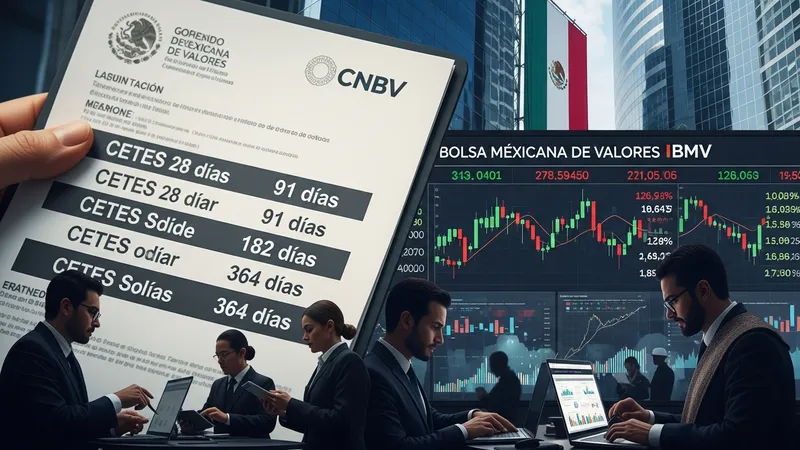
The Bolsa Mexicana de Valores (BMV) lists a wide range of stocks and debt instruments, including equity shares of major Mexican companies and corporate bonds. Trading volume and market capitalization vary, affecting liquidity and pricing. Regulations enacted by the Comisión Nacional Bancaria y de Valores (CNBV) oversee transparency and investor protections.
Mutual funds are increasingly common in Mexico’s financial landscape, providing pooled investment options across asset classes. Funds regulated under Mexican laws must follow stipulated investment policies and diversify assets to reduce risk concentration. Their fees and minimum investment requirements differ according to fund type and management company.
Real estate is another frequently considered asset class, often influenced by Mexico’s urban development trends, legal frameworks for property ownership, and financing options. Institutions like INFONAVIT facilitate access to housing finance, which can indirectly support wealth accumulation through property investment. Understanding associated costs such as taxes, maintenance, and legal fees is important when evaluating real estate for portfolio inclusion.