
A business revolving credit arrangement provides a firm with a reusable borrowing limit that can be drawn against as cash needs arise. Under this structure a lender sets a maximum credit line and the borrower may request advances up to that ceiling during an agreed draw period. Interest typically accrues only on amounts actually outstanding rather than on the full approved limit. Repayment options can include interest-only payments for a defined time or periodic principal and interest payments that reduce outstanding balances, after which the line may be renewed or converted to a term obligation.
Establishing this type of short-term facility often involves assessing the borrower’s cash flow patterns, collateral availability, and credit history. Lenders may require regular financial statements, accounts receivable aging, or inventory reports to monitor ongoing risk. Fees can include initial set-up charges, periodic maintenance or non-usage fees, and early termination costs in some cases. Pricing is commonly variable and may be indexed to a market reference rate plus a lender margin; the overall effective cost depends on draw frequency, average outstanding balance, and any ancillary fees.
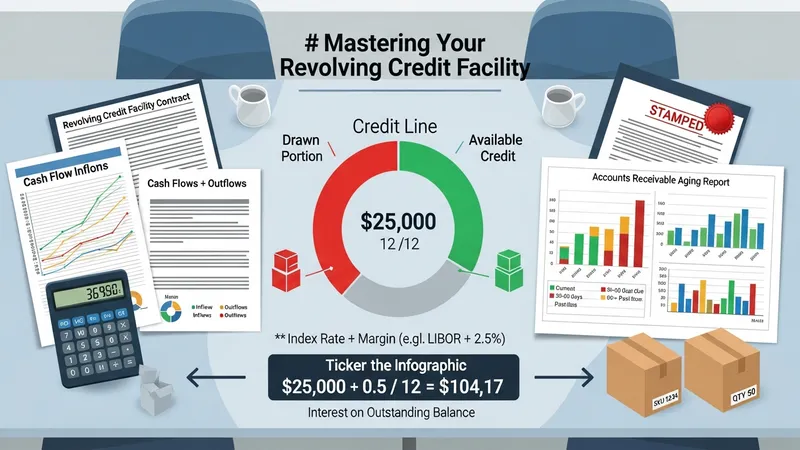
Comparative frameworks are useful when evaluating how a revolving facility functions in practice. For example, secured lines may allow larger limits for businesses that can pledge receivables, whereas unsecured lines may be suitable for firms with stable, predictable cash flows but limited collateral. Online lenders may shorten the time to initial funding, but pricing components and renewal practices can differ. Assessments typically weigh access speed, ongoing reporting requirements, flexibility to draw and repay, and overall cost over a representative cycle such as a quarter or fiscal year.
Interest calculation methods commonly used in these facilities warrant attention. Many lenders apply a variable interest rate tied to a reference index plus a margin, and interest accrues daily on outstanding balances. Some facilities allow interest-only payments during an initial draw period, transitioning to principal amortization later. Fees such as commitment or non-utilization charges can affect effective borrowing costs when average utilization is low. Borrowers often model different utilization scenarios to estimate annualized cost rather than relying on a single stated rate.
Operational controls and reporting expectations may be part of the credit agreement. Lenders often include covenants that require maintenance of financial ratios, timely delivery of management accounts, and notification of material events. Collateralized lines can include periodic audits or third-party verifications of inventory or receivables. These administrative elements can influence the practical utility of the facility for routine cash-flow management and should be considered alongside price when comparing options.
Use cases for revolving facilities commonly include bridging short-term liquidity gaps, smoothing seasonal receivables cycles, funding inventory buildup ahead of peak demand, or covering unexpected operational expenses. Because repayment capacity is linked to incoming cash flow, businesses that experience variability in timing of receipts may particularly rely on the revolving feature. Planning draws and repayments to align with anticipated inflows may reduce interest exposure while preserving access to funds during slower periods.
In summary, a reusable business credit facility provides a flexible way to obtain short-term liquidity subject to an approved limit, with pricing and administrative features that vary by provider and product. Key considerations typically include secured versus unsecured structures, interest and fee mechanics, reporting and covenant requirements, and how the line fits into a broader working capital strategy. The next sections examine practical components and considerations in more detail.
Legal and operational structures for revolving credit often differ by provider and the presence or absence of collateral. Documentation may range from a relatively simple facility agreement for small unsecured lines to comprehensive security agreements, UCC filings, and borrowing base certificates for secured credit. The borrowing base concept ties available credit to eligible assets such as receivables or inventory and typically specifies advance rates and ineligible items. Understanding documentation requirements up front may clarify reporting burdens and the periodic effort required to maintain the facility.

Underwriting procedures for these credit lines may include analysis of historical cash flows, accounts receivable aging, and inventory turnover. Lenders frequently request bank statements and tax returns as part of initial underwriting. For lines tied to receivables, advance rates often reflect perceived collectability; higher-quality receivables may receive a larger percentage advance. Periodic reviews or covenant compliance tests can influence renewal prospects and limit adjustments during the facility term.
Security interests and priority arrangements should be reviewed as part of structural analysis. Secured lenders may require first-priority liens on specific asset categories, while other creditors could retain separate claims. Subordination agreements and intercreditor terms can affect the practical availability of collateral in stressed situations. Businesses should understand how collateral is defined, what triggers default, and the remedies available to lenders should covenants not be met.
Document negotiation frequently covers fee schedules, borrowing base definitions, reporting frequency, and events of default. Non-usage fees, renewal fees, and interest recalculation provisions are areas that can materially affect ongoing cost. Firms may consider how flexible draw mechanics and repayment timing are reflected in the agreement, and whether options exist for adjusting the limit or converting outstanding balances to a term loan under specified conditions.
Effective cost for a revolving facility is the sum of stated interest, margin, and ancillary fees spread across expected utilization. Aside from interest on drawn amounts, commitment fees may apply to unused portions, and administration fees can be charged for renewals or covenant waivers. Pricing patterns often correlate with the borrower’s credit profile and whether collateral is provided. In many markets, smaller unsecured lines carry higher margins and may include tiered pricing structures based on utilization bands or covenant performance.
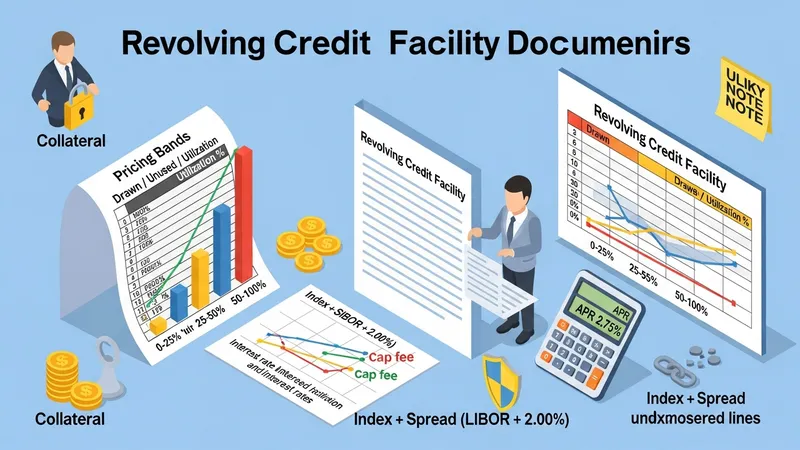
Interest-rate mechanics frequently reference a published index plus a spread; some lenders offer fixed-rate options or caps for a fee. Daily interest accrual and monthly billing are common, and borrowers may encounter compounding effects if interest is not paid timely. To estimate annualized cost, businesses often simulate expected draw levels and durations over a typical business cycle, accounting for periodic fees that become more significant when utilization is low.
Operational charges can be material in total cost calculations. Examples include processing or renewal fees, field examination expenses for collateral inspections, and fees for borrowing base determinations. These items may be one-time at origination or recurring. When comparing providers, isolating recurring versus one-time costs can provide a clearer view of ongoing affordability and whether a facility aligns with projected cash-flow patterns.
Credit line pricing can also be influenced by broader market conditions such as prevailing interest rates and liquidity in the lending sector. During periods when reference rates move, variable-rate lines will reflect those shifts. Lenders may adjust margin requirements in response to perceived risk changes. Therefore, evaluating cost sensitivity to rate movements and scenario-testing for higher-rate environments can be informative for planning purposes.
Common operational uses of a revolving facility include smoothing payroll timing differences, financing seasonal inventory buildup, and bridging invoice collection lags. Because the line can be reused after repayment, it suits situations where cash shortfalls are intermittent rather than constant. Businesses that rely on the facility often adopt internal controls to govern when draws occur, who may request advances, and how quickly excess balances are repaid once receipts arrive.
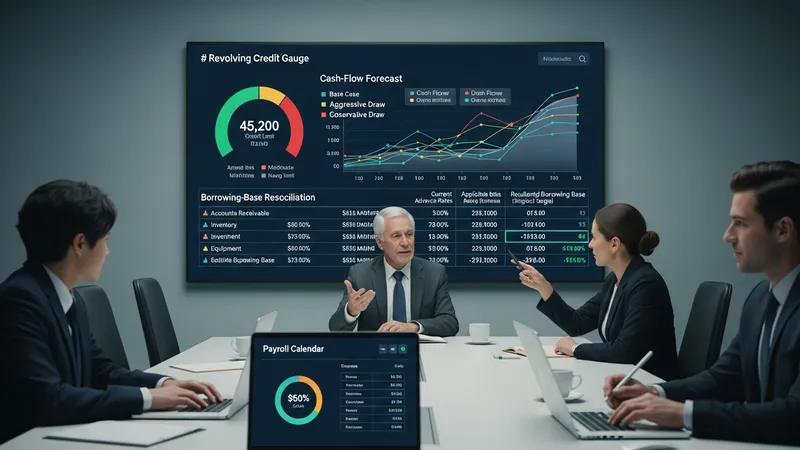
Monitoring practices often combine internal reporting with lender-required submissions such as monthly or weekly financial reports. Automated cash-flow forecasting that models draw scenarios may help manage interest exposure by minimizing unnecessary usage. For asset-secured lines, regular reconciliation of receivables and inventory against the borrowing base is typically required and may involve threshold tests that affect available credit in real time.
Risk management considerations include stress-testing liquidity under adverse revenue conditions and ensuring covenant compliance over forecast periods. Businesses may maintain contingency plans that identify alternative financing actions or temporary cost reductions if utilization increases beyond planned levels. Transparency with the lender about significant operational changes can also affect the facility’s stability and the prospects for limit increases or renewals.
Integration with treasury and accounting systems can reduce administrative friction and improve visibility into outstanding balances and incurred fees. Some providers offer online portals with real-time balance and transaction displays which may simplify draw requests and repayments. Firms should weigh the convenience of access methods against pricing and reporting requirements when choosing a provider to ensure the facility aligns with operational workflows.
Deciding whether to incorporate a revolving facility into a capital structure involves comparing expected benefits against costs and administrative effort. Considerations include anticipated draw frequency, typical outstanding balance, and whether flexibility is more valuable than lower cost term financing. For some firms the ability to avoid repeated loan applications for short-term needs may justify the maintenance fees and reporting commitments associated with a revolving line.

Renewal dynamics often involve periodic lender reviews that reassess creditworthiness, borrowing base eligibility, and covenant compliance. Renewals may lead to limit increases, decreases, or adjusted terms depending on performance and market conditions. Firms may prepare by maintaining clear documentation of cash-flow improvements or operational changes that support a desired renewal outcome, while recognizing that final decisions rest with the lender and prevailing conditions.
Strategic placement of a revolving facility within a firm’s overall financing mix can preserve term financing for fixed investments while using the line for working capital variability. This separation can align funding costs with asset lives and cash-flow profiles. Decision-makers often model how different blends of revolving and term financing affect liquidity ratios and interest expense under a range of forecast scenarios to inform a balanced approach.
When evaluating prospective facilities, treating provider selection as a multi-dimensional choice—covering price, flexibility, reporting burden, and access speed—may yield better long-term alignment with business needs. Considering how a revolving source interacts with other credit lines, payment terms with suppliers, and seasonal revenue patterns can help frame whether the facility will support, rather than complicate, ordinary operations.