
Business setup and company structuring describe the sequence of decisions and actions needed to establish a legal entity and arrange its internal governance, financial foundation, and operational framework. In Hong Kong this process typically includes selecting a legal form, fulfilling statutory registration steps, assigning governance roles, and preparing basic accounting and compliance arrangements. The structure chosen shapes how owners share liability, how the entity is taxed, who must act as company secretary and director, and which licences or permits may be required for specific activities.
Structuring a new company in Hong Kong often involves navigating local statutes and public registers while aligning operational needs with regulatory requirements. Key statutory references include the Companies Ordinance and the Business Registration regime; administrative steps normally involve preparing incorporation documents, registering with the Companies Registry, and obtaining a Business Registration Certificate from the Inland Revenue Department. Early-stage decisions about shareholding, director appointments, and registered address can affect downstream compliance and administrative costs.
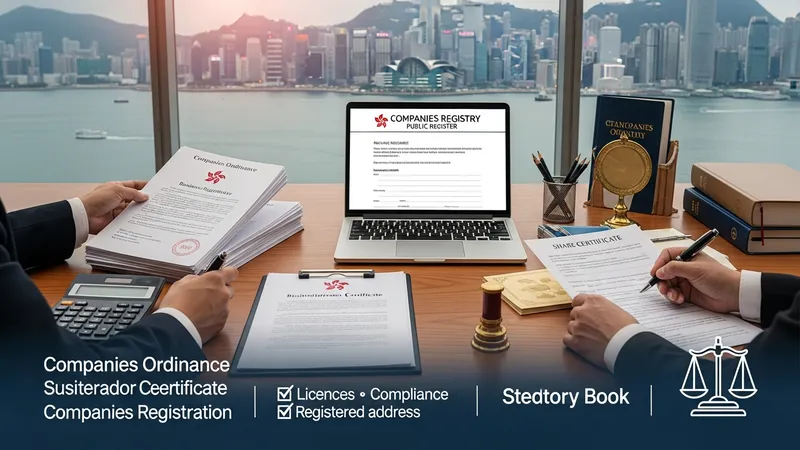
When comparing these structures, practitioners often weigh administrative complexity, liability exposure, and compliance obligations. For example, a private company limited by shares may offer clearer separation between personal and corporate liabilities but typically requires maintenance of statutory registers, annual returns to the Companies Registry, and adherence to the Companies Ordinance (Cap. 622). Sole proprietorships and partnerships may involve simpler filing but place liabilities directly on the owners. These trade-offs can influence governance choices and ongoing costs.
Registration tasks in Hong Kong commonly include name reservation, preparation of Articles of Association or partnership deed, submission of incorporation forms, and business registration. Official fees set by the Companies Registry and the Inland Revenue Department may apply; incorporation-related administrative fees and basic professional compliance services can typically range from modest to moderate amounts in HK$ depending on service scope and whether additional advisory support is engaged. For statutory text and fee details see the Companies Ordinance and the Companies Registry fee pages.
Governance arrangements often specify director roles, the company secretary function, and shareholder decision pathways. In Hong Kong a company limited by shares generally must have at least one director and a company secretary; corporate secretarial duties include maintaining statutory records and filing annual returns. Many founders consider these roles early because they affect statutory compliance and the flow of internal approvals. The Companies Registry and the Companies Ordinance supply the baseline requirements for these positions.
Financial setup and banking steps are integral to structure and operations. Opening a corporate account in Hong Kong normally involves due diligence aligned with anti‑money‑laundering and counter‑terrorist financing standards; local banks and the Hong Kong Monetary Authority provide relevant guidance. Accounting frameworks, tax registration with the Inland Revenue Department, and the selection of bookkeeping methods can shape reporting timelines and administrative workload during the company’s first year.
Operational and licence considerations can vary by sector; some activities in Hong Kong require specific permits, professional licences, or sectoral approvals from municipal or departmental regulators. Identifying likely licence requirements early can inform whether the selected legal form is appropriate for the intended activities. Administratively, the next sections examine practical components and considerations in more detail.
Choosing a legal structure is a foundational step in structuring a new company in Hong Kong. Common paths include incorporation as a private company limited by shares, registration as a sole proprietorship or partnership, or establishing a branch of a foreign entity. Each path may influence liability exposure, the need for a company secretary, the number of directors, and the level of ongoing statutory reporting required by the Companies Registry. Consideration of these elements typically precedes document drafting and submission.

Incorporation paperwork in Hong Kong generally requires a company name, Articles of Association, details of directors and shareholders, and a registered address. The Companies Registry processes incorporate filings and maintains public registers; applications may be submitted electronically or in paper form. Incorporation often triggers a parallel business registration process with the Inland Revenue Department, and founders typically allow time for both processes to complete before commencing commercial operations.
Legal compliance after registration commonly includes maintaining statutory records, preparing annual returns, and ensuring that corporate governance documents reflect ownership and management arrangements. The Companies Ordinance (Cap. 622) outlines many of these obligations; its provisions on director duties, share capital, and record keeping establish the legal baseline for Hong Kong companies. Engaging with the ordinance and registry guidance may reduce the risk of procedural oversights.
Practical considerations often include the administrative capacity to update registers, file returns punctually, and record resolutions. Typical timings for incorporation and registration can vary but often complete within days to a few weeks, depending on document readiness and any clarifications requested by authorities. These timing patterns may affect operational planning such as contract signing or opening a bank account, so they are commonly factored into early-stage timelines.
Governance structures in Hong Kong companies usually specify directors, shareholders, and a company secretary; these roles carry statutory responsibilities under local law. A private company limited by shares typically must appoint at least one director and one company secretary. The company secretary function includes maintaining statutory registers and facilitating filings with the Companies Registry. Directors have duties that commonly relate to fiduciary obligations and compliance with the Companies Ordinance, and understanding these duties early can inform internal control design.

Ongoing compliance often involves preparing audited accounts (when required), filing annual returns, and observing disclosure obligations. The Inland Revenue Department expects timely tax filings and appropriate record keeping for profits tax purposes. While smaller entities may face simpler reporting than large public companies, the routine of bookkeeping, tax filing, and annual statutory submissions is a persistent component of corporate administration in Hong Kong.
Insider considerations include timely appointment or engagement of a company secretary and clarity on whether services will be handled in‑house or through external firms. Many companies in Hong Kong register a local address for statutory communications and arrange a company secretary who understands local filing cycles. These arrangements may help smooth annual filing processes and reduce administrative friction when statutory deadlines approach.
Regulatory updates in Hong Kong may affect compliance requirements over time; monitoring official channels such as the Companies Registry and the Inland Revenue Department is commonly recommended for staying informed. Such monitoring is typically treated as a routine part of governance to ensure the company continues to meet statutory obligations and reporting expectations.
Establishing a financial foundation in Hong Kong frequently starts with opening a corporate bank account and registering for tax purposes. Banks in Hong Kong commonly conduct customer due diligence consistent with guidance from the Hong Kong Monetary Authority, including identity verification for directors and beneficial owners. Preparing accurate incorporation documents, proof of business activities, and clear source‑of‑fund explanations may influence the account opening process and timelines.
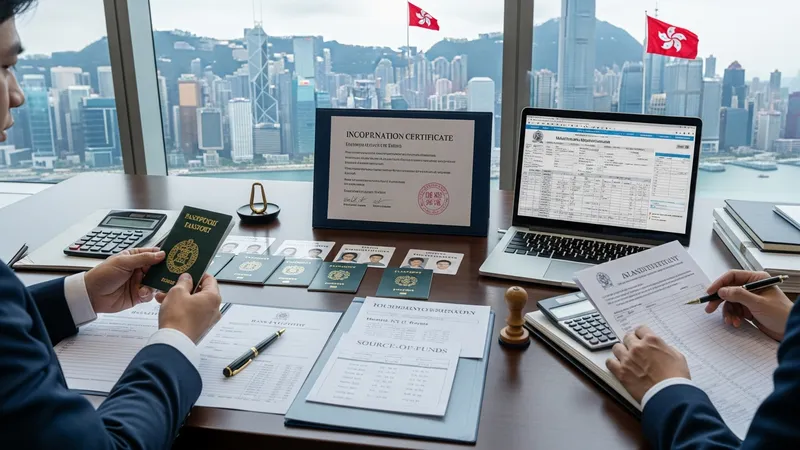
Tax registration with the Inland Revenue Department and structuring bookkeeping systems are essential for periodic tax filings and statutory reporting. Companies commonly register for profits tax and maintain records to support tax computations. While incorporation itself does not determine tax outcomes, the selected structure and transaction flows may affect how taxes are reported and which filing cycles apply. Typical bookkeeping arrangements vary by scale and complexity of operations.
Typical cost considerations in Hong Kong for basic financial setup may include official registration fees, company secretary or registered address fees, and banking administrative costs. For example, official filing fees and business registration charges are set by public agencies and available on their websites; professional services for accounting or corporate secretarial support may be charged separately and can vary by provider and service scope. These costs can be anticipated as part of early financial planning.
Operational advice often labels record keeping, segregation of corporate and personal funds, and establishment of internal controls as routine but important practices. Maintaining clear transactional records and consistent accounting policies may support smoother audits and tax filings. Founders commonly consider these elements during the initial structuring to align financial processes with statutory expectations in Hong Kong.
Operational licensing needs in Hong Kong depend on the nature of commercial activities. Certain sectors—such as financial services, food and beverage, travel agencies, or professional services—may require permits or licences from specific regulators. For instance, regulated financial activities are subject to oversight by the Hong Kong Monetary Authority and other relevant bodies. Identifying potential licence requirements early can inform whether additional approvals or specialised compliance arrangements are necessary.

Sectoral examples commonly cited in Hong Kong include the need for restaurant licences from municipal authorities, travel agent licences from the Travel Industry Council or relevant department, and regulatory authorisations for certain investment activities. The precise scope and application requirements are available from the corresponding departmental pages; businesses typically consult those pages to confirm documentation and inspection standards before commencing relevant operations.
Insider considerations often address timelines for licence approvals and the need to meet premises, staffing, or hygiene standards. Some licences require inspections or ongoing reporting, and founders frequently allow for lead times when planning a launch. Maintaining awareness of renewal cycles and any continuing compliance obligations is generally a part of operational planning for licensed activities in Hong Kong.
When planning operational structure, many entities map required licences to their chosen legal form and governance arrangements, since some licences may be personal to an individual practitioner while others attach to the corporate entity. Cross‑referencing licence requirements with registration status and planned activities is typically a practical step to reduce administrative surprises and align structure with operational needs.