
Organizations that work to detect and limit fraudulent activity commonly combine continuous data monitoring with automated alerts and human review. These systems ingest transaction records, login events, device signals, and identity attributes to identify patterns that differ from established baselines. When an algorithm or rule identifies an anomalous pattern—for example, a high-value card transaction from an unfamiliar device—an alert is generated to prompt an appropriate follow-up, which may include blocking a transaction, requesting additional authentication, or routing the case to an investigator.
Monitoring and alerting operate together: monitoring collects and scores events in near real time, while alerts translate scored events into actionable items for downstream workflows. The underlying techniques may include rule-based scoring, statistical thresholds, machine-learning models trained on historical fraud cases, and identity verification checks against third-party credit and identity data. In the United States context, these capabilities often must align with federal and state privacy and consumer-protection requirements while integrating with bank and card network infrastructures.

Transaction scoring used by issuers and card networks typically relies on a mix of static business rules and adaptive scoring models. In practice within the United States, card networks and major banks may score authorizations on attributes such as merchant category, transaction velocity, geographic distance from prior activity, and device fingerprint. These scores can be used to automatically decline, hold for authentication, or pass-through transactions. Because rules can create false positives, many U.S. institutions tune thresholds periodically and use human review for escalated alerts to reduce customer friction while maintaining fraud control.
Behavioral and device intelligence systems often supplement transaction signals with non-financial indicators. Device fingerprints, IP reputation, and behavioural biometrics may detect scripted attacks or account takeover attempts that transaction-only systems miss. U.S. banks commonly integrate these signals into online and mobile channels to provide layered defence. Such platforms may require careful data governance; handling device and behavioural signals typically triggers privacy and data-security considerations under federal guidance and some state laws, and organizations often document processing choices in privacy notices.
Identity verification and data-check services can identify anomalies consistent with synthetic identity fraud or stolen identity usage. These services may query consumer-reporting agencies or identity graphs to validate name, address, and date-of-birth combinations. In the United States, consumer-reporting and identity-check processes are influenced by statutes such as the Fair Credit Reporting Act and guidance from the Federal Trade Commission, which can affect permissible uses and required notices. Integration of these checks often forms part of account onboarding, higher-risk transaction review, or recovery workflows.
Alerting design and downstream workflows shape how effective monitoring ends up being in practice. Alerts can be tiered by severity, routed to automated remediation steps, or assigned to specialized investigation teams. Effective U.S.-based implementations often instrument feedback loops where investigation outcomes are used to retrain models or adjust rule thresholds. Implementers typically balance detection sensitivity against operational costs and customer impact; periodic review cycles and performance metrics inform adjustments and justify resource allocation for monitoring and response.
Overall, combining real-time monitoring, behavioural signals, and identity verification can create layered detection that may reduce fraud exposure while creating manageable workflows for review teams. Implementers in the United States often consider regulatory and privacy obligations when designing data collection and alerting. The next sections examine practical components and considerations in more detail.
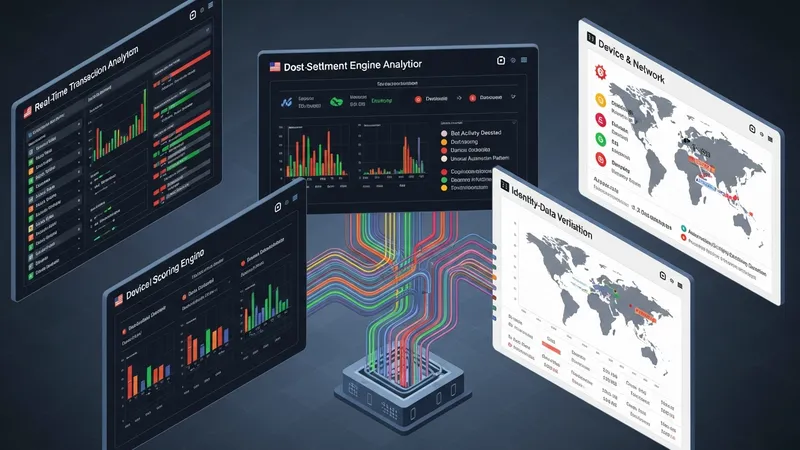
Monitoring approaches vary by channel and use case and commonly include transaction-level monitoring, account-behaviour monitoring, device and network monitoring, and identity-data checks. Transaction monitoring inspects payment authorizations and settlement records for atypical patterns, while account-behaviour monitoring tracks login frequency, credential changes, and unusual access patterns. Device and network monitoring capture IP reputation, device fingerprinting, and browser characteristics to detect automation or spoofing. Identity-data checks compare supplied attributes to consumer-reporting and verification services to surface inconsistencies. In the United States, these distinct monitoring categories are often combined to create complementary signals that feed scoring engines and alerting rules.
Transaction monitoring systems used by U.S. financial institutions may operate at different latencies: some work in milliseconds during authorization flows, others run batch analytics on settled transactions to detect organized fraud rings. Authorization-time systems often rely on lightweight models or pre-computed rules to avoid transaction latency, while post-settlement analytics can use more computationally intensive methods. Practitioners typically balance the need for rapid decisions with model complexity, and many institutions maintain separate models for authorization and post-settlement surveillance to address these constraints.
Device and behavioural monitoring may incorporate passive signals that do not require explicit customer interaction. Examples include assessing device integrity, identifying emulated environments, and measuring typing cadence or gesture patterns in mobile apps. These signals can be useful for detecting credential stuffing or automated scripts that attempt account takeover in the U.S. market. Organizations often treat these signals as probabilistic indicators and combine them with transactional risk scores to reduce false positives while preserving detection capability.
Identity-data checks draw on consumer-reporting agencies, government-issued ID verification, and third-party identity graphs. In the United States, many institutions reference consumer-reporting or verification services when onboarding customers or when elevated-risk transactions occur. Legal frameworks such as the Fair Credit Reporting Act influence permissible uses and retention practices for certain identity checks. As a consideration, practitioners often document data sources and retention policies to align monitoring practices with compliance expectations and audit requirements.
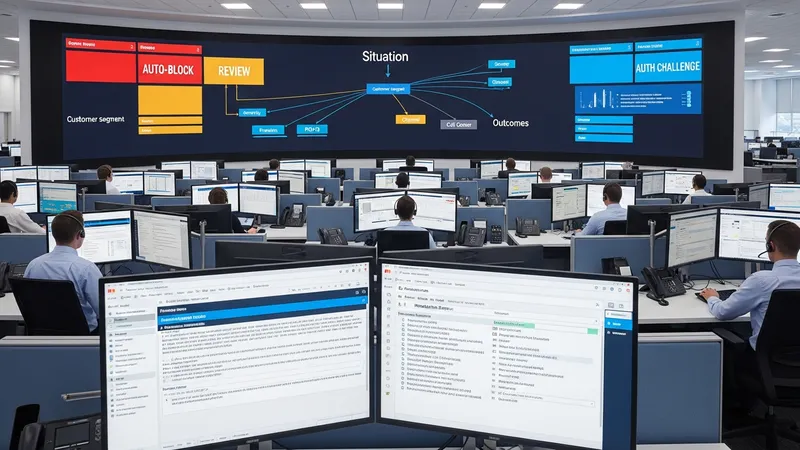
Alerting translates monitored signals into actionable items. Typical alert categories include automated remediation alerts (e.g., block or hold), low-confidence alerts for analyst review, and alerts that trigger additional authentication challenges. Routing decisions often depend on alert severity, customer segment, and channel. Within U.S. financial services, alerts may be integrated into case-management platforms that capture investigator notes, remediation steps, and outcome classifications. This integration helps create the feedback loops necessary for tuning models and rules over time.
False positives are a central operational consideration when designing alerts. Excessive false positives can burden investigation teams and create poor customer experiences, while overly permissive thresholds may miss genuine fraud. Many U.S. institutions implement score-based triage where high-score events proceed to automated actions and medium-score events enter a human-review queue. Organizations may also use sampled reviews or retrospective analyses to estimate true-positive rates and adjust thresholds or model parameters accordingly.
Escalation and cross-team coordination are common aspects of response workflows. Alerts that indicate potential regulatory or legal issues—including multi-account fraud rings or suspected identity theft—may escalate to legal, compliance, or law-enforcement liaison teams. In the United States, internal reporting workflows often capture incident details to support regulatory reporting obligations or law enforcement requests. Clear documentation and role-based responsibilities typically improve response consistency and reduce time to resolution.
Alert delivery channels can include internal dashboards, email, secure messaging, and customer-facing notifications (for example, SMS or app push for authentication prompts). When customer notifications are used, U.S. implementers often consider authentication of the notification channel and consumer privacy implications. A practical consideration is ensuring that automated customer prompts do not create additional vectors for social-engineering attackers; for this reason, many firms combine outbound notifications with in-app confirmation or direct customer service touchpoints.
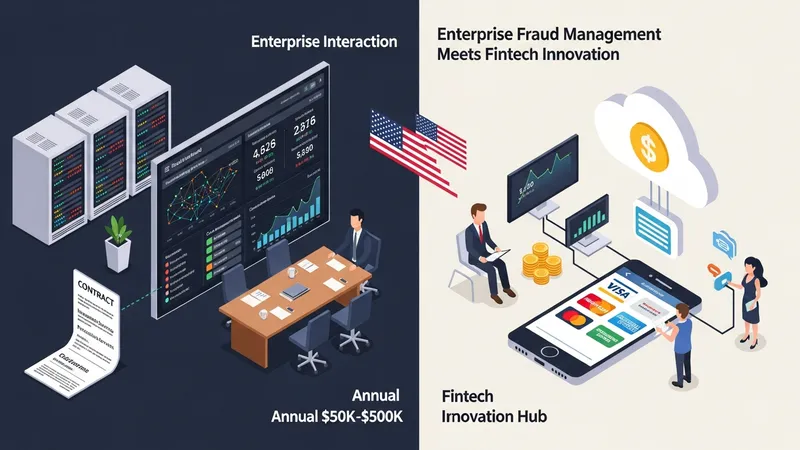
Costs for monitoring and alerting capabilities vary widely based on scale, complexity, and deployment model. For financial institutions, enterprise fraud platforms that provide real-time scoring, machine-learning models, and case-management integration may involve initial integration fees and ongoing platform subscriptions. Pricing structures can be per-transaction, per-account, or subscription-based, and may include professional services for tuning and model training. Costs often scale with transaction volume and the number of monitored channels such as card, ACH, wire, and digital wallets.
For smaller institutions or fintechs, managed services and cloud-based detection platforms may offer alternative pricing that scales with usage. Typical consumer-oriented identity monitoring subscriptions in the U.S. have been reported in a range on the order of several dollars to a few dozen dollars per month, while enterprise solutions for fraud detection and prevention can extend from low five-figure to six-figure USD annual arrangements depending on functionality and volume. These patterns are indicative rather than prescriptive; organizations often pilot solutions to assess performance and refine cost projections.
When budgeting, U.S. implementers commonly account for implementation effort, data integration costs, model maintenance, and analyst staffing for investigation queues. Additional costs may come from regulatory compliance activities, vendor audits, and data-storage requirements. Some institutions amortize these activities across operational teams, while others track fraud-detection spend as a distinct budget item; either approach may be appropriate depending on organizational governance and reporting practices.
Price sensitivity can influence architectural choices: institutions with constrained budgets may prioritize rule-based detection and manual review workflows at first and progressively adopt machine-learning models as volume and complexity increase. It is often useful to perform a phased evaluation, measure key performance indicators during pilot runs, and reassess vendor or in-house options based on measured detection performance relative to operational cost.
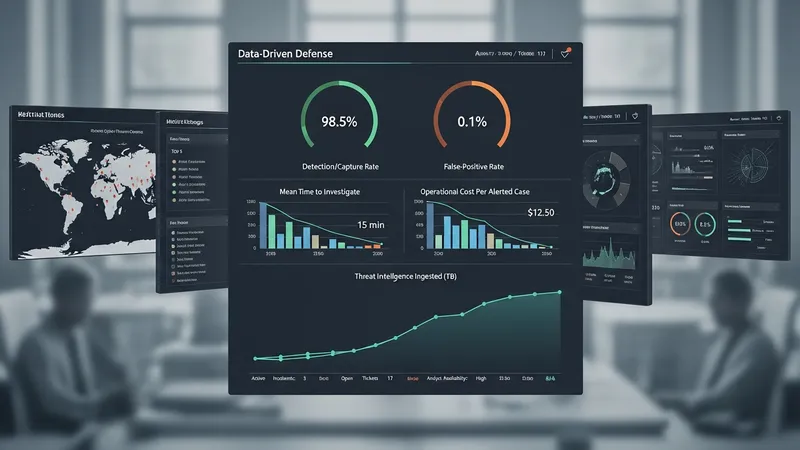
Common performance measures for monitoring and alerting include true-detection rate (often expressed as detection or capture rate), false-positive rate, mean time to investigate, and operational cost per alerted case. Organizations in the United States often report these metrics at regular intervals to quantify system performance and to guide tuning decisions. Because model performance can drift as fraud patterns evolve, periodic re-evaluation and retraining are typical practices to maintain effectiveness over time.
Compliance and legal considerations are integral in U.S. implementations. Data collection and signal processing may implicate federal statutes, such as the Gramm-Leach-Bliley Act for financial institutions and the Fair Credit Reporting Act where consumer-reporting data is used. Some states also have privacy statutes that affect data handling and consumer disclosures. Implementers commonly involve legal and privacy teams early to document lawful bases for processing, retention schedules, and consumer notice language.
Operational considerations include vendor selection, data quality, and integration with legacy systems. Data quality—accuracy, timeliness, and completeness—directly affects model reliability. Many U.S. institutions establish data pipelines with validation checks, monitoring dashboards, and fallback procedures. Vendor service-level agreements (SLAs) and transparency about model inputs and update cadences are often evaluated as part of procurement, particularly where regulatory oversight or auditability is required.
Finally, practical implementation tips often emphasize measurable pilots, stakeholder alignment, and governance. Pilots can reveal real-world detection characteristics and workload implications; clear governance defines who approves threshold changes and who owns model retraining. Documentation of decision criteria and an auditable trail of changes can support internal reviews and regulatory inquiries. Taken together, these practices may help organizations maintain a balanced monitoring and alerting capability that addresses operational needs and regulatory expectations.