
Home-based care providers face exposures that arise from clinical services, nonclinical interactions, and business operations. Liability insurance for home health agencies is a collection of policy types designed to address harms that may occur during care delivery, such as allegations of professional negligence, bodily injury to third parties, or data breaches that expose patient information. Policies typically define covered events, policy limits, exclusions, and procedures for reporting claims, with terms that may vary by insurer and state regulation.
Coverage structure often separates clinical professional exposures from premises and operations exposures. For a typical agency, this can mean holding separate professional liability (errors and omissions) policies and general liability policies, while also considering other products such as cyber liability or workers’ compensation where relevant. Underwriting commonly examines agency size, services provided, staff credentials, supervision protocols, and state licensure or Medicare enrollment status.
Insurers often set limits and deductibles that reflect the size and risk profile of the agency; policy endorsements and exclusions can materially change what is covered. For example, some professional liability forms may exclude certain high-risk procedures or noncompliant documentation practices. State departments of insurance and federal oversight for Medicare-certified agencies may influence policy terms, and agencies typically must disclose complaint history, prior claims, and regulatory actions during application.
Claims handling processes are an important contractual detail. Policies usually specify notice requirements, cooperation duties, and defense control provisions that determine who manages litigation and settlement negotiations. Agencies may find that early reporting of incidents is required to preserve coverage, and failure to follow policy notice provisions can affect coverage availability for an event that may later give rise to litigation.
Coverage gaps can appear where a policy form does not match the agency’s service mix. For instance, agencies that provide telehealth, medication administration, or complex wound care may face exposures not contemplated in a standard community-based form. Insurers often request clinical protocols, staffing ratios, and training documentation to assess whether such services are within underwriting appetite and whether specific endorsements are needed.
Premiums and program structure frequently reflect a combination of factors: projected payroll or revenue, claims history, geographic dispersion of clients, and regulatory compliance. In the United States, multi-state agencies may have to address varying state rules for licensing and insurance requirements, and some states require specific minimums for certain coverages. Risk transfer through contractual indemnity with subcontractors or independent caregivers can also affect insurance needs and potential exposures.
In summary, liability coverage for home health providers is composed of several distinct policy types that together address clinical, operational, and information-security risks. Policy forms, limits, exclusions, and claims procedures vary and may be influenced by federal and state regulation as well as the agency’s operational profile. The next sections examine practical components and considerations in more detail.
Professional liability insurance for clinicians commonly covers allegations of clinical negligence by registered nurses, licensed practical nurses, therapists, and other licensed staff. This coverage typically responds to claims alleging failure to assess, improper treatment, medication errors, or documentation lapses. In the United States, requirements for professional liability may be influenced by Medicare participation and state licensure boards, which often require agencies to carry appropriate malpractice limits for enrolled providers.
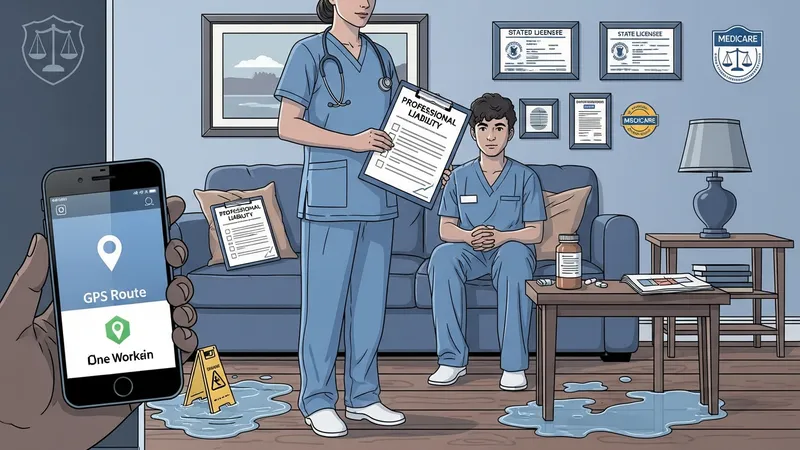
General liability policies address nonclinical incidents such as slips, trips, or third-party property damage during home visits. Such policies often include coverage for legal defense and settlements for bodily injury or property damage to nonpatients. Because services occur in private residences, insurers may evaluate travel patterns, lone-worker protocols, and documentation of client premises conditions when underwriting general liability for home health operations.
Cyber and privacy liability coverage is increasingly relevant as agencies maintain electronic health records and communicate protected health information. Policies may cover forensic investigations, notification costs, credit monitoring for affected individuals, and regulatory fines where insurable. Federally prescribed rules such as HIPAA set standards for safeguarding electronic protected health information and may affect the scope of response expected after a breach.
Other policy types that may be considered include employment practices liability for personnel disputes, directors and officers coverage for managerial decisions, and workers’ compensation for employee injuries. Each of these forms addresses a different facet of agency exposure, and the aggregate program should be evaluated against the agency’s service offerings and staffing model rather than assumed from a single-template policy.
Insurance contracts commonly specify timely notice requirements and cooperation obligations when an incident occurs. Agencies should be aware that insurers often expect written notice of events that may reasonably give rise to a claim; late notice can complicate coverage. Reporting protocols may require internal incident documentation, witness statements, and preservation of records that insurers use to assess defense strategy and coverage applicability.

Claims handling provisions vary: some policies provide the insurer with the right to control defense and settlement, while others require insured consent for settlements above certain thresholds. Agencies may face potential conflicts where a claimant’s medical needs and an insurer’s economic considerations differ; understanding reservation of rights letters and the insurer’s litigation practices is useful for setting expectations about dispute resolution timelines and possible indemnity outcomes.
Documentation practices can influence both underwriting and claim outcomes. Detailed care plans, signed consent forms, medication administration records, and incident reports often form the factual basis for evaluating allegations. In the United States, regulatory agencies may review complaint files during inspections, and well-structured documentation can be a critical component in defending against claims or explaining the clinical rationale behind care decisions.
Coordination with subcontractors and independent contractors is a frequent source of contractual and coverage complexity. Agencies typically need clear contractual indemnity and insurance requirements for subcontracted caregivers; insurers often review these arrangements to determine whether an agency has shifted or retained sufficient risk. State-specific licensing or background-check mandates can also affect how responsibility is allocated in claims involving third-party providers.
Premium calculations usually reflect several measurable inputs: payroll or revenue size, mix of clinical services, number of patient encounters, historical claims frequency, and geographic footprint. In the United States, rates may also be influenced by state-level claim litigation patterns and regulatory expectations. For example, states with higher average medical malpractice payouts may result in higher premiums for professional liability policies for similar service profiles.

Policy limits and retention choices shape how much risk an agency retains versus transfers to the insurer. Higher limits reduce the risk of policy exhaustion in severe claims but often increase premium costs. Agencies commonly review aggregate limits, per-claim limits, and sublimits (for specific exposures such as privacy breaches) to ensure that their program aligns with potential exposure size and contractual obligations to payors or referral entities.
Common exclusions can materially change protection scope. Typical exclusions involve intentional acts, certain regulatory fines or penalties, and services provided outside the scope of licensure. Cyber exclusions or limitations may apply where basic security controls are absent. Agencies should review exclusions with a licensed insurance professional and legal counsel to identify whether specific operations require endorsements or separate policies to close gaps.
Premium mitigation measures that insurers may consider include written policies, staff training records, incident-response plans, and use of electronic health record safeguards. Demonstrated compliance with state licensing standards, routine background checks, and documentation audits may influence underwriting decisions and pricing. These considerations are typically presented as factors rather than guarantees of rate reduction.
Effective risk management for home health agencies often combines clinical governance with operational controls. Clinical governance may include standardized care protocols, competency assessments, and ongoing supervision for licensed and unlicensed staff. Operational controls often address scheduling, travel safety, medication handling, and client environment assessments to reduce incident likelihood during home visits.

Regulatory compliance commonly intersects with insurance expectations. For Medicare-certified agencies in the United States, adherence to Conditions of Participation and state licensure standards can affect both the ability to enroll in federal programs and an insurer’s view of operational risk. Agencies may find that documented compliance activities—such as routine quality reviews and corrective action plans—are useful when responding to underwriting questions or post-claim inquiries.
Information security measures are a practical focus given increasing digitization. Considerations may include multi-factor authentication, encryption of devices, and staff training on phishing recognition. Insurers that underwrite cyber risk often request evidence of such controls, and federal guidance from agencies like HHS and CISA may be referenced when developing internal policies to limit exposure to data breaches.
Contractual risk transfer is another common aspect: written agreements with subcontractors, vendors, and referral sources can allocate responsibility and require that counterparties maintain specified insurance limits. These contractual provisions may be relevant during claims allocation, though courts and regulators in the United States may evaluate whether contractual terms are enforceable and consistent with public policy when disputes arise.