
Peer-to-peer investing describes a model in which online marketplaces connect individual lenders with borrowers through digital platforms. In the United States, these platforms typically collect borrower applications, present loan listings to potential lenders, and manage the repayment flow. The platforms may facilitate different loan types such as personal installment loans, small-business loans, or refinancing arrangements, and they commonly provide credit information, term length, and estimated interest for each listed loan. Platform operators often act as intermediaries that streamline payment processing, recordkeeping, and borrower servicing without directly issuing the underlying loan capital in many cases.
These online lending platforms generally use automated systems to match investor funds with borrower listings and to calculate expected cash flows. Investors can often choose individual loans or use portfolio tools that allocate funds across multiple borrowers to spread exposure. Borrowers undergo underwriting that may incorporate credit scores, income verification, and alternative data. Platforms in the U.S. commonly disclose fee schedules for investors and borrowers and may report loan performance metrics. Regulatory oversight can vary by loan type and state, and federal agencies may play a role where securities laws or consumer protections apply.

Platform models may differ in how loans are originated and held. Some U.S. platforms have historically facilitated direct lending by matching individual investor funds to borrower notes, while others may partner with banks or institutional originators that temporarily fund loans before they are made available to investors. Loan servicing—collecting payments, applying funds to principal and interest, and handling delinquencies—is often performed by the platform or a third-party servicer. Transparency about servicing responsibility, fees, and loan contract terms is typically provided in platform documentation and investor disclosures.
Underwriting approaches can vary across platforms and may evolve over time. Traditional credit bureau scores are commonly used alongside employment and income data; some platforms supplement this with alternative data or machine-learning credit models. In the United States, underwriting practices may be influenced by fair lending laws, and platforms often document their criteria and risk segmentation for investor review. Investors reviewing listings may see borrower credit grades, estimated loss rates, and historical performance buckets that can inform but not guarantee outcomes.
Fee structures for investors and borrowers are an important operational aspect of U.S. platforms. Common investor fees may include servicing fees or management fees expressed as a percentage of payments collected, while borrower fees might include origination or late-payment charges. Platforms often publish these fees in user agreements or fee schedules. Fee levels can affect net cash flows to investors and borrowers’ effective borrowing costs, and they may vary depending on loan size, term, and credit profile. Fee transparency is typically part of regulatory and marketplace expectations.
Risk characteristics on peer-to-peer platforms in the U.S. often include credit risk, prepayment variability, and platform-specific operational risk. Historical default rates for unsecured consumer loans can vary by borrower grade, and investors are commonly advised that diversification across many loans may reduce the impact of single-loan defaults. Platforms may offer portfolio tools and statistical summaries to help investors assess dispersion and historical loss patterns. Investors should consider tax reporting, liquidity constraints, and potential serviceability of loans when evaluating listings.
In summary, peer-to-peer investing in the United States refers to online marketplaces that list borrower loans and allow individual investors to allocate funds to those listings, with platforms handling matching, servicing, and disclosure. Platform models, underwriting methods, fee structures, and risk profiles may differ, and federal or state regulatory frameworks can affect how platforms operate. The next sections examine practical components and considerations in more detail.
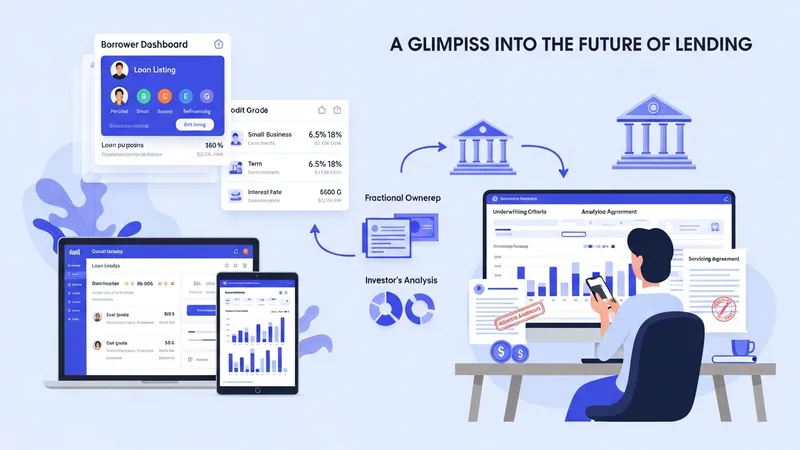
Different U.S. platforms may operate under distinct structural models that influence investor experience. Some platforms historically allowed individual investors to buy fractional notes backed by loans originated on the platform, while others partner with banks or institutional lenders that initially fund loans and later transfer interests. Common loan types presented on U.S. marketplaces include unsecured personal installment loans, small-business loans, and debt refinancing products. Loan terms, collateral requirements, and repayment schedules can vary by loan category. Understanding the origination and holding structure may clarify where credit risk resides and who performs servicing functions for listed loans.
Loan listings on U.S. platforms typically include standardized data fields to support investor evaluation. These fields often contain borrower credit grade or score ranges, loan purpose, term length, interest rate range, and payment schedule. Platforms may also provide historical performance charts or vintage analyses segmented by credit grade. For investors, these data points may be used to model expected cash flows and loss scenarios. It is common for U.S. platforms to require documentation of a loan’s underwriting criteria and servicing agreements in their disclosures to comply with transparency expectations.
Origination partners can affect regulatory classification and investor protections. When a bank originates a loan and subsequently sells or transfers an interest, the legal characteristics of the investor exposure may differ from loans directly originated by nonbank platforms. Federal agencies such as the Consumer Financial Protection Bureau (CFPB) and the Securities and Exchange Commission (SEC) may have jurisdictional intersections depending on product structure, so prospective investors and analysts often review platform disclosures and public filings to understand legal frameworks and compliance measures relevant to listed loans.
Platform selection for investors may be informed by loan mix and liquidity features. Some U.S. marketplaces emphasize consumer installment loans with predictable monthly payments, while others include business-purpose credit with different repayment profiles. Secondary market availability can vary; some platforms or third-party services provide a marketplace for resale of loan interests, which may introduce additional fees and liquidity considerations. Readers may compare loan types and structural arrangements to align expectations with their analysis of yield, duration, and credit exposure.

Underwriting approaches on U.S. platforms often combine credit bureau data with borrower-declared income and employment verification. Some platforms incorporate alternative data sources or machine-learning models that may analyze payment histories, education, or other variables. Credit models typically segment borrowers into grades or bands reflecting estimated default risk, and platforms may publish historical default or performance metrics by category. Investors should treat model outputs as probabilistic estimates rather than guarantees, and consider that economic conditions can shift loss rates relative to historical baselines.
Default and recovery processes vary by platform and loan contract. In many U.S. cases, servicing actions such as late notices, collection attempts, and charge-off procedures are documented in loan agreements; recovery rates after default may depend on the type of loan and jurisdictional collection practices. Platforms often report net charge-off rates for vintage cohorts, providing a performance lens that may assist in modeling expected losses. It is important for investors to review how platforms handle charge-offs and whether there are reserve funds, guaranty arrangements, or buyback provisions in place.
Diversification is a commonly discussed risk mitigation tactic on U.S. marketplaces. By allocating smaller amounts across many loans and credit grades, investors may reduce idiosyncratic exposure to single-borrower defaults. Platforms often provide automated diversification or portfolio-builder tools that spread capital according to user-set parameters. While diversification can lower single-loan volatility, systemic credit events or macroeconomic downturns may still lead to correlated defaults across segments, so diversification does not eliminate overall market or systemic risk.
Stress-testing assumptions and scenario analysis can be informative when evaluating peer-to-peer loan portfolios. Investors may model variations in unemployment, interest-rate shifts, or consumer debt burdens to observe potential impacts on default rates and cash flows. U.S. platforms sometimes publish sensitivity analyses or historical performance through economic cycles, which can provide context but should be interpreted cautiously. Such analysis helps frame potential outcomes rather than predicting specific returns.
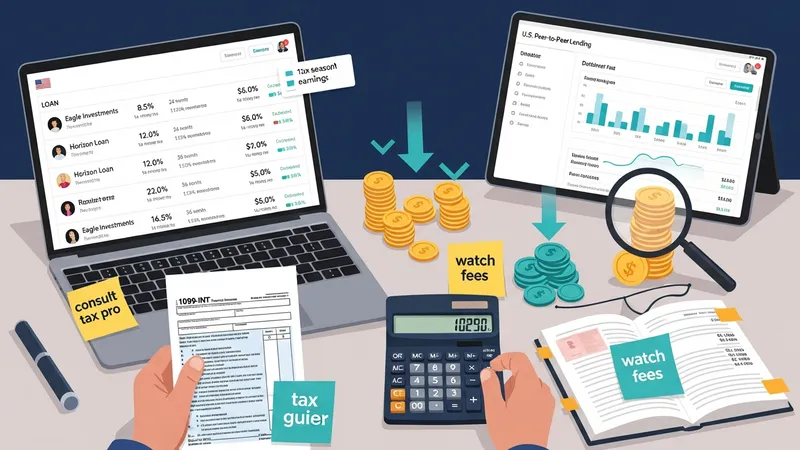
Fee schedules for U.S. platforms can include investor-facing servicing fees, transaction charges on secondary market trades, and borrower origination fees. These fees typically reduce net cash flows to lenders and raise effective borrowing costs for borrowers. Platforms generally disclose these fees in user agreements and help pages. For fiscal reporting, investors in the United States commonly receive IRS forms such as Form 1099 reporting interest and miscellaneous income where applicable; tax treatment can vary by loan type and by investor situation, so many investors consult tax guidance or a professional to interpret platform-issued statements.
Secondary markets may be available on some U.S. platforms or through third-party marketplaces, providing a mechanism to resell loan interests before maturity. Secondary-market liquidity can be limited, with prices influenced by perceived credit risk, remaining term, and prevailing rates. Transactions on secondary markets may incur additional fees and may settle with discounts or premiums relative to principal outstanding. Investors relying on potential resale should understand platform rules, notice periods, and fee implications, since resale is not guaranteed and market depth can fluctuate.
Operational transparency regarding fee allocation and tax reporting is central to investor assessment. Many U.S. platforms publish sample investor statements and explain how payment flows are allocated among principal, interest, fees, and recoveries. Investors may review archives of historical vintage performance and fee-impact examples to estimate net returns under different scenarios. Conservative modeling that incorporates published fee rates and a range of default assumptions may yield a more measured expectation of net portfolio outcomes than using headline interest rates alone.
When evaluating platform economics, consider both explicit fees and implicit costs such as time to monitor, bid-ask spreads on secondary trades, and potential collection inefficiencies. Platforms occasionally revise fee schedules or servicing arrangements, which can affect investor economics over time; monitoring platform disclosures and historical updates may provide insights into how fee changes have affected past cohorts. Such information is factual context rather than a predictor of future policy changes.
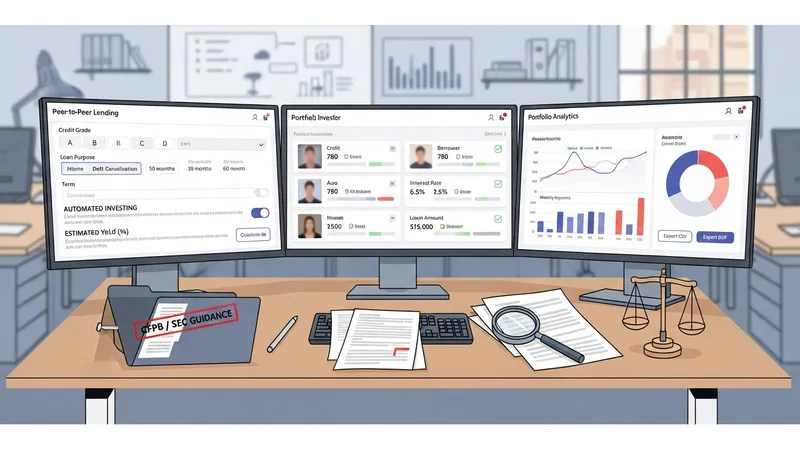
U.S. investors commonly interact with platform tools that allow selection by credit grade, loan purpose, term, and estimated yield. Automated investing features may apply user-defined filters to allocate funds across eligible listings, while manual selection permits choosing specific borrower listings. These controls can help implement diversification strategies introduced earlier in the article. Platforms also often offer reporting dashboards showing payment schedules, delinquency status, and cumulative returns, aiding investors in portfolio monitoring and rebalancing actions without implying a recommendation.
Regulatory context for U.S. platforms includes state lending laws, federal consumer-protection statutes, and securities regulations where applicable. The Consumer Financial Protection Bureau (CFPB) provides guidance on consumer lending practices, while the Securities and Exchange Commission (SEC) may evaluate whether certain investor offerings constitute securities subject to registration or exemptions. Platform disclosures and public filings may reference applicable regulatory frameworks, and investors may consult official agency resources for authoritative guidance on compliance and enforcement trends relevant to marketplace lending.
Reporting and tax treatment are practical elements of U.S. investing that affect net outcomes. Platforms generally issue tax forms reflecting interest and income, and investors may need to track principal repayments, charge-offs, and recoveries for accurate tax reporting. Additionally, state-level tax considerations can apply depending on residency. Thorough recordkeeping and review of platform-issued statements are factual steps investors may undertake to ensure alignment with reporting obligations rather than prescriptive advice about tax strategies.
In closing, peer-to-peer investing in the United States involves platform-specific choices about loan types, underwriting models, fee structures, and secondary-market access, with regulatory and tax implications that may influence investor experience. The examples introduced earlier—LendingClub, Prosper, and Upstart—illustrate variation in originations and underwriting emphasis across U.S. marketplaces. Readers may continue to the platform documentation and official regulatory pages for additional primary-source information that supports informed, measured consideration rather than expectation of particular outcomes.