
Pumps and fluid handling equipment are mechanical systems that transfer liquids or mixtures through pipelines and process systems. In practical terms, these assemblies include the moving elements, drive systems, seals, and wetted materials that determine how a liquid moves under pressure and velocity constraints. Describing the concept involves clarifying how device type, power source, and construction materials relate to the fluid’s properties — for example, whether it is clean water, an abrasive slurry, viscous oil, or a sanitary food product. Technical parameters such as flow rate, discharge head, and allowable solids content typically define suitable classes of equipment.
Design and selection also consider operational context: intermittent versus continuous service, temperature range, regulatory hygiene or containment requirements, and access for maintenance. In industrial and municipal settings within Italy, these considerations intersect with local building practices, regional water authority requirements, and national standards. Equipment may be driven by electric motors, diesel engines, or hydraulic power and can be mounted as close-coupled units, between-bearing assemblies, or in mobile frames for site work.
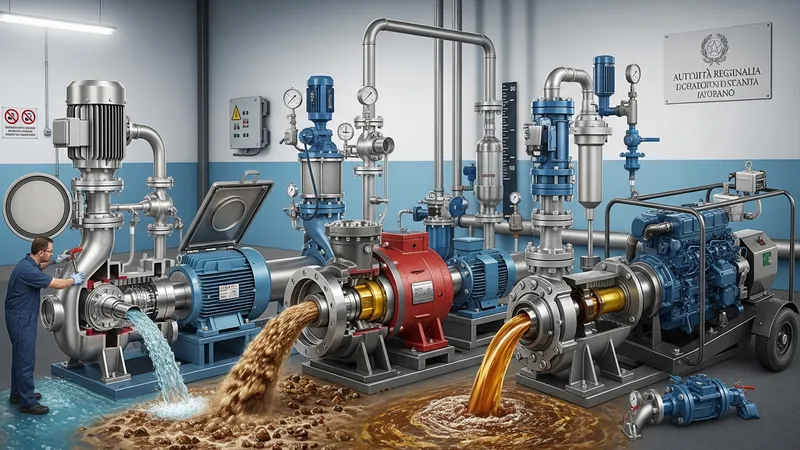
Comparing these examples, centrifugal units often provide higher flow at lower pressures by converting rotational energy into kinetic energy, while positive displacement devices deliver a fixed volume per cycle and may handle higher viscosities more predictably. Diaphragm and peristaltic types isolate the fluid from mechanical drives, which can reduce contamination risk and simplify compliance with food or pharmaceutical hygiene requirements. In Italy, selection frequently references national norms and industry practice when matching pump hydraulics to process demands.
Material compatibility and corrosion resistance commonly influence choice in Italian facilities. For instance, AISI 304 or 316 stainless steels are typically used in the food and beverage sector to meet sanitary expectations, while cast iron or duplex stainless may be selected for municipal water and wastewater pumps. Where abrasive solids are present, designers often consider hardened alloys, ceramic coatings, or replaceable wear parts. These material trade-offs may affect capital cost and service life simultaneously.
Energy use and driving arrangements are practical considerations that can significantly affect life-cycle costs. Electric motor efficiency levels and the use of variable frequency drives (VFDs) may reduce electricity consumption for modulating flow, a factor increasingly monitored in Italian industrial energy management plans. Conversely, remote or temporary sites sometimes use diesel-driven pumps, which entail different maintenance and emissions considerations under Italian environmental regulations.
Maintenance access, spare parts logistics, and local technical support are frequently decisive in Italian procurement choices. Domestic manufacturers and local distributors often provide shorter lead times for replacement parts and service visits, which may reduce downtime risk for continuous processes such as municipal water supply or food processing lines. Conversely, specialised or custom pumps may have longer delivery times and require planned spare inventories.
In summary, pumps and fluid handling equipment are chosen by balancing fluid properties, hydraulic requirements, material compatibility, energy considerations, and local service arrangements. In Italy, these factors interact with national standards, sector-specific hygiene or environmental rules, and the availability of local technical support. The next sections examine practical components and considerations in more detail.
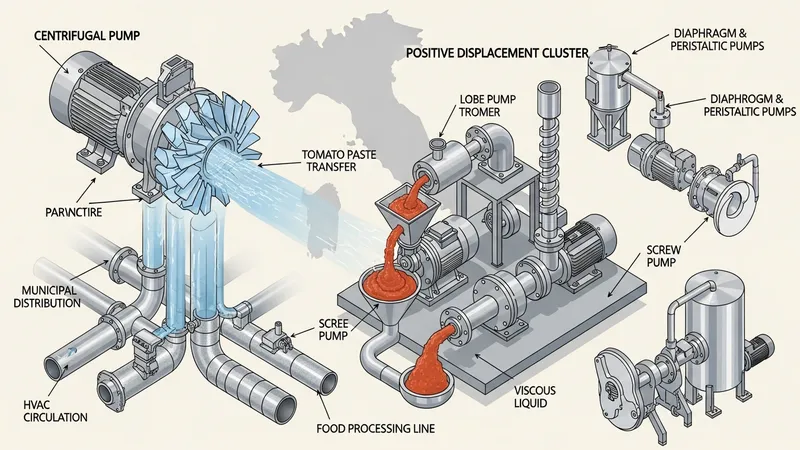
Centrifugal pumps convert rotational motion to fluid energy through an impeller; they are typically applied where flow rates are substantial and fluid viscosity is low. In Italy, centrifugal designs are widely used in municipal distribution systems and HVAC circuits. Positive displacement pumps, including gear, lobe, and screw variants, provide volumetric flow that is less sensitive to pressure, making them suitable for dosing, metering, and handling viscous fluids found in food processing plants across Italy. Diaphragm and peristaltic pumps provide fluid isolation and are common for chemical dosing and abrasive slurries where leakage control is essential.
Submersible pumps are another widely used category for dewatering, sewage pumping, and well installations; these are often specified in Italian construction and civil works projects. Self-priming and dry-running tolerant units are chosen for certain site conditions. Metering pumps and progressive cavity pumps are frequently used where steady low-flow delivery under pressure is needed, such as in dosing additives or pumping viscous pastes in industrial lines found in northern Italian food manufacturing hubs.
Material and seal assemblies affect performance across types. Mechanical seals, gland packing, or encapsulated drive systems are chosen depending on the fluid’s abrasiveness, toxicity, and temperature. In Italy’s regulated sectors, hygienic seals and polished wetted surfaces are often applied to comply with sanitary standards. Manufacturers and operators commonly document compatibility testing when switching fluids to avoid unexpected corrosion or seal failure.
Manufacturing origin and supply chain factors influence availability and support. Italian pump makers and regional distributors may supply materials and spare parts more quickly to local plants, which can be relevant for continuous operations. Sourcing decisions often weigh initial purchase price against predicted maintenance intervals and energy consumption in projected operational scenarios, typically using case-by-case estimates rather than absolute rules.
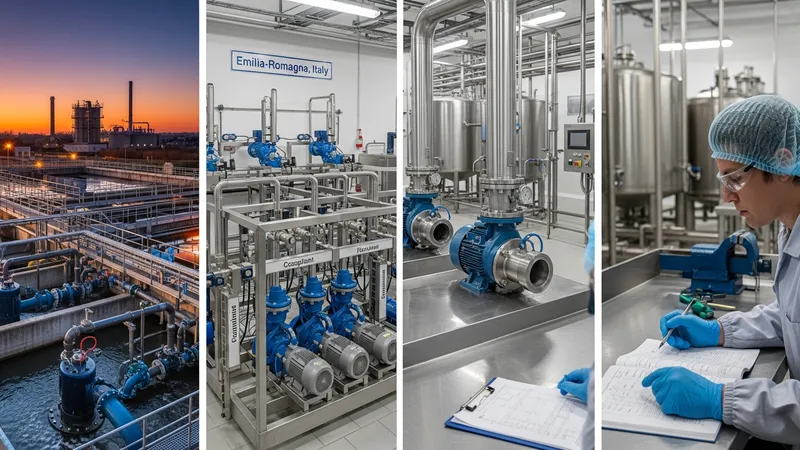
Municipal water and wastewater systems in Italy frequently use centrifugal and submersible pumps for distribution and sewage handling. Treatment plants may use various pumps for sludge recirculation and chemical dosing; operators commonly reference technical guidance from national authorities and local utilities when selecting pump classes. Industrial facilities such as food and beverage processors in regions like Emilia-Romagna and Lombardy often prioritize hygienic materials and smooth surface finishes to meet regulatory and supply-chain hygiene expectations.
The chemical and pharmaceutical sectors in Italy may specify diaphragm or sealless pumps to reduce leakage risk and ease cleaning. Where explosive atmospheres exist, equipment compliant with ATEX-related requirements is typically used; Italian sites rely on certification records and the relevant EU directives as part of their compliance documentation. Agricultural irrigation and drainage systems in Italy’s rural areas often employ pump sets sized to seasonal demands and well characteristics, with portable diesel units still used for temporary water management.
Construction and civil engineering projects commonly use portable dewatering pumps for excavation and tunnelling; these units are selected for solids handling and ease of transport. In coastal or marine contexts, corrosion-resistant materials and sacrificial anodes may be considered in pump design due to saline exposure. Urban stormwater management systems sometimes integrate pumping stations that are sized for peak runoff scenarios and coordinated with municipal planning standards.
Industrial cooling circuits, district heating, and district cooling systems in Italian metropolitan areas usually incorporate pump redundancy and monitoring to reduce operational interruptions. Where energy efficiency is a concern, operators may adopt control strategies such as variable speed drives to match pump output to system demand, often quantified during engineering studies and asset management planning.
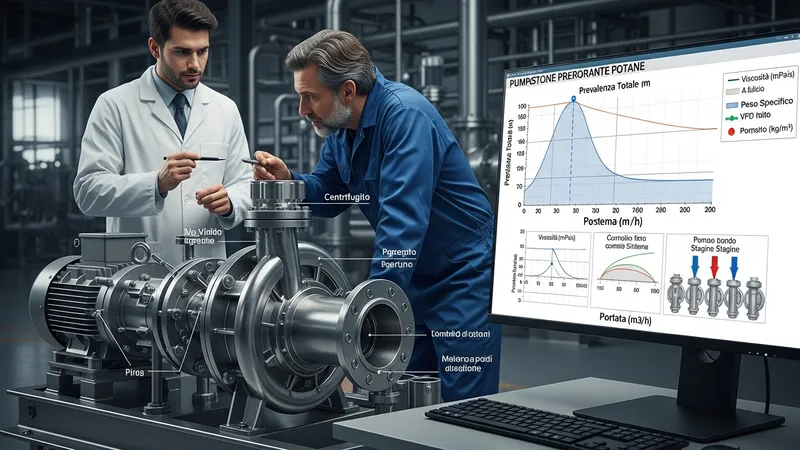
Hydraulic requirements define initial selection: flow rate (m3/h) and total head (m) determine the pump curve that must be matched to the system. Viscosity, specific gravity, and the presence of entrained gas or solids alter the effective head and volumetric efficiency; selection in Italy’s industrial contexts often references manufacturer performance data and in-house testing. Engineers may model system curves to estimate operating points and to determine whether throttling, variable speed control, or pump staging is preferable.
Material selection depends on chemical compatibility and cleaning regimes. Stainless steels (AISI 304/316) are commonly specified in the Italian food industry, while duplex stainless or coated materials may be used for aggressive chemicals. Seal type choices—mechanical seals, packed glands, or sealless options—reflect leak-tolerance and maintenance capabilities. In wastewater or slurry applications, abrasion resistance and replaceable wear components are typical considerations to control long-term replacement costs.
Energy efficiency and control strategies can affect operating expense over the equipment’s life. The adoption of electric motors with higher efficiency classes and the use of variable frequency drives are practices used in Italy to optimise power draw where flow requirements vary. Pump arrangement and piping layout also influence system losses; attention to suction conditions, NPSH availability, and minimising unnecessary bends may reduce cavitation risk and extend component life.
Regulatory and site-specific constraints influence procurement choices. ATEX classification, hygiene regulations, and municipal water authority guidelines may require documented conformity or specific materials and testing records. Local service presence for maintenance and spare parts is often a deciding factor in plant reliability planning, and life-cycle cost estimations typically include scheduled maintenance intervals, parts lead times, and energy consumption estimates rather than relying on purchase price alone.
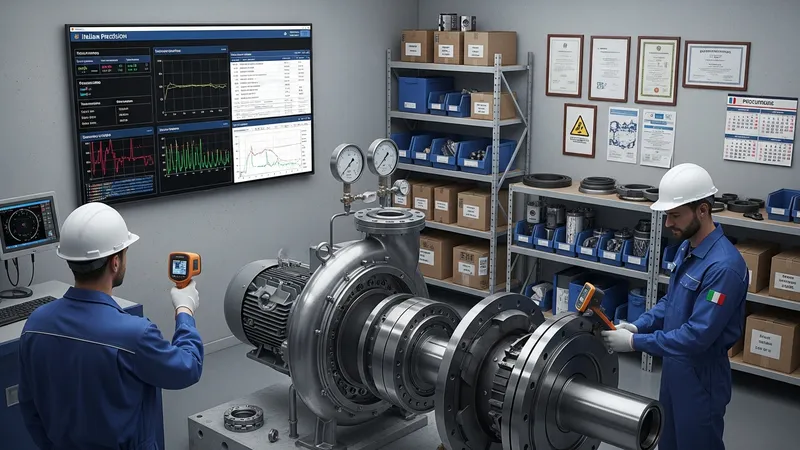
Planned maintenance schedules commonly include periodic inspection of seals, bearings, and wear parts, with intervals depending on duty cycles and fluid aggressiveness. In Italy, industrial operators often maintain vendor or third-party service agreements for complex pump assemblies to ensure compliance documentation and traceability. Spare part inventories are sized to expected repair times, and lead-time assessments for local suppliers are frequently part of procurement decisions to limit operational downtime.
Condition monitoring practices, such as vibration analysis, temperature sensing, and flow/pressure trend tracking, may be employed to identify degradation before failure. These techniques can inform preventive maintenance planning and help estimate remaining useful life. In Italian industrial settings, databases of operational incidents and maintenance histories are sometimes used to refine replacement intervals and to justify the economics of retrofits versus replacement.
Environmental and disposal considerations are relevant at end of life: fluids such as lubricating oils and contaminated components are managed under Italian environmental regulations, and recycling or proper disposal pathways are usually specified in procurement contracts. Energy use over the operational life is often considered in tenders; life-cycle costing may include energy price assumptions and typical duty cycles to estimate long-term operating expense.
Procurement in Italy frequently weighs local technical support and parts availability alongside equipment performance. Decision frameworks typically consider initial cost, estimated energy use, maintenance frequency, and compliance with sector regulations. For complex or custom applications, engagement with local engineering expertise and documented case histories is often used to validate expected performance rather than relying solely on catalogue data.