
Small businesses in the United States commonly manage legal exposure through liability insurance that is organized by specific coverage categories. These coverages are designed to address claims arising from business operations, such as bodily injury or property damage to third parties, alleged errors or omissions in professional services, defects in sold products, liability from business-owned vehicles, and data-breach incidents. Policies may be structured differently depending on the insurer and the risk being insured; for example, some professional liability forms are written on a claims-made basis while general liability is often occurrence-based. Understanding the categories helps business owners and managers match coverage to operational risks.
Selection and configuration of liability protections typically depend on the nature of the activity, contractual requirements, workforce size, and state regulatory frameworks in the United States. Insurers may offer standalone policies for specific exposures or package several coverages into a business owners policy (BOP) or a commercial package policy. Limits, deductibles, and endorsements can alter how a claim is handled and how much a policy will pay. Compliance, contract language, and vendor or landlord requirements frequently influence which coverages are needed and how they are documented on policy forms.

When comparing these categories, small firms often weigh frequency versus severity: general liability claims may occur more often but tend to have lower average costs than a single product defect claim that can produce high litigation expenses. Limits of liability are typically selected according to contract requirements and perceived worst-case scenarios; for instance, a service contractor working on commercial property may need higher limits to meet a client contract. Endorsements such as additional insured status or contractual liability modify standard forms and are frequently requested in U.S. commercial agreements.
Coverage triggers and policy form types can shape long-term exposure. Professional liability written on a claims-made form generally requires continuous coverage or a retroactive date to protect against later claims, while occurrence policies usually cover events that happen during the policy period regardless of when a claim is reported. Small businesses in the United States often consider tail coverage or extended reporting periods when changing carriers to avoid gaps. These technical distinctions may affect premium, renewal negotiations, and the practical handling of long-tail liabilities.
Pricing patterns for each coverage type may vary considerably by industry and state. For illustrative purposes, general liability premiums for low-exposure small operations in the U.S. may start in the hundreds of dollars per year, while higher-risk contractors can see premiums in the thousands. Professional liability premiums may be highly dependent on revenue and claims history and can range from several hundred to several thousand dollars annually for many small practices. Cyber liability pricing often depends on revenue, type of data handled, and security controls in place. These are typical patterns rather than guarantees.
Policy limits, exclusions, and the interplay between primary and excess coverage often determine how a claim is ultimately satisfied. Umbrella or excess liability layers can extend limits above primary policies but typically follow the terms and exclusions of underlying coverages, which may vary by insurer. Examination of policy language—especially exclusions related to contractual liability, pollution, or professional services—can uncover gaps that may require additional forms or separate policies. In the United States, state insurance departments and industry guides commonly recommend careful review of these provisions before relying on a policy for contractual compliance.
In summary, liability protection for small businesses is composed of distinct coverage categories that address operational, professional, product, auto, and cyber exposures. Each category has structural and pricing characteristics that may vary by industry, state regulations, and contract needs. Understanding the differences between occurrence and claims-made triggers, typical premium patterns, and common endorsements can help clarify how coverage functions in practice. The next sections examine practical components and considerations in more detail.
General liability commonly responds to third-party claims for bodily injury and property damage and typically includes personal and advertising injury elements. For small retailers or contractors operating in the U.S., general liability may be the foundational policy for premises and operations exposures. Product liability is relevant when a business designs, manufactures, or sells goods; it can involve defect theories such as manufacturing, design, or failure-to-warn. Professional liability focuses on services and advice and is frequently structured to address economic losses linked to alleged professional errors. Cyber liability increasingly covers breach response and regulatory notification costs tied to personal data held by the business.
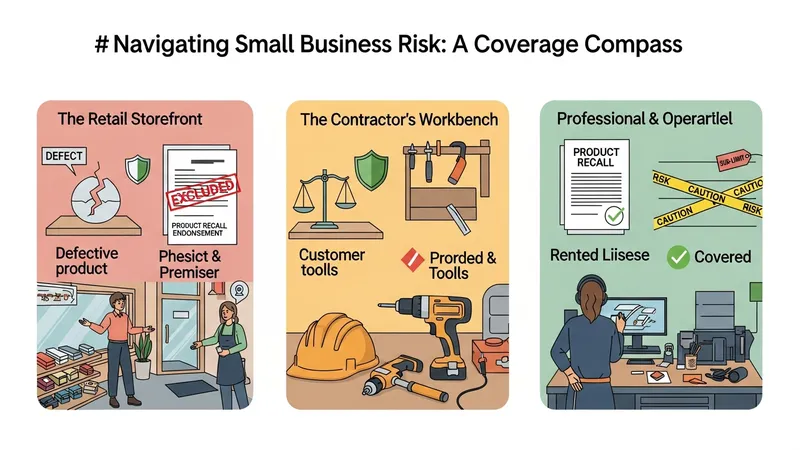
Each category may include typical endorsements or sub-limits that shift how losses are paid. For example, damage to rented premises may have a specified sub-limit within commercial general liability, while product recall costs are often excluded and require a separate recall policy or endorsement. In the United States, data-breach notification requirements vary by state and can influence cyber coverage needs. Small businesses may consider whether a packaged policy such as a Business Owners Policy (BOP) provides adequate combined protection or whether standalone policies better reflect unique exposures.
Interaction among coverages is an important practical consideration. A commercial auto policy will usually be primary for vehicle-related injuries, while general liability may decline coverage for claims arising from vehicle use. Contracts with clients or landlords often require additional insured endorsement, which can extend coverage to other parties but may also create coverage conflicts or additional premium. In the U.S., insurers may issue endorsements to satisfy common contract language, but precise wording varies, and insureds often review such endorsements to ensure they align with contractual obligations.
Regulatory context in the United States affects certain liability exposures. State tort laws, comparative negligence rules, and statutory caps on damages in particular jurisdictions can influence expected claim outcomes and carrier underwriting. For example, states with specific product-liability statutes or consumer protection laws may see different litigation dynamics than others. These legal environments may factor into underwriting and pricing decisions by carriers, and they can shape what is customary within a given state for limits, deductibles, and required endorsements.
Underwriting and pricing for liability coverages typically consider revenue, payroll, business classification, claims history, and the nature of operations. In U.S. practice, carrier rate tables and industry classifications (such as those from the National Council on Compensation Insurance for workers' comp, or class codes used in commercial lines) influence premium calculations. For many small firms, higher revenue or higher payroll often leads to higher premiums because the exposure base increases. Claims frequency and severity on an insured’s loss history commonly result in adjustments to renewal pricing or retention requirements.
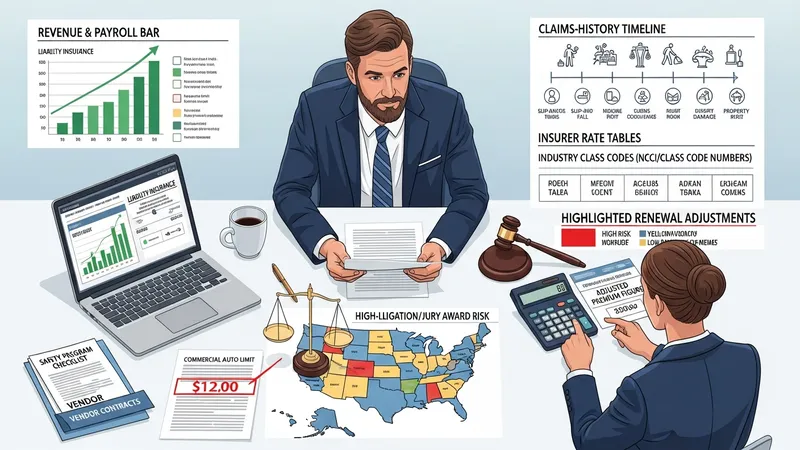
State-specific factors may affect price levels as well. Litigation environment, jury awards, and state-mandated coverages can create variance in premium across states. For instance, where courts historically award larger damages, insurers may price accordingly for businesses operating there. Additionally, regulatory requirements—such as minimum automobile liability limits for commercial vehicles—can increase baseline premiums. Insurers also consider controls such as safety programs, contracts, and vendor management practices when evaluating pricing allowances or credits.
Typical premium ranges are inherently variable but can be described in cautious terms. For example, a small office-based service firm in many U.S. jurisdictions may see general liability premiums that may fall in a range of approximately $400 to $1,200 annually for modest limits, while a small contractor with higher exposures may see premiums from several thousand dollars annually. Professional liability premiums for small consultants often fall into a different spectrum tied to professional revenue and claims experience. These ranges are rough indicators and will vary by carrier, limits, and specific risk characteristics.
Deductibles, limits, and retentions influence the net cost of protection. Selecting higher deductibles can lower premium but increases the insured’s out-of-pocket exposure; conversely, higher limits increase premium but extend potential insurer payments. Small businesses often balance these choices against contract obligations and the potential financial impact of a large claim. Insurance brokers or advisors in the U.S. frequently model different limit and deductible scenarios to illustrate potential premium impacts, though such illustrations are informational rather than assurances of future pricing.
Small businesses in the United States encounter several provider types: national carriers that underwrite standard commercial forms, regional insurers that may specialize in local markets, and specialty underwriters that focus on niche industries or higher-risk operations. Some providers offer packaged products such as Business Owners Policies that combine liability and property coverages, while others issue standalone policies for particular exposures. Distribution channels include direct-write insurers, independent agents, and brokerage firms; selection of a delivery channel can affect policy forms, service options, and available endorsements.
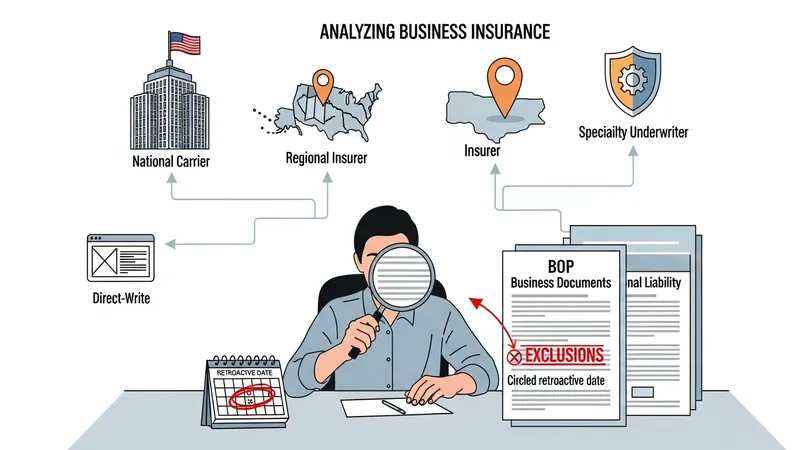
Policy forms and insurer practices differ and should be reviewed carefully. Insurer forms may include proprietary wording or industry-standard language; small businesses can expect variations in exclusions, definitions, and claims-handling procedures. For example, professional liability policies from different underwriters may vary in how they define “professional services” or in available retroactive date options. Understanding these differences can influence how effectively a policy responds to specific incidents and how claims are administered after a report is made.
Service elements such as claims response time, local adjuster availability, and loss-control resources can affect the practical value of a policy. In the United States, larger carriers may offer broader national networks of adjusters and digital claims reporting, while regional carriers may provide more tailored local market expertise. Small businesses often assess whether a carrier’s claims handling aligns with their operational needs and whether the insurer provides access to risk-control resources that can help reduce future exposures.
Contractual relations with vendors, clients, and landlords frequently shape insurer selection and policy amendments. Many U.S. contracts require additional insured endorsements, waiver of subrogation, or specified limits; insurers differ in their willingness to provide certain endorsements and in the precise wording they will accept. Firms that work under government contracts or in regulated sectors should verify that proposed policy terms meet contract specifications and regulatory expectations as a practical measure rather than as a guarantee of coverage in every circumstance.
Claims handling processes typically begin with prompt notice to the insurer and documentation of the event or allegation. In U.S. practice, timely reporting can affect coverage, especially for claims-made professional liability policies where the reporting window is critical. Insurers will often assign a claims adjuster to investigate, obtain statements, and coordinate defense counsel when applicable. Businesses should maintain incident logs, correspondence, and witness information to support the claims process; accurate records may influence the speed and clarity of resolution.

Contractual obligations often require specific policy endorsements such as additional insured status or certificates of insurance. When a contract includes these clauses, small businesses should review the endorsement language carefully because the scope of coverage provided to additional insureds varies by form and carrier. Certificates of insurance are administrative documents that summarize coverages but do not alter policy terms; insurers and contracting parties typically rely on underlying policy endorsements for the substantive obligations affecting defense and indemnity.
Recordkeeping and proactive documentation are practical considerations rather than guarantees of coverage. Maintaining written safety procedures, training logs, and quality-control records can support a defense or mitigation strategy and may be favorably viewed by underwriters at renewal. In industries subject to regulation or licensing, retaining compliance documentation and incident reports can also assist in meeting notification requirements and in interfacing with regulatory authorities in the event of a claim.
Dispute resolution and policy review practices commonly shape long-term exposure management. Policies may include provisions for arbitration, choice of law, or jurisdiction that affect how disputes are resolved. Periodic policy reviews—especially when a business expands services, hires employees, or enters new contracts—can identify potential coverage gaps. These reviews are intended to inform decisions about limits, endorsements, and carrier selection rather than to assure specific outcomes in future claims.