
T cell cancer treatment focuses on research and methods that use T cells, which are a critical group of immune cells, to study and interact with cancers. This approach explores how specialized immune cells can be trained or engineered to recognize and respond to cancer by targeting specific molecular markers found on cancer cells. The goal is to deepen scientific understanding of immune function in oncology, while evaluating new laboratory and clinical techniques that could influence future research directions.
T cells interact with cancer in multiple ways, both naturally and through clinical intervention. Modern research investigates how to enhance these interactions, often by altering T cells outside the body and reintroducing them to increase their recognition of cancer cells. As a result, various treatment approaches are being developed that seek to utilize or improve the immune system’s activity against cancer. These studies require rigorous review and cautious interpretation to avoid overstatement of their potential outcomes.

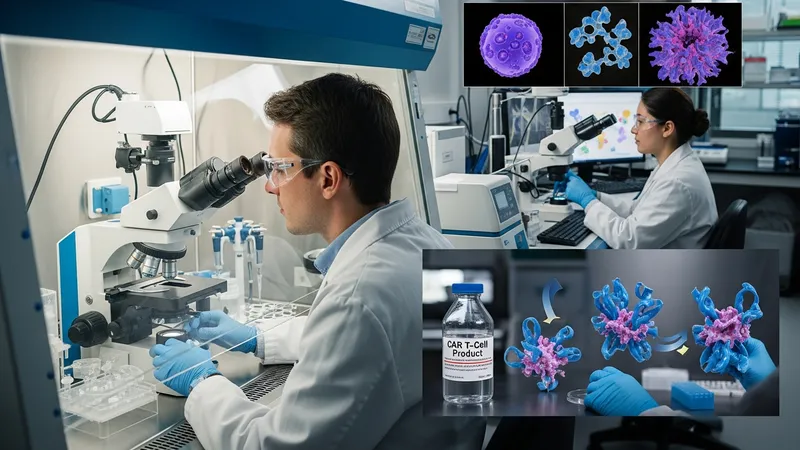
CAR T-cell therapy represents a laboratory-intensive method where a patient’s own T cells are modified to better detect and respond to specific cancer-related targets. These genetically engineered cells are then expanded and reinfused, with ongoing studies examining safety, persistence, and interaction within the tumor environment. Such therapies may involve custom manufacturing, which can extend timelines and influence accessibility and research workflows.
T-cell receptor (TCR) based approaches are also under exploration. These techniques focus on modifying the native receptors of T cells, potentially allowing more precise recognition of cancer-associated antigens displayed by tumor cells. TCR modalities typically target proteins that are presented on the inside of cancer cells, broadening the spectrum of possible applications under clinical investigation. Each laboratory method undergoes extensive research to establish parameters for efficacy and control.
Adoptive cell transfer methods feature prominently in immune-oncology research. By growing and activating immune cells outside the body, then returning them to the patient, researchers can study changes in immune engagement with cancer. TIL-based protocols represent one of several forms of ACT being examined for different cancer types in laboratory and early-phase trials. Reports from ongoing studies highlight considerations such as cell expansion, viability, and monitoring for unintended immune responses.
Scientists working in this field typically evaluate multiple laboratory endpoints, including T cell persistence, target specificity, and functional integration in the host environment. Detailed monitoring and careful reporting help identify research findings and guide further experimentation. While some approaches are still in early development, the collective research may inform future strategies for understanding immune responses to cancer and designing new experimental interventions.
In summary, T cell cancer treatment research includes laboratory and clinical techniques that seek to boost immune recognition or activity against cancer. The following sections will examine practical components and considerations of these approaches in greater detail.
Several methods are under investigation for utilizing T cells in cancer treatment strategies. CAR T-cell therapy is one of the most studied, involving the genetic modification of a patient’s own T cells to recognize proteins found on the surface of cancer cells. Since each approach operates differently, comparisons often focus on laboratory technique, scientific applicability, and parameters monitored during studies. Critical distinctions may influence the direction and focus of ongoing research in this area.
TCR-based therapies differ from CAR T-cell techniques by targeting cancer molecules that are presented inside tumor cells. This is possible because T cell receptors can interact with antigen fragments displayed on a cell’s surface via major histocompatibility complex (MHC) proteins. Such targeting may broaden the range of research candidates and is of particular interest for cancers that do not display typical surface markers.
Adoptive cell transfer encompasses a wider group of research methods. These typically involve expanding tumor-infiltrating lymphocytes or other immune cells in laboratory settings before reinfusion. This process may utilize cytokines, co-stimulatory signals, or genetic enhancements to improve cell viability and function upon return to the host. Each variant of this method can be tailored to specific cancer research models and experimental contexts.
The distinctions between CAR T-cell, TCR, and ACT methods often lie in how T cells are sourced, modified, and deployed. Researchers typically consider the scientific objectives, intended cancer type, and monitoring requirements when designing studies. While no single method is universally preferred, the differences highlight the diverse strategies being explored to unlock new insights into immune system interactions with cancer.
Research into T cell cancer treatment methods often involves evaluating a range of laboratory and clinical considerations. These include how T cells are harvested and whether the cells’ quality or activity can be effectively maintained during laboratory manipulations. The choice of genetic modification technique, such as viral vectors or gene editing, may impact manufacturing consistency and scientific outcomes being evaluated.

Tumor heterogeneity is an additional factor frequently considered in T cell cancer research. Since each patient’s tumor may possess a unique combination of molecular markers, identifying appropriate antigens for targeting can be complex. Scientists typically use extensive screening and validation to confirm that modified T cells can recognize a sufficient proportion of cancer cells while minimizing unintended effects on healthy tissue.
Another key aspect is the safety profile of each T cell–based approach under study. Early-phase laboratory and clinical research carefully monitors for possible off-target activity or immune-related complications. Many studies implement stepwise dose escalations and frequent monitoring, helping researchers gather data while reducing uncertainty in laboratory or trial settings.
Lastly, the persistence of engineered or expanded T cells is a topic of ongoing research. Understanding how long modified cells remain functional inside the body, and whether their anti-cancer activity is sustained over time, may provide important signals for designing future experimental protocols. Each of these considerations helps guide ongoing exploration in the field of immune-oncology research and therapy development.
Effective monitoring and assessment practices form a foundation for credible research on T cell cancer treatments. Laboratory teams typically track various outcomes, including T cell proliferation, receptor expression, and ability to recognize cancer cells in culture or experimental animal models. Flow cytometry, molecular assays, and imaging techniques are commonly employed to collect quantitative data about the cells’ behavior.

Clinical research designs often incorporate regular sampling of blood or tissue to monitor for the persistence and activity of modified T cells. Researchers observe biomarkers that may indicate how these cells interact with both target cancerous tissue and other organs. This process can help detect early signals of cellular expansion, persistence, or immune activation in response to the therapy under investigation.
Additionally, safety monitoring remains paramount. Early-phase research frequently includes protocols for early detection of adverse immune reactions, such as off-target effects or excessive inflammatory responses. Lab teams may halt or adjust treatment protocols based on predefined safety criteria, reflecting a general emphasis on controlled and monitored environments for all experimental methods.
Finally, longitudinal data collection enables researchers to observe potential effects over time. They may gather information about relapse, immune response durability, or molecular changes in the tumor or immune landscape. Each layer of assessment is designed to build a comprehensive picture of how T cell–based strategies operate within different experimental and patient settings, adding critical context to ongoing studies.
Looking ahead, research into T cell-based cancer treatments is focusing on refining techniques, understanding mechanisms of resistance, and expanding the types of cancers that may be studied with these methods. Innovations in genetic engineering and cell culture may provide new tools for improving T cell specificity and persistence, with the aim of enhancing research models and laboratory observations.

Ongoing challenges continue to shape the field. Researchers are exploring solutions to issues such as tumor antigen variability, immune evasion mechanisms, and potential side effects of immune activation. These factors often require the development of combination therapies, improved candidate selection, and advanced manufacturing processes tailored to specific research scenarios.
Additionally, international collaborative efforts and data-sharing platforms are helping to accelerate knowledge accumulation on the subject. Such collaborations allow scientists to aggregate findings, compare Protocols, and identify promising areas for further examination. In many cases, harmonization of laboratory methods and reporting standards enables more robust comparisons across research groups.
In summary, T cell cancer treatment remains a rapidly evolving area of scientific investigation. With continued technological advances and careful study design, researchers may further clarify the role of T cells in controlling or influencing cancer progression. The field is expected to generate ongoing insights that contribute to a deeper understanding of immune-oncology and the future of experimental cancer research.