
Tardive tremor is a movement disorder that may occur as a result of long-term exposure to certain medications, particularly those that influence neurotransmitter systems in the brain. This condition can present as involuntary, rhythmic shaking that is often noticeable in the hands but may also involve other muscle groups such as the head or limbs. Tardive tremor is considered within the group of tardive syndromes, which are characterized by the delayed appearance of movement abnormalities after starting or continuing specific medical therapies.
The distinguishing features of tardive tremor often include its rhythmic nature, variability in onset, and association with extended use of medications that act on dopamine pathways. Clinical assessment focuses on the identification of these physical signs in the presence of a relevant medication history. Differentiating tardive tremor from other tremor types, such as those linked to aging or underlying neurological diseases, can be important for clinicians seeking to understand the underlying mechanisms and possible contributing factors.

Tardive tremor is typically studied in the context of other tardive movement abnormalities. Compared to other types of tremors, tardive tremor is notable for its connection to medication history and usually emerges after prolonged exposure rather than immediately following medication initiation. Understanding these timelines may be essential in evaluating individuals presenting with new-onset tremor symptoms.
Clinically, tardive tremor may be observed during routine physical examinations when a person has a known history of using specific neuroleptic or psychoactive medications. The tremor's features, including frequency, amplitude, and distribution, can vary among individuals. Although the precise causes are not fully determined, the tremor is thought to stem from changes in brain chemistry resulting from chronic drug exposure.
Differentiating tardive tremor from other disorders—such as essential tremor, parkinsonian tremor, or metabolic conditions—often requires careful clinical judgement. This process generally involves excluding alternative diagnoses based on detailed medical history and examination, and recognizing patterns that are more typical of tardive syndromes.
Research into tardive tremor remains ongoing, with interest in understanding both prevention and management. While studies have identified links to medication classes, ongoing data analysis is refining how frequently this condition develops and how its features might overlap with other neurological conditions. A cautious, individualized assessment is usually recommended in clinical contexts.
In summary, tardive tremor reflects a neurological condition associated with certain types of medication use. It is characterized by rhythmic, involuntary shaking and distinguished through careful history-taking and physical examination. The next sections examine practical components and considerations in more detail.
Tardive tremor most commonly arises after prolonged exposure to medications that influence dopamine pathways in the brain. The risk of developing this movement disorder can increase with the cumulative duration and dosage of certain antipsychotics or antiemetic drugs. Individuals who have received these medications for extended periods may be observed to have an elevated likelihood of developing involuntary shaking, although not everyone exposed to such agents experiences this outcome. Factors such as age, gender, and genetic predisposition may also contribute to susceptibility.

Additional risk factors may include a previous history of other movement disorders or neurological conditions. Research suggests that those with underlying vulnerabilities in their nervous systems may be more prone to developing tardive tremor. Coexisting conditions or previous episodes of drug-induced movement issues can also act as clues when evaluating new tremor symptoms in clinical settings.
The relationship between specific medication types and tardive tremor remains an area of active investigation. While some antipsychotic drugs (particularly older, so-called typical antipsychotics) have been associated with higher reported incidences, newer agents may also contribute, though often at lower observed rates. It is important to note that individual responses can vary widely, reflecting complex interactions between personal health histories and pharmacological exposure.
Understanding these factors can be important for clinicians and researchers seeking to navigate the complexity of diagnosis and management. Since tardive tremor can often present after years of medication use, continuous monitoring and thorough documentation of medication history are considered valuable practices in healthcare environments. The consideration of both drug exposure and individual risk profiles typically guides assessment and subsequent clinical decisions.
The clinical presentation of tardive tremor often includes involuntary, rhythmic shaking that can affect one or multiple parts of the body. The hands are most frequently involved, though the tremor may also appear in the head, tongue, or other regions. The movement typically persists both at rest and during purposeful actions, which may help differentiate it from other tremor forms. The onset of symptoms tends to be delayed, occurring after months or years of exposure to the associated medications.

Diagnosis generally requires a detailed history and physical examination. Documentation of prolonged exposure to medications known to influence dopamine pathways is a key consideration. Clinicians typically look for characteristic rhythmicity and distribution of the tremor, as well as accompanying signs of other movement disorders that may suggest a broader spectrum of tardive syndromes.
Imaging studies—such as MRI or CT scans—are not routinely used to confirm tardive tremor but may be utilized to exclude alternative causes of movement abnormalities. Laboratory tests can occasionally be conducted to rule out metabolic or systemic illnesses that might manifest with similar symptoms. A careful medication review is almost always part of the diagnostic process.
Because no single test is definitive for tardive tremor, diagnosis is typically based on the combined findings from symptom history, medication exposure timeline, and neurological examination. Periodic reassessment may be important, as the nature and severity of symptoms can fluctuate over time, and the clinical features may overlap with other movement disorders related to drug exposure.
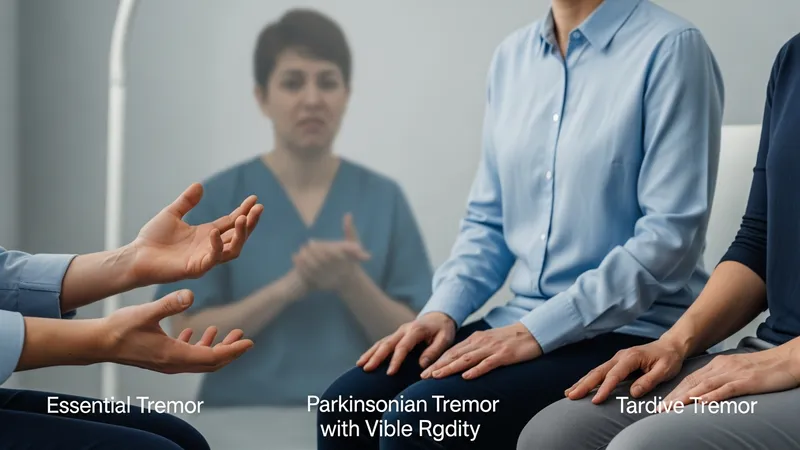
Distinguishing tardive tremor from other common forms of tremor is an important clinical consideration. Essential tremor, for instance, typically presents as a bilateral action tremor with a strong genetic component and is unrelated to medication use. In contrast, parkinsonian tremor often occurs at rest and is accompanied by other symptoms such as rigidity and bradykinesia. Tardive tremor, by comparison, is set apart by its probable link to chronic medication use and its delayed appearance relative to the initiation of treatment.
Another related movement disorder is tardive dyskinesia, characterized by repetitive, involuntary movements such as lip smacking or tongue protrusion. While tardive tremor may coexist with other tardive conditions, the pattern of shaking is usually slower and more rhythmic, rather than the rapid or irregular movements seen in dyskinesia. This difference aids in diagnostic workups and in determining the appropriate strategies for ongoing monitoring.
Comparisons with metabolic or systemic causes of tremor are also routinely considered. For instance, tremor associated with thyroid disease or medication side effects outside the tardive syndromes is investigated through laboratory and history-based assessments. These alternative considerations help prevent misattribution of symptoms and can inform the broader care approach for individuals experiencing tremor.
Ultimately, understanding both the similarities and differences among various tremor types may support better clinical identification and ongoing study of tardive tremor. Detailed documentation and regular follow-up are components frequently highlighted in academic discussions of these movement disorders, emphasizing the importance of a nuanced and longitudinal approach.
Current research on tardive tremor focuses on clarifying its underlying mechanisms, incidence patterns, and distinction from other tardive syndromes. Studies are examining the roles of different medication classes and the biological factors that may predispose some individuals to develop tremor symptoms. Further work is also devoted to refining criteria for diagnosis and exploring options for symptom management, though clinical approaches remain largely individualized and cautious.

There is considerable interest in developing strategies for early detection and monitoring of tardive tremor, particularly in populations at higher risk due to prolonged medication use. The implementation of systematic screening protocols and standardized assessment tools is one area where ongoing investigation may yield practical advancements for healthcare professionals.
Multidisciplinary collaboration between neurologists, psychiatrists, pharmacologists, and primary care providers is considered valuable for managing tardive tremor. Sharing clinical observations and research findings may enhance understanding and help build consensus regarding the most reliable diagnostic frameworks. This approach supports a careful balance between the benefits of treating underlying conditions and the monitoring for potential neurologic side effects.
As scientific understanding evolves, the knowledge surrounding tardive tremor continues to grow. Emphasis remains on individualized assessment, measured monitoring, and responsible use of medications in populations at potential risk. The intersection of research and clinical practice encourages continued vigilance and adaptation in the approach to this movement disorder.